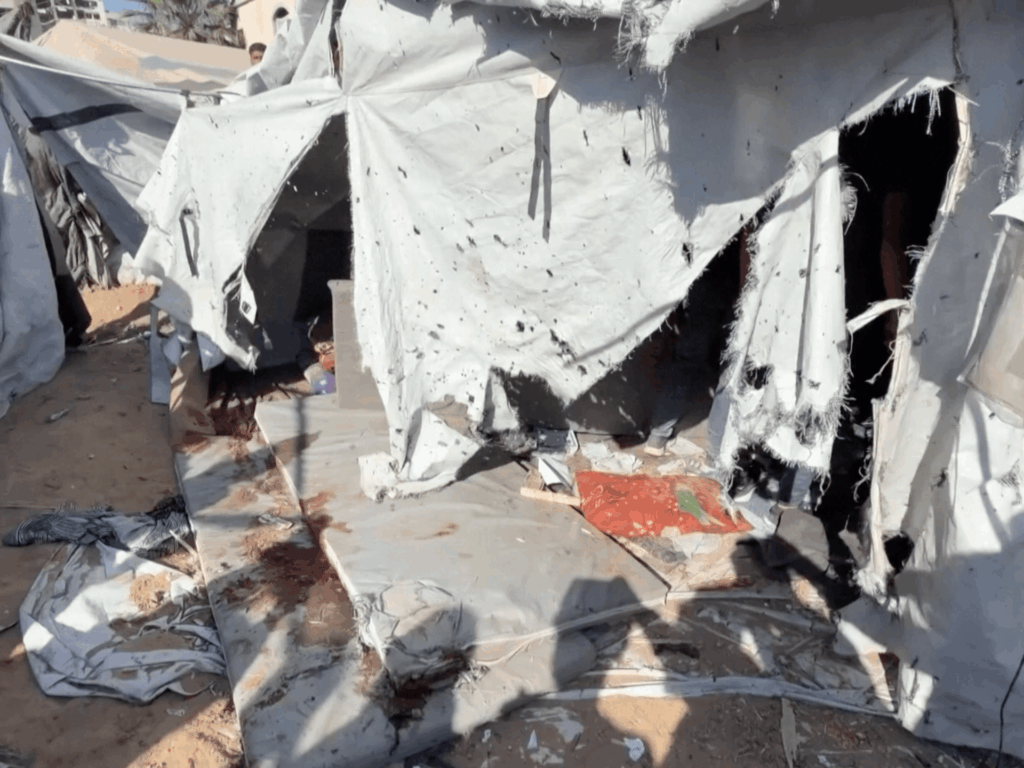
A recent Israeli attack on a tent camp in Gaza City has tragically resulted in the deaths of several Palestinians. The strike targeted a densely populated area where many families were living in temporary shelter, highlighting the ongoing conflict’s severe impact on civilian populations.
The incident has drawn widespread condemnation from international observers and human rights organizations, emphasizing the urgent need for measures to protect non-combatants in conflict zones. Gaza City, long a focal point of tension between Israeli forces and Palestinian groups, has witnessed repeated bouts of violence, with civilian areas frequently caught in the crossfire.
Eyewitnesses report that the attack occurred without warning, leaving residents little time to seek safety. The affected tent camp housed displaced families, many of whom had fled previous outbreaks of violence in other parts of Gaza. The destruction of their shelters has compounded the humanitarian crisis in the region, worsening shortages of food, water, and medical supplies.
Israeli military officials have stated that the strike was aimed at militant targets within the camp; however, the high number of civilian casualties has sparked fierce debate about the proportionality and legality of the operation. International law mandates that all parties in a conflict take precautions to avoid civilian harm, a principle critics argue was not upheld in this instance.
The United Nations has called for an immediate investigation into the attack, urging all parties to exercise restraint and prioritize the protection of civilians. Meanwhile, humanitarian agencies are mobilizing to provide emergency aid to survivors, who face dire conditions amid the rubble.
This latest attack underscores the persistent volatility in the Gaza Strip and the urgent need for renewed diplomatic efforts to end the cycle of violence. Peace advocates warn that without a comprehensive political solution, such tragedies are likely to continue, exacerbating regional instability and suffering.
Efforts to facilitate dialogue between Israeli and Palestinian leaders have gained momentum in recent months but remain fragile. Many hope that increased international engagement can help break the deadlock, promote mutual understanding, and ultimately prevent further bloodshed.
The devastation at the Gaza City tent camp is a stark reminder of the human cost of conflict and the imperative for all involved to redouble their commitment to peace and the protection of innocent lives.
As investigations proceed and aid reaches those in need, the world watches with a heavy heart, hoping for an end to the violence and a future where such tragedies become a thing of the past.