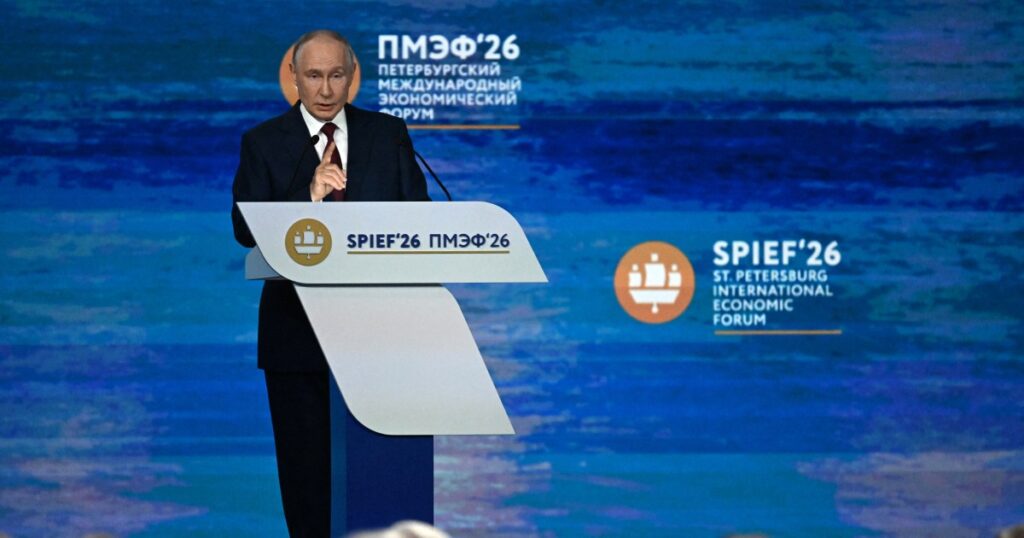
In a recent statement, Russian President Vladimir Putin declared that there is ‘no point’ in meeting with Ukrainian President Volodymyr Zelenskyy for the time being. Putin emphasized that Russia’s military operations against Ukraine will persist until Moscow’s strategic objectives are fully achieved.
The war in Ukraine has been ongoing for over a year, marked by intense fighting and significant geopolitical tensions. While several diplomatic efforts have been made to de-escalate the conflict, progress has been slow and fragile. Putin’s remarks indicate a firm stance from Russia, signaling no immediate willingness to engage in high-level dialogue with Kyiv under the current circumstances.
Putin’s assertion that military action will only cease once Russia’s goals are met sheds light on Moscow’s broader ambitions in the region. Observers note that this position underscores Russia’s commitment to its objectives, which are often viewed as the reclamation or control of contested territories within Ukraine.
The international community has expressed concern over the prolonged conflict’s human and economic toll, urging both sides to pursue negotiations. However, Putin’s comments suggest that Russia is not currently inclined to compromise or halt its campaign prematurely.
Ukraine, led by President Zelenskyy, has repeatedly called for diplomatic talks to end hostilities and restore peace. Yet, with Putin dismissing the notion of talks at this juncture, the prospects for near-term negotiations appear bleak.
Analysts point out that the impasse could lead to further destabilization in Eastern Europe, with the potential for escalation if diplomatic channels remain closed. European nations and allies continue to monitor the situation closely, providing support to Ukraine while advocating for dialogue.
Putin’s stance reflects a broader narrative within Russian leadership that military strength is essential to securing the nation’s interests. The continuation of operations indicates Moscow’s readiness to sustain the conflict until their conditions are met.
Meanwhile, humanitarian concerns rise as civilian populations in affected regions endure ongoing violence and displacement. International aid organizations call for increased efforts to protect vulnerable communities amid the conflict.
The statement also illustrates the complexities of conflict resolution in the region, where territorial, political, and historical factors intertwine, complicating peace efforts.
As the situation evolves, stakeholders worldwide watch closely for any shifts in policy or breakthroughs in diplomacy, though current indications from Putin suggest a prolonged standoff.
The future of Russia-Ukraine relations remains uncertain, with Putin’s comments reinforcing a cautionary outlook on immediate peace prospects. Both nations continue to brace for the consequences of sustained confrontation.