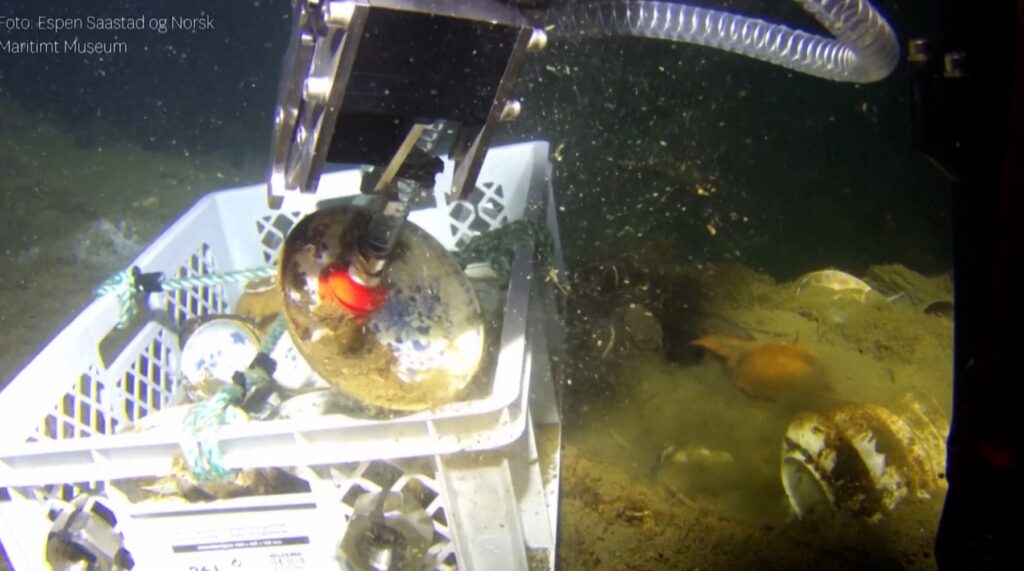
In an exciting archaeological discovery off the southern coast of Norway, a team of experts has successfully salvaged an 18th-century shipwreck, unveiling a treasure trove of artifacts that provide a glimpse into historical trade and cultural exchanges. Among the recovered items are exquisite pieces of Chinese porcelain and European goods, including a stunning chandelier, which underscore the extensive maritime networks of the era.
The shipwreck, dating back to the 1700s, was discovered through marine surveys and painstaking underwater excavation efforts. Archaeologists meticulously recovered the artifacts, which have since been preserved for further study and display. The Chinese porcelain found on the wreck is particularly notable for its fine craftsmanship and vibrant glazing, emblematic of the era’s luxury goods traffic between Asia and Europe.
The presence of European items, such as the ornate chandelier, illustrates the blend of cultural influences that these trading vessels carried across the seas. This discovery highlights the significant maritime routes that connected continents and facilitated the exchange of goods, ideas, and artistry during the 18th century.
Experts believe the ship may have been part of a larger fleet involved in international trade, navigating the treacherous waters of the North Sea. The recovered porcelain and European artifacts are invaluable for historians and archaeologists seeking to better understand the economic and cultural dynamics of this period.
The Norwegian Directorate for Cultural Heritage praised the salvage operation, emphasizing the collaborative efforts of archaeologists, divers, and conservation specialists. They noted that the preservation of these fragile items opens new avenues for public education and engagement with Norway’s rich maritime history.
Plans are underway to exhibit the artifacts in museums, allowing visitors to admire these rare pieces and learn about the fascinating story of the ship and its cargo. This remarkable find not only expands our knowledge of 18th-century naval commerce but also celebrates the enduring connections forged by maritime exploration and trade.
As the investigation continues, researchers hope to uncover more insights about the ship’s journey, its crew, and the broader historical context, shedding light on a vibrant chapter of Norway’s past. The successful salvage of this shipwreck serves as a testament to the dedication and expertise of those committed to preserving our shared heritage beneath the waves.