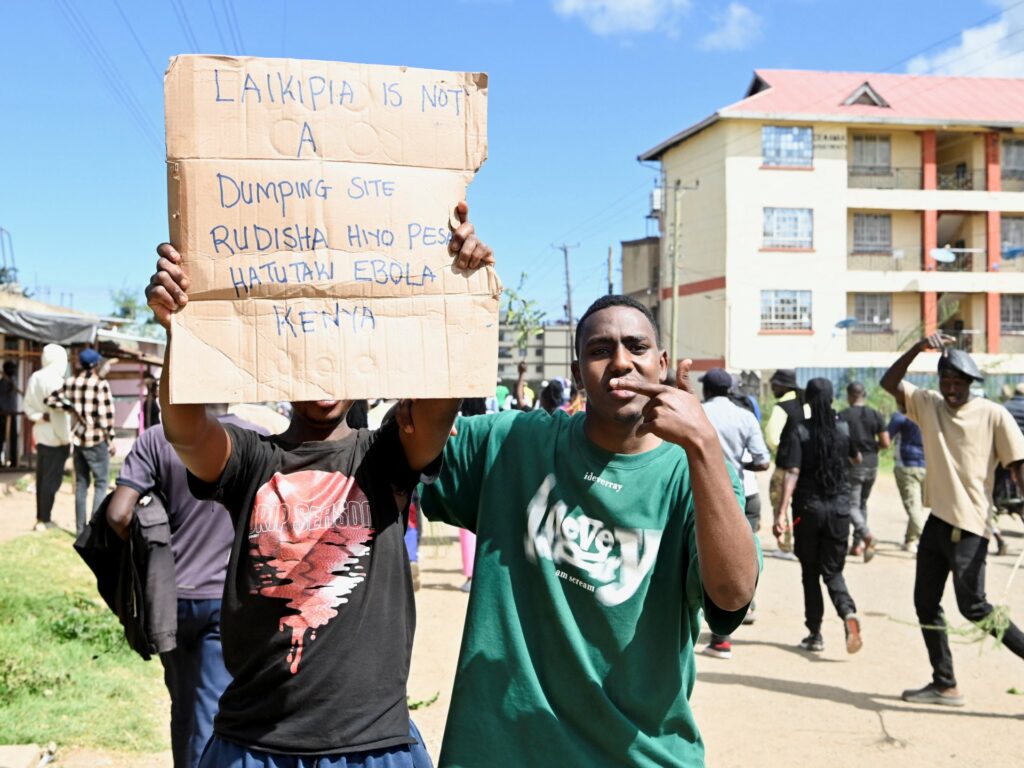
In central Kenya, a wave of protests has erupted as hundreds of locals gathered to oppose a US-funded initiative aimed at establishing a quarantine center for Americans exposed to the Ebola virus. The plan, which involves setting up a facility to isolate and monitor American citizens who might have come into contact with the highly contagious virus, has sparked significant public backlash.
The protests highlight growing tensions between community members and foreign health initiatives in the region. Many Kenyans expressed concerns over the quarantine center being located in their area, fearing that it could increase the risk of Ebola spreading locally, despite assurances from health officials and international organizations about the strict safety and containment measures planned for the facility.
Opponents of the project argue that the quarantine center could lead to stigmatization and discrimination against the local population, as well as possible disruptions to their daily lives and economic activities. They question the transparency of the project and the extent of community involvement in the decision-making process.
Supporters of the centre point to the importance of such facilities in managing outbrakes and protecting both local and international communities from Ebola, which has been a severe public health issue in parts of Africa. The US has committed funding and expertise to help curb the spread of the virus and improve epidemic preparedness in vulnerable regions.
The Kenyan government has attempted to mediate the situation by engaging with community leaders and health experts to address concerns and provide clear information about the quarantine centre’s operation and safety protocols.
Ebola is a viral hemorrhagic fever that can cause severe illness and death if untreated. It has sparked outbreaks in various African countries in recent decades, prompting international responses aimed at containment and care. Quarantine centres play a critical role in isolating potentially infected individuals to prevent wider transmission.
This protest is a reflection of broader challenges faced when implementing health interventions that involve foreign aid and international cooperation in regions where fear, misinformation, and historical distrust may be prevalent. It underscores the necessity of involving local communities fully and transparently in health projects.
Moving forward, dialogue between the US, Kenyan authorities, and community representatives will be crucial in finding a solution that balances public health priorities with local concerns. The success of the Ebola response program depends on building trust, ensuring safety, and fostering cooperation at all levels.
As the situation develops, the international health community continues to monitor the outbreak risks closely and supports initiatives aimed at strengthening healthcare infrastructure and epidemic response capabilities in affected areas.