Tensions in the Middle East have escalated dramatically following a series of military actions between Iran’s Islamic Revolutionary Guard Corps (IRGC) and the United States. The IRGC has launched a retaliatory strike in response to recent US attacks, marking another heightening in conflict that has drawn international concern.
The retaliatory strike executed by the IRGC reportedly involved missile and drone operations targeting US interests in the region. This move comes after the US conducted attacks, which Iran has condemned as aggressive and provocative. The specific details of the US actions leading to this response have not been fully disclosed, adding to the ambiguity surrounding the current situation.
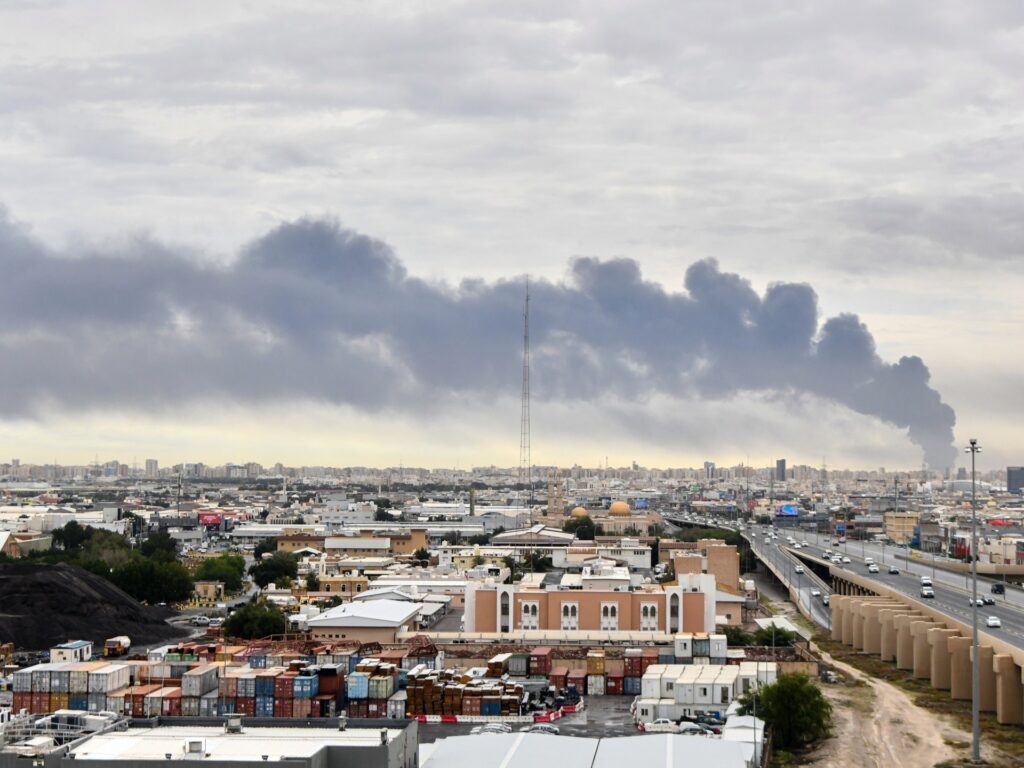
Kuwait, a key regional player and host to US military forces, reported the activation of its defense mechanisms amid this tense atmosphere. Kuwaiti officials confirmed that their air defense systems successfully intercepted a number of missiles and drones that breached their airspace. This was accompanied by widespread sirens and heightened alerts across the country, signaling the seriousness of the threat.
The interception of these projectiles by Kuwait underscores the risky spillover effects the conflict could have on neighboring countries. As a host nation of US troops, Kuwait finds itself in a precarious position, balancing its strategic alliances with the necessity to protect its own sovereignty and civilian population.
Analysts suggest that the IRGC’s retaliatory action could be aimed at deterring further US military interventions and sending a clear message about Iran’s defensive capabilities. The use of both missiles and drones showcases Tehran’s increasing reliance on diverse military technologies to counterbalance the superior firepower of the US.
International reactions have so far called for de-escalation and dialogue to prevent a broader conflict. The United Nations and other global entities have urged restraint from all parties against a backdrop of rising hostilities.
This latest episode is part of a long-standing and complex conflict marked by proxy wars, sanctions, and military confrontations between the US and Iran. The involvement of regional players like Kuwait highlights the wider implications for Middle Eastern stability and global security.
Moving forward, the situation remains volatile with the potential for further exchanges that could escalate into larger scale military engagements. Diplomatic efforts will be crucial to navigate this precarious time and to seek a peaceful resolution to the ongoing strife.