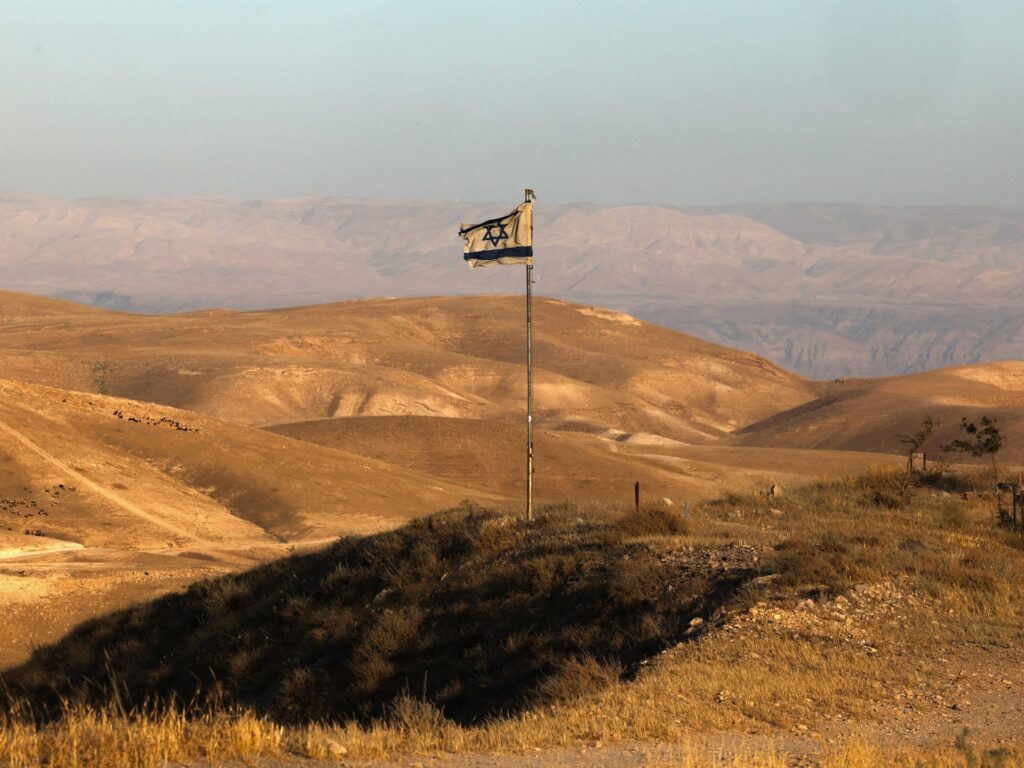
A newly introduced digital register of land ownership in the West Bank by Israel is drawing sharp criticism and is viewed by many as a dangerous escalation of its occupation. This digital register is intended to catalog land ownership in the region, which has been a contentious and highly sensitive issue amid the ongoing Israeli-Palestinian conflict.
The West Bank, home to a significant Palestinian population, has long been a disputed territory with complex legal and political claims. Israel’s move to establish a digital land register is seen by critics as a strategic tool that could further entrench Israeli control over the occupied territory.
Palestinian groups, international observers, and rights organizations warn that this digital register could facilitate the appropriation and formalization of land confiscations, making it easier for Israeli authorities to claim ownership rights over Palestinian property. They argue that this represents a form of digital colonization, embedding Israeli influence deeper into the administrative and legal frameworks governing the West Bank.
This digital system is not just an administrative update but a significant political act. By digitizing the land records, Israeli authorities could potentially streamline the process of transferring land rights, which may accelerate settlement expansions—a highly controversial and internationally criticized aspect of Israel’s presence in the West Bank.
The international community has consistently called for a halt to settlement activities, citing that they violate international law and hinder the prospects for peace. The digital land register is perceived as contravening these calls, reinforcing a narrative that sees Israel’s occupation strategy as increasingly sophisticated and technologically advanced.
While Israel claims the register is meant to clarify and secure land ownership, Palestinians see it as a mechanism to legitimize and perpetuate their dispossession. The move might also impact future negotiations, as clearly documented land ownership could influence claims and disputes, potentially disadvantaging Palestinian claims to their ancestral lands.
Legal experts emphasize that land ownership in the West Bank is a highly complex issue, compounded by varying laws from Ottoman, British Mandate, Jordanian, and Israeli authorities. The digital register could simplify these complexities in a way that favors Israeli legal interpretations.
Critics argue that the technology-driven approach does not address underlying issues of occupation, discrimination, and lack of Palestinian sovereignty. Instead, it could deepen disparities and further marginalize Palestinian communities.
Human rights organizations are calling for transparency and international oversight concerning the digital land register’s implementation. They stress that any process impacting land rights must respect Palestinian legal claims and be in compliance with international humanitarian law.
This development highlights the evolving nature of the Israeli-Palestinian conflict, where digital tools and technological means are increasingly employed in ways that have meaningful political and social repercussions.
In summary, Israel’s digital land register in the West Bank is more than a bureaucratic measure; it is perceived as a calculated move that consolidates control, challenges Palestinian land rights, and represents an advanced phase of occupation. The controversy surrounding the register underscores the ongoing tensions and the complex interplay between technology, law, and territorial disputes in this historically fraught region.