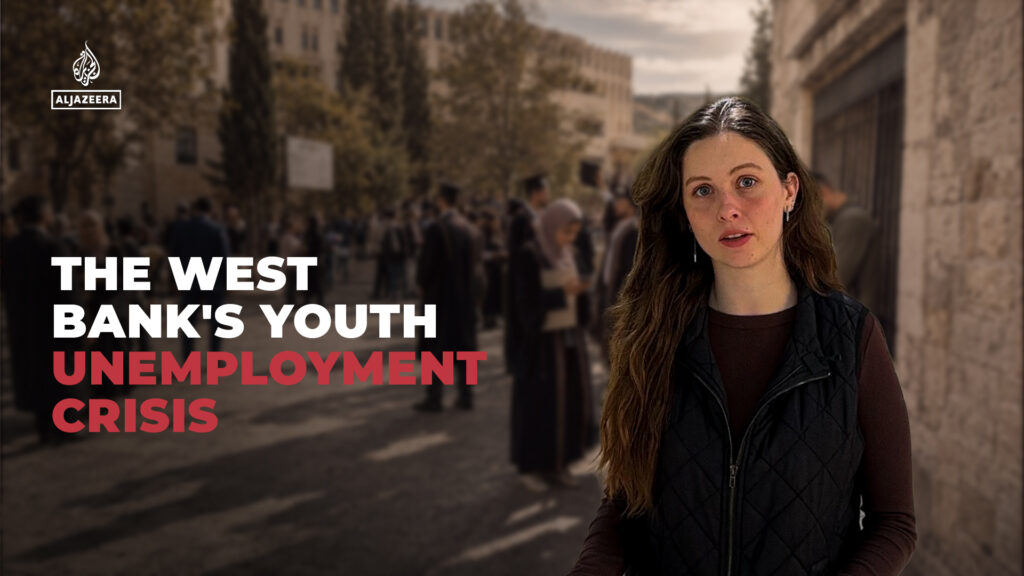
Youth unemployment in the West Bank has become a critical issue affecting the region’s socio-economic stability and the future of its young population. Despite the talent and ambition of many young individuals, the job market has failed to absorb them adequately, leading to soaring unemployment rates among the youth demographic.
Several factors contribute to this crisis, including political instability, restricted economic growth, limited access to resources, and a constricted labor market due to ongoing conflicts and restrictions. The West Bank, a Palestinian territory with a predominantly young population, faces unique challenges that exacerbate unemployment. Young people in the region often find themselves caught between insufficient educational opportunities and a lack of job prospects that match their skills.
The unemployment rate among youth in the West Bank is estimated to be significantly higher than global averages, with estimates often exceeding 40%. This high rate is alarming, considering that youth represent a large portion of the population and are essential for driving future economic progress.
Education systems in the West Bank have struggled to adapt to market needs, resulting in a mismatch between graduates’ skills and employer demands. Many young people graduate with degrees that do not translate into available or sustainable job opportunities. Technical and vocational training programs, which could offer practical skills, remain under-resourced and underdeveloped.
Political factors such as Israeli occupation and movement restrictions further hinder economic development. Checkpoints, barriers, and limited access to markets restrict enterprise growth and employment creation. Additionally, frequent political uncertainty discourages foreign investment and stifles entrepreneurship among West Bank youth.
The consequences of youth unemployment extend beyond just economic hardship. High levels of idle youth contribute to social frustration and can heighten tensions and instability in the region. Without sufficient employment opportunities, many young people face diminished hopes for a secure and prosperous future, which can lead to increased migration, social unrest, or even radicalization.
Several initiatives have been launched by local organizations, international bodies, and NGOs aimed at addressing youth unemployment. These programs focus on skills development, entrepreneurship encouragement, and providing platforms for young people to connect with job opportunities. Nonetheless, sustainable progress requires coordinated efforts between Palestinian authorities, international donors, and private sector partners to create a more conducive environment for economic development.
Investment in education reform tailored to market needs, infrastructure improvement, and easing movement restrictions could significantly improve the youth employment landscape. Furthermore, encouraging innovation and enterprise within the youth community may foster job creation and economic resilience.
Addressing the youth unemployment crisis in the West Bank is not only vital for the region’s stability but also for ensuring the potential of its young population is fully realized. Supportive policies, comprehensive reforms, and targeted investments are essential to unlocking economic opportunities for the youth of the West Bank and securing a more prosperous future for the entire region.