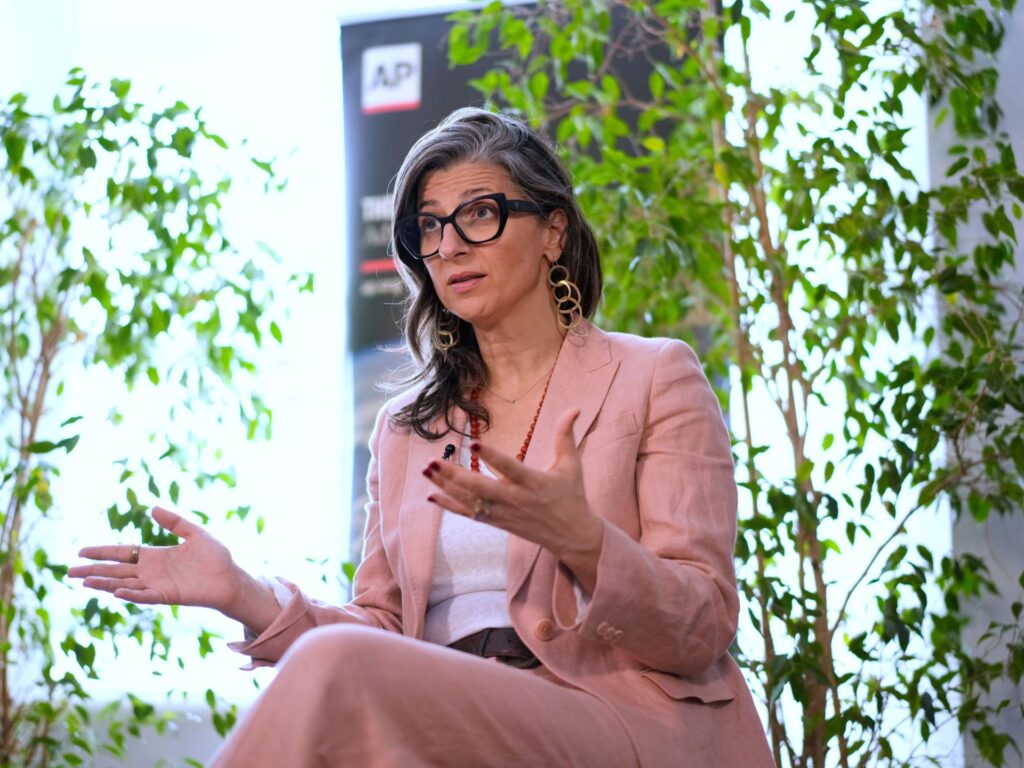
In a contentious move, the United States government has returned Francesca Albanese, a Palestinian rights expert, to its sanctions list. This decision reflects a broader pattern under recent administrations, particularly the Trump administration, to exert pressure on international officials who critically examine alleged abuses by Israeli forces in Palestinian territories.
Francesca Albanese is an esteemed expert known for her work focusing on human rights issues in the Palestinian territories. Her investigations and reports have often highlighted concerns regarding Israeli military operations and their impacts on Palestinian civilians. Her reinstatement to the sanctions list has sparked significant debate within international human rights circles and diplomatic arenas.
The sanctions list, managed by the US Treasury Department, includes individuals and entities subject to various restrictions, such as asset freezes and travel bans, deemed by the US government to have acted against American interests or international norms as interpreted by Washington. Albanese’s inclusion marks a signal of disapproval ostensibly linked to her scrutiny of Israeli policies.
Experts and advocates for Palestinian rights argue that targeting Albanese undermines the important work of monitoring human rights and stifles accountability. They see the move as part of an ongoing effort to silence voices that raise critical issues about Israel’s military conduct and its effects on local populations.
The Trump administration notably intensified these efforts by applying economic and diplomatic pressures on international figures who investigated alleged human rights abuses by Israeli forces. This strategy has continued under subsequent administrations to varying degrees, reflecting geopolitical sensitivities and the complex US-Israel relationship.
Supporters of the US government’s decision contend that scrutiny of Israeli military actions should consider wider security contexts and accuse critics of bias. They argue that sanctions are a legitimate tool for responding to individuals whose activities are perceived as harmful to diplomatic alliances and national interests.
Despite the controversy, Albanese remains an influential figure in the field of international human rights, widely respected for her thorough investigations and commitment to justice for Palestinian communities. Her situation highlights the tension between national policy objectives and international human rights advocacy.
International organizations and some UN officials have expressed concern over the implications of sanctioning human rights experts. They warn that such measures could discourage open and transparent investigations essential for peace-building and conflict resolution.
The US decision raises questions about the future of human rights work in geopolitically sensitive regions and the protection of experts who expose abuses irrespective of their political ramifications. It also brings to light the ongoing challenges facing Palestinian rights advocacy amid fraught regional conflicts.
As the global community watches closely, the repercussions of this move will likely resonate beyond US borders, influencing diplomatic relations, international human rights law, and efforts to hold all parties accountable in the Israeli-Palestinian conflict.
In summary, the reinstatement of Francesca Albanese to the US sanctions list exemplifies the delicate intersection of international human rights monitoring and national political strategies. It underscores the complexity of advocating for Palestinian rights within a highly polarized and contested global environment.