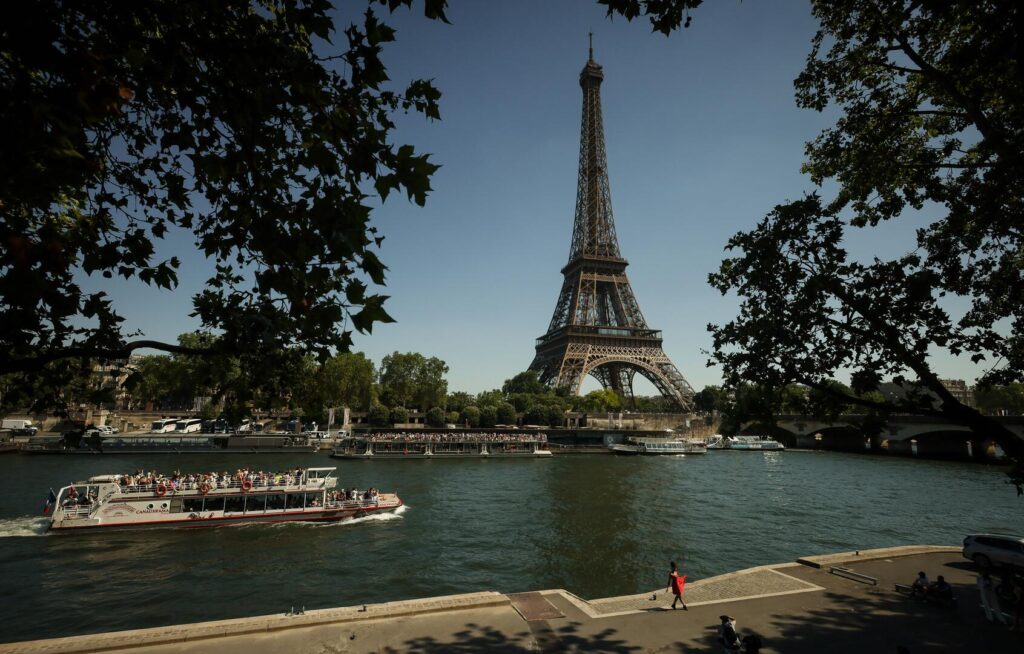
A tourist boat passes by the Eiffel Tower during a sunny day in Paris, Wednesday, May 27, 2026. (AP Photo/Thomas Padilla)
Europe is currently experiencing an unprecedented heatwave that has pushed temperatures to record highs, affecting millions across the continent. Amid this intense heat, the residents of Paris have been seeking relief from the soaring temperatures in any way they can. Despite official bans on swimming in urban waterways, Parisians have flocked to the Saint-Martin canal, a popular spot in the city, to cool off and find some respite from the sweltering weather.
The heatwave sweeping across Europe has led to warnings from meteorological agencies and authorities urging people to stay indoors, hydrate, and avoid physical exertion during peak heat hours. However, the extreme conditions have made these recommendations challenging to follow fully. Temperatures in Paris and across France have climbed well above seasonal averages, reaching levels that have not been seen in decades.
The ban on swimming in city canals like Saint-Martin is primarily for safety reasons, including concerns about water quality and the risk of accidents in urban waterways. Despite these warnings, many locals and tourists alike have ignored the prohibitions, choosing the canal as a seemingly convenient and accessible means to beat the heat.
City officials have expressed concern over this trend, emphasizing the risks of swimming in unauthorized areas. They have also reiterated calls for public compliance with health and safety guidelines to prevent accidents and health emergencies during the heatwave. Additionally, emergency services remain on alert to respond quickly to any incidents resulting from the heat or unauthorized swimming.
The phenomenon of urban residents resorting to unconventional methods to cool down during extreme heat underscores the severity and impact of climate change on daily life. This heatwave has also triggered wildfires in several regions, strained power grids due to increased air conditioning use, and posed significant health risks, particularly to vulnerable populations such as the elderly and children.
In response to the heatwave, various European cities have opened cooling centers, distributed water, and implemented other measures to mitigate the effects of the heat. Public health campaigns emphasize staying hydrated, wearing light clothing, and checking on neighbors and family members who may be at increased risk.
The scene at the Saint-Martin canal captures a vivid image of how urban landscapes and residents adapt to environmental challenges, sometimes pushing against regulatory boundaries in the search for comfort and survival. As climate change continues to drive extreme weather events, cities will need to invest further in heat mitigation strategies and public education.
Meanwhile, Parisians swimming against the ban is a stark reminder of the immediate human impact of the climate crisis and the urgent need for comprehensive measures to address global warming and protect public health.
In conclusion, the record-breaking heatwave in Europe has not only tested infrastructure and emergency preparedness but also highlighted the lengths to which people will go to find relief. The situation in Paris’ Saint-Martin canal epitomizes the clash between natural human needs and regulatory frameworks in the face of climate extremes. Going forward, balancing safety with adaptive responses will be crucial as such heatwaves may become more frequent and intense.