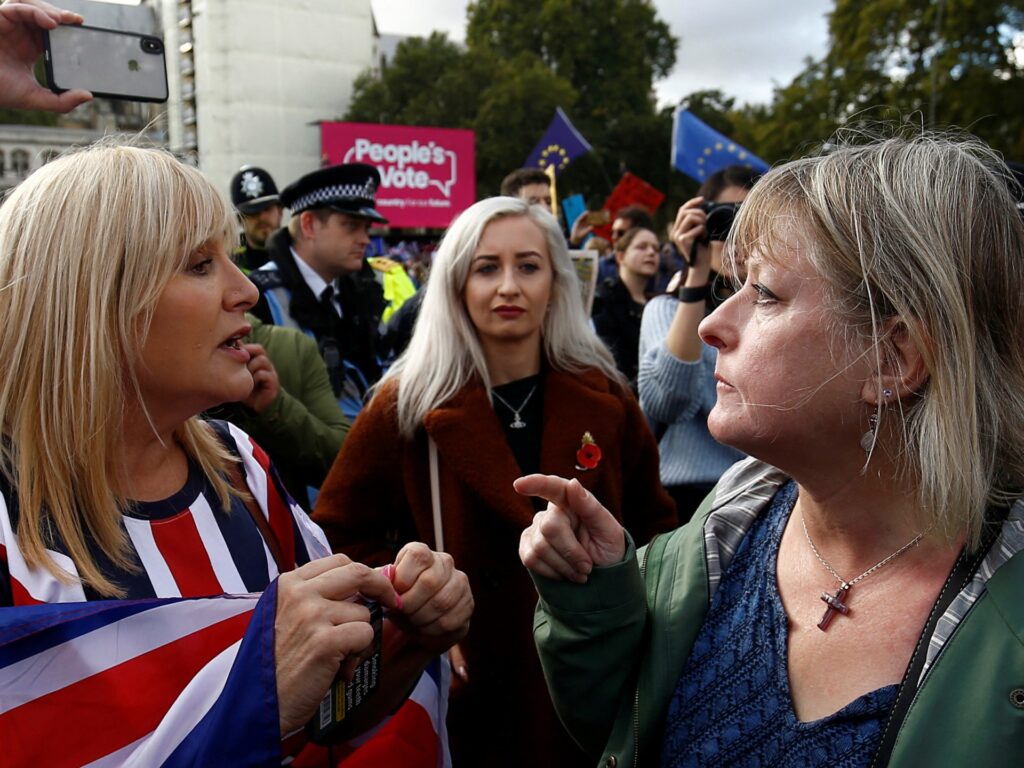
In recent political developments in Britain, the issue of Brexit has resurfaced as a significant point of debate amid shifts in the power dynamics surrounding Prime Minister Keir Starmer. Starmer, who leads the Labour Party, has found his hold on power increasingly tenuous in the face of emerging political challenges. His current stance indicates a promise to strengthen ties with the European Union, marking a notable shift towards rapprochement after years of Brexit-related divisions.
The political landscape is further complicated by the rise of the eurosceptic Reform Party. This party’s growing popularity signals a shift in public sentiment towards skepticism about the EU, challenging the mainstream parties’ policies and rhetoric about Britain’s relationship with Europe. Reform’s ascent is putting additional pressure on Starmer and his administration, threatening to pull political discourse further towards nationalist and eurosceptic positions.
Brexit has remained a deeply polarizing issue in Britain since the 2016 referendum. The exit from the EU redefined the nation’s economic and political trajectories, with ongoing debates about trade, sovereignty, immigration, and regulatory autonomy. Starmer’s recent push to strengthen EU ties indicates a strategic attempt to stabilize Britain’s position and possibly mend the fractured relationship with European neighbors.
Meanwhile, the Reform Party’s eurosceptic platform resonates with voters disillusioned by what they perceive as inadequate benefits from EU membership or the post-Brexit outcomes. Their rise reflects a broader European trend where nationalist and eurosceptic parties gain ground amid economic uncertainties and identity politics.
The current political climate in Britain suggests a brewing contest over the country’s future orientation towards Europe. Starmer’s promise to mend EU relationships comes at a time when public opinion remains divided, and the political right wing, embodied by Reform, pushes for a hardline stance on sovereignty and national control.
Observers note that the renewed Brexit debate is not only a matter of foreign policy but also a reflection of internal power struggles within Britain. Starmer’s weakening grip on power demonstrates the precarious balance of political forces and the ongoing contest for the nation’s ideological direction.
As Britain navigates these turbulent waters, the coming months are likely to witness intensified debates in Parliament and public forums. How these debates evolve will significantly impact Britain’s economic policies, international relations, and domestic cohesion.
Ultimately, the Brexit question, far from being settled, continues to shape Britain’s political identity and strategic choices in an increasingly complex global environment. Starmer’s administration faces the dual challenge of managing internal dissent and responding to the electoral threats posed by eurosceptic factions like the Reform Party.