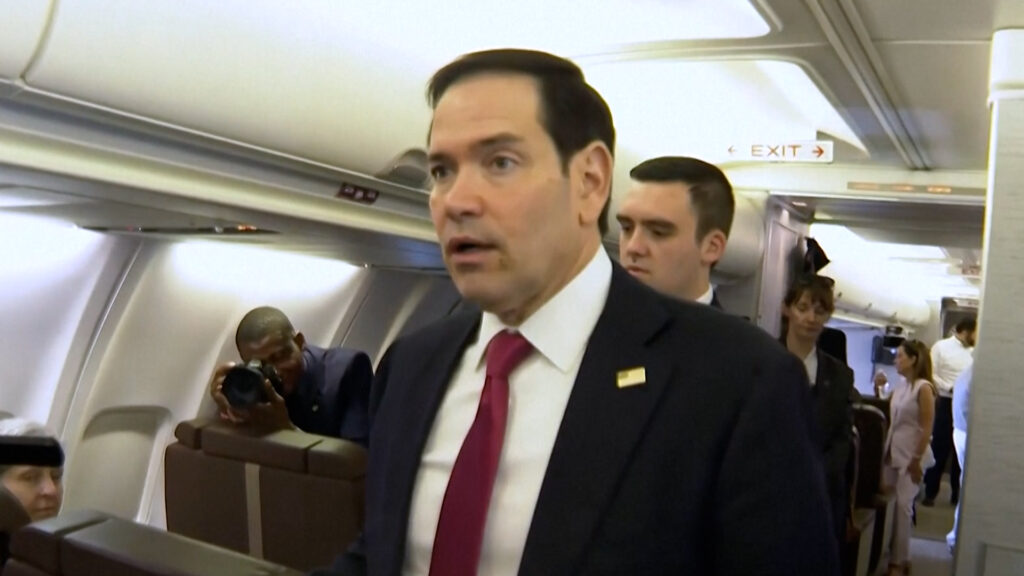
Senator Marco Rubio recently made a strong statement regarding the strategic Strait of Hormuz, declaring that it will be reopened “one way or the other.” The Strait of Hormuz is a critically important waterway through which a significant portion of the world’s oil supply passes. Its closure or blockage has far-reaching implications for global energy markets and international security.
Rubio’s comments come amid heightened tensions in the region, where conflicts and political disputes have threatened free navigation through this narrow passage. The senator’s declaration underscores the importance the United States places on maintaining open sea lanes for the transport of oil and other goods.
The Strait of Hormuz, located between the Persian Gulf and the Gulf of Oman, is a choke point for global energy shipments, with about 20% of the world’s petroleum passing through it daily. Any disruption can have immediate and severe consequences for global oil prices and supply stability.
While details of Rubio’s statement were not elaborated upon, the phrase “one way or the other” implies a determination to ensure passage regardless of the obstacles encountered. This could hint at diplomatic efforts, economic measures, or even military options to guarantee that the strait remains accessible.
The geopolitical landscape around the Strait is complex, involving key players such as Iran, whose naval activities have been a source of concern, and allies including the United States and Gulf Cooperation Council (GCC) countries committed to safeguarding this vital route.
Investors, governments, and international observers closely watch developments in the Strait of Hormuz due to its global economic significance. A prolonged closure would not only destabilize energy markets but might also escalate regional conflicts.
Rubio’s statement aligns with broader U.S. policy objectives aimed at maintaining a free and open Indo-Pacific region and supporting allies in countering coercive tactics.
In summary, Senator Rubio’s firm stance on reopening the Strait of Hormuz highlights the critical importance of this maritime chokepoint for energy security and regional stability. The international community continues to monitor the situation closely, hoping for peaceful resolutions that ensure the uninterrupted flow of crucial resources.