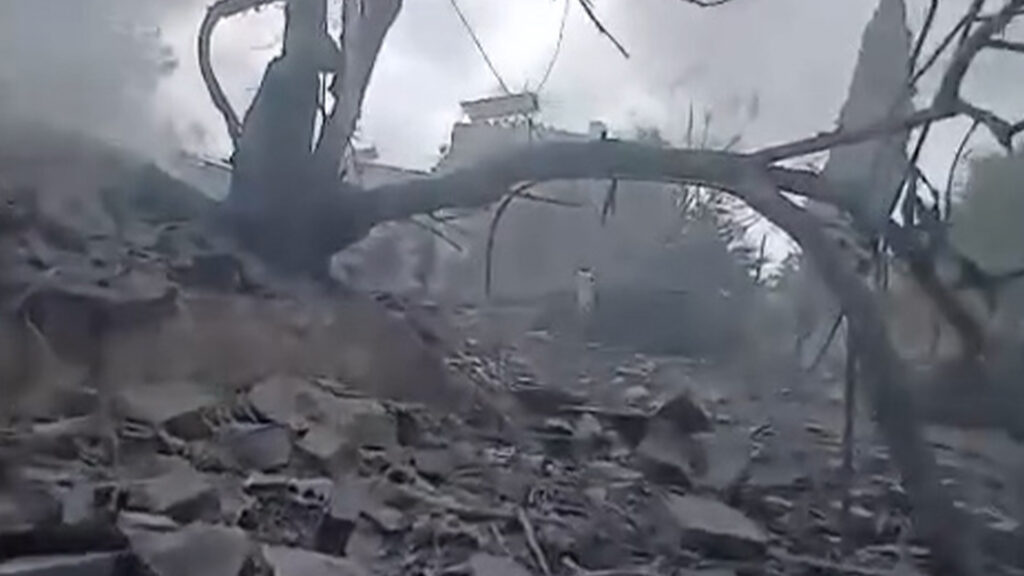
Newly released videos have brought to light the extensive destruction in the town of Maarakeh, situated in southern Lebanon, following a series of lethal Israeli air strikes. These strikes have had a profound impact on the local communities, leading to casualties and widespread damage to infrastructure.
Maarakeh, a town known for its peaceful residential neighborhoods, now shows scenes of devastation. Buildings that once housed families and businesses have been reduced to rubble. Roads and essential infrastructure, including water and electricity lines, have suffered significant damage, complicating relief efforts.
The Israeli military conducted these air strikes as part of its ongoing campaign targeting militant groups in southern Lebanon. Official statements assert that the raids aimed to neutralize threats along the border, but the aftermath has raised concerns about the humanitarian toll.
Local residents have reported an intense bombardment that began in the early hours, catching many off guard. Emergency services faced challenges accessing the hardest-hit areas due to debris and ongoing security concerns. The destruction has left many displaced, with families seeking shelter in schools and community centers.
Health officials warn of the growing need for medical supplies and personnel to treat the injured. Hospitals in the region are stretched thin, grappling with an influx of casualties resulting from the air strikes.
International observers and humanitarian organizations have called for immediate ceasefires to allow for humanitarian aid and reconstruction efforts. They emphasize the importance of protecting civilian lives and restoring essential services to prevent a broader crisis.
The strikes in southern Lebanon mark a significant escalation in the region, further destabilizing an already fragile peace. Political leaders in Lebanon have condemned the attacks, vowing to seek support from the international community.
As global attention focuses on the aftermath, new questions arise about the long-term implications for regional security and the prospects for renewed dialogue. The people of Maarakeh and surrounding areas face a challenging path to recovery, underscoring the urgent need for diplomatic efforts to prevent further violence.
In summary, the recent Israeli air strikes have left Maarakeh devastated, highlighting the human cost of ongoing conflicts in the region. The scars of this violence will likely influence the geopolitical landscape for months to come, making it imperative for all parties involved to pursue peaceful resolutions.