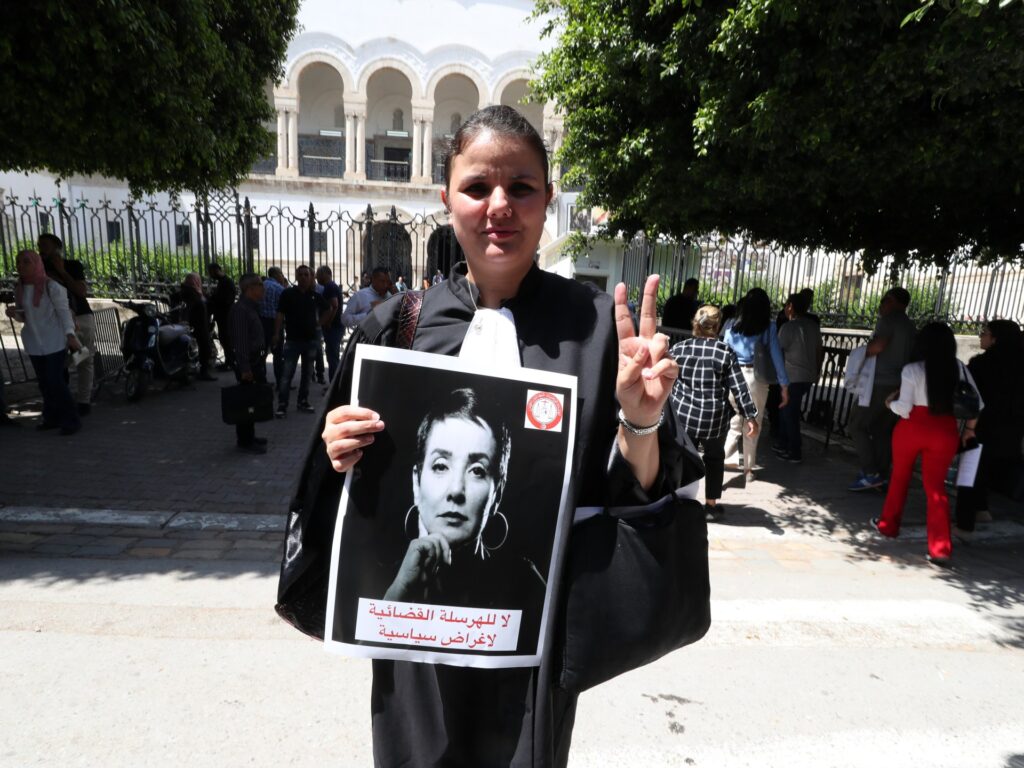
In a move that has drawn significant attention to Tunisia’s political climate, a Tunisian court has handed a new jail term to Sonia Dahmani, a vocal critic of President Kais Saied. This marks the second conviction for Dahmani this year, reflecting the growing intensity of President Saied’s crackdown on dissent and opposition voices within the country.
Sonia Dahmani, a prominent lawyer and outspoken critic, has been targeted amid a series of measures taken by President Saied to consolidate power since his rise to office. Her new conviction adds to the increasing concerns expressed by human rights organizations and international observers about the erosion of democratic freedoms in Tunisia.
The government’s aggressive stance against opponents has escalated since President Saied’s controversial political maneuvers, which include dissolving parliament and restructuring the judiciary, moves widely criticized as undermining the rule of law.
Legal experts note that Dahmani’s case highlights a broader pattern of judicial actions perceived as politically motivated, aimed at silencing dissent and curtailing freedom of expression in Tunisia. This development is part of a wider trend where lawyers, journalists, activists, and other critics face legal repercussions for speaking out against the current administration.
Supporters of Dahmani see the conviction as part of a campaign to intimidate and suppress dissenting voices, while government officials defend the legal proceedings as necessary measures to enforce the law and maintain national stability.
The international community has responded with a mix of condemnation and calls for Tunisia to uphold democratic principles, emphasizing the importance of preserving judicial independence and respecting human rights. Several organizations have urged President Saied’s administration to reconsider its approach and engage in dialogue with opposition groups.
The case of Sonia Dahmani is emblematic of the broader struggle within Tunisia as the nation grapples with balancing national security and political order against the fundamental rights of freedom of speech and political participation.
As the situation unfolds, the eyes of domestic and international stakeholders remain fixed on Tunisia, watching how President Saied’s government will navigate the challenges of governance in a deeply divided political landscape. The new jail term for Dahmani underscores a critical juncture in Tunisia’s democratic journey, raising pressing questions about the future of civil liberties in the country.