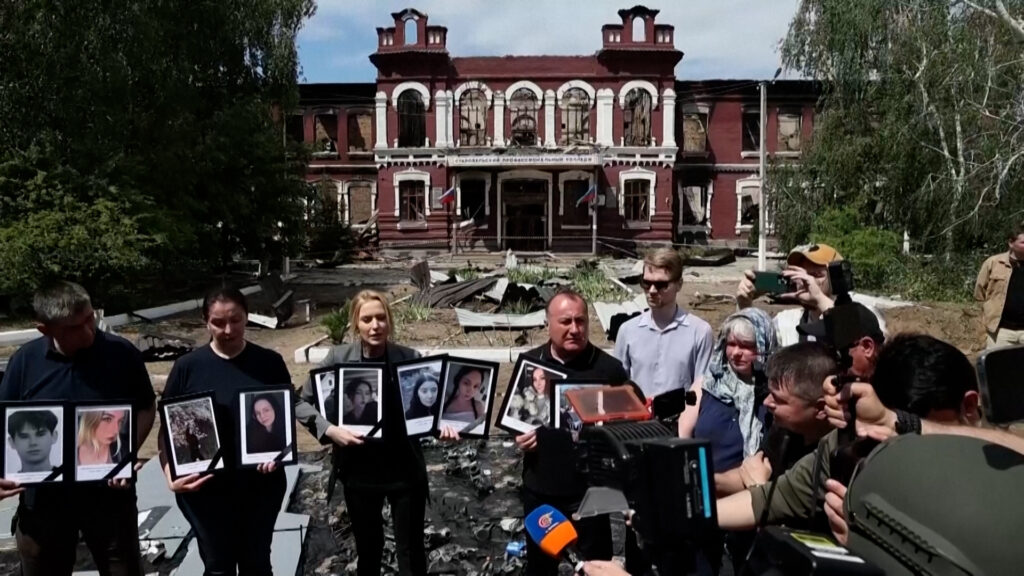
In a rare move, Russian authorities invited international media representatives to witness firsthand the aftermath of a deadly strike on a college in the occupied city of Luhansk. The strike, reportedly carried out by Ukrainian forces, caused significant damage to the educational institution, drawing widespread condemnation and highlighting the escalating conflict in the region.
The Russian government emphasized the destruction and casualties resulting from the strike as evidence of Ukrainian aggression. Visuals and reports from the scene depicted extensive damage to the college building, with debris scattered around and portions of the structure collapsed. Eyewitness accounts described the attack as sudden and devastating, disrupting the lives of students and staff members.
Luhansk, a city in eastern Ukraine, has been a focal point of conflict since 2014, following Russia’s annexation of Crimea and the outbreak of violence in the Donbas region. The area has experienced frequent skirmishes and military actions between Ukrainian forces and Russian-backed separatists.
This particular strike on the college has drawn international attention due to the involvement of an educational institution, raising concerns about the targeting of civilian infrastructure in the ongoing conflict. Human rights organizations and global leaders have expressed alarm over the increasing impact on civilians and called for restraint from all parties involved.
Russian officials used the media visit to underscore their narrative of Ukrainian provocations, aiming to sway public opinion and justify their continued military presence in the region. Ukrainian authorities have denied targeting civilian sites intentionally, attributing the damage to the fog of war and ongoing hostilities.
The incident highlights the complexities and human cost of the conflict, with civilians often caught in the crossfire. Reports indicate that several casualties resulted from the strike, though exact numbers remain unconfirmed due to limited access and ongoing security concerns.
International diplomatic efforts continue to seek a resolution to the conflict, with calls for negotiations and ceasefires. However, on-the-ground realities suggest that violence persists, complicating peace prospects.
The media coverage facilitated by Russia provides a glimpse into the physical and emotional toll experienced by communities in occupied Luhansk. It also serves as a stark reminder of the volatility of the region and the challenges faced by civilians amidst geopolitical tensions.
As the war continues, the world watches closely, hoping for a peaceful end to hostilities and the restoration of stability in eastern Ukraine. The strike on the Luhansk college is a somber chapter in a broader narrative marked by conflict, displacement, and the fight for sovereignty.