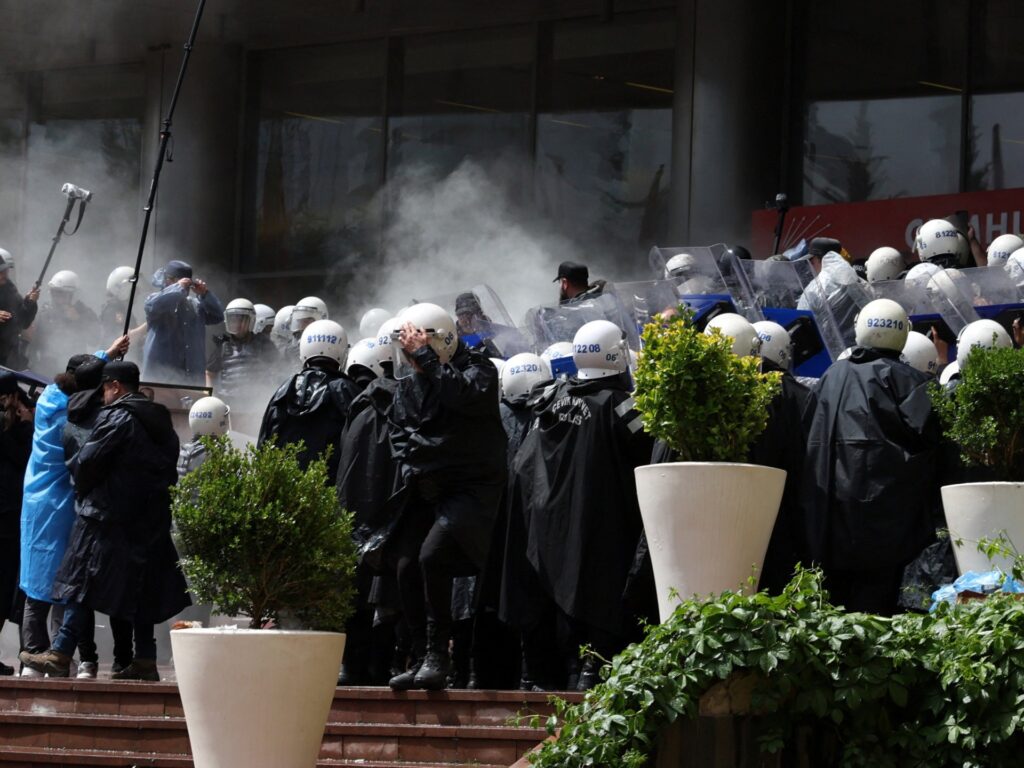
In a significant and alarming development in Turkish politics, police forces have stormed the headquarters of the main opposition party, the Republican People’s Party (CHP), in Ankara. This incident has sparked violence and heightened tensions within the nation.
The confrontation unfolded as security forces forcibly entered the CHP’s central office, a move that has been met with widespread condemnation and concern from politicians, activists, and citizens alike. The CHP, a major political entity with deep-rooted influence in Turkey’s political landscape, serves as a critical voice in opposition to the ruling government.
Eyewitnesses and party officials report chaotic scenes as officers clashed with party members and supporters present at the site. The exact reasons for the police action remain unclear, with official statements pending, but early reports suggest it may be related to political demonstrations or actions deemed unacceptable by authorities.
This incident marks a significant escalation in the political strife that has been simmering in Turkey. The CHP has historically advocated for secularism, democracy, and human rights and is often at odds with the ruling administration’s policies.
International observers and human rights organizations have expressed concern about the implications such confrontations have for democratic processes and civil liberties in Turkey. The violent storming of a political party’s headquarters is viewed by many as a violation of political freedoms and an undermining of democratic norms.
The Turkish public and global community are now awaiting further developments and official reactions as investigations into the reasons and repercussions of the police raid continue.
This event underscores the volatile nature of Turkey’s current political climate and raises urgent questions about the state of governance, freedom of expression, and the rule of law. As Turkey grapples with internal divisions, the ramifications of police intervention in opposition party activities could have far-reaching consequences for the nation’s democratic fabric and stability.