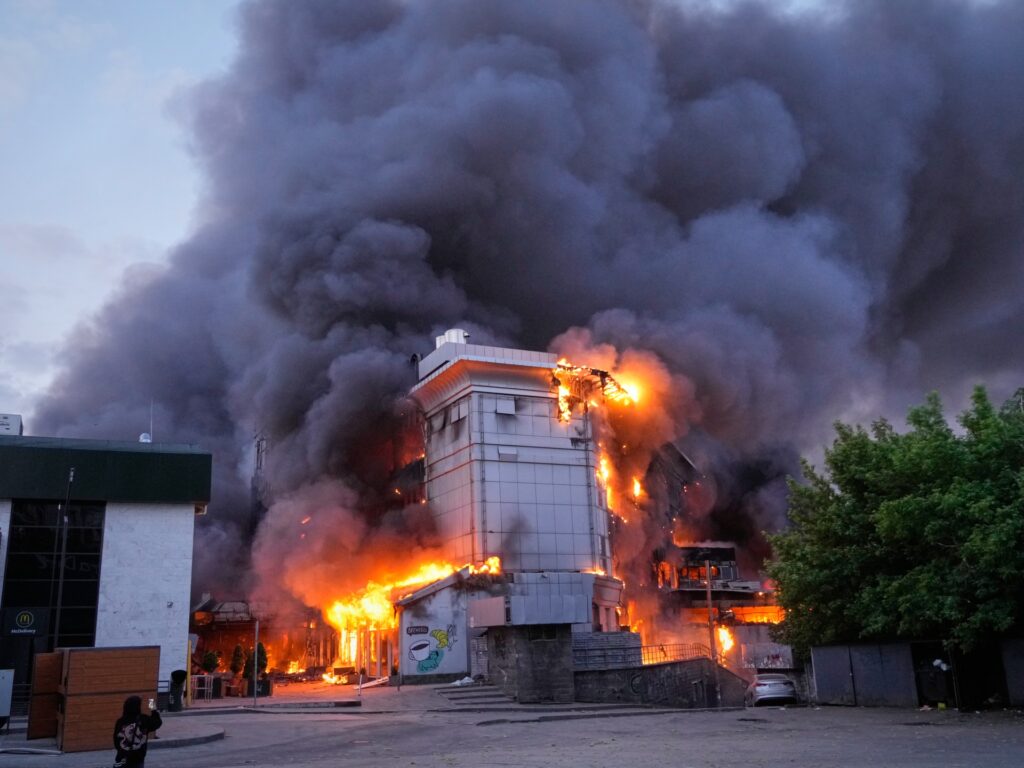
In a grave development amid ongoing conflict, Russian attacks on Ukraine’s capital, Kyiv, have resulted in the tragic loss of at least four lives. Two individuals were killed in Kyiv itself, while another two lost their lives in the surrounding Kyiv region. The assaults have not only caused fatalities but also widespread destruction, with damage reported to 40 different locations across the area.
These attacks mark a significant escalation in the conflict and highlight the vulnerability of the capital city and its surrounding regions. Residents experienced intense bombardments, which led to severe infrastructure damage including residential buildings, public facilities, and critical utilities.
Authorities and emergency services responded swiftly to the crisis, working under difficult conditions to provide aid and restore services. The incidents have sparked heightened alarm among international observers and have led to calls for increased humanitarian support and diplomatic efforts to de-escalate the violence.
This tragedy underlines the human cost of the conflict, affecting not only combatants but civilians who bear the brunt of warfare’s harsh realities. The Ukrainian government and international allies have condemned the attacks, vowing to pursue resilience and recovery measures in the aftermath.
Details about the specific targets and motivations behind this round of attacks are still under investigation. However, such strikes on civilian-populated areas raise serious concerns about compliance with international humanitarian laws.
In the broader context, these attacks are part of an ongoing struggle that has seen fluctuating intensity but persistent instability in the region. The global community remains attentive to developments, seeking pathways to peace and support for those affected.
As recovery efforts begin, the focus is on providing immediate relief to the victims and reinforcing the city’s defenses to prevent further casualties. The need for a sustainable resolution that addresses political and security dimensions of the conflict is more urgent than ever.
This latest violence serves as a poignant reminder of the fragile stability in the area and the dire need for concerted efforts to stop the suffering and move toward peace.