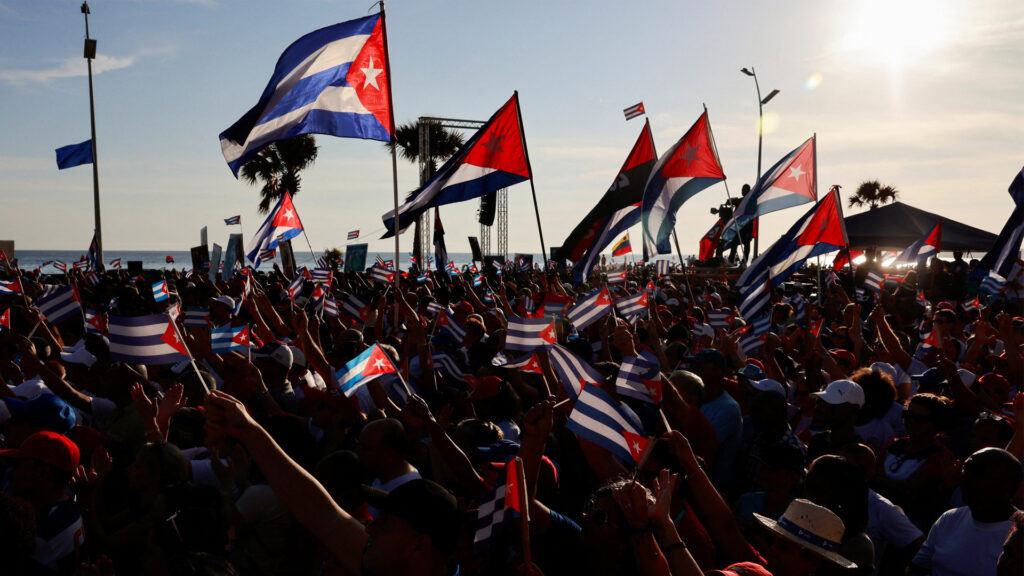
Thousands of Cubans gathered in Havana to demonstrate their support for Raul Castro, the former president and a prominent figure in Cuban politics. The protest took place outside the US embassy, marking a significant show of solidarity amidst recent tensions concerning a US indictment involving Castro. The demonstrators voiced their opposition to what they see as an unjust legal action against Castro by the United States, highlighting a broader sentiment of resistance against foreign interference in Cuba’s internal affairs. The rally drew a diverse crowd, including party members, local citizens, and supporters of the Cuban government, all united in their call for respect towards Cuba’s sovereignty and its leadership. The event underscored the enduring influence of the Castro family in Cuban society and politics, as well as the complex relationship between Cuba and the United States. While specific details about the indictment have not been publicly disclosed in full, the rally organizers emphasized the importance of national unity in the face of external pressures. Observers noted that such mass mobilizations are common in Cuba when there is perceived aggression or criticism from the US, reflecting longstanding historical and political tensions. The protest also served as a platform for various speakers who reiterated commitments to the Cuban revolution and criticized US policies. International reactions to the protest and indictment have varied, with some countries expressing support for Cuba’s stance against what they consider to be politically motivated charges. This incident adds to the ongoing narrative of strained US-Cuba relations, which have seen periods of both thaw and heightened tension over the past decades. The Cuban government has consistently condemned what it terms as hostile actions by the US, framing this latest indictment within that context. Activists and analysts alike are watching closely as the situation develops, with potential implications for diplomatic interactions and regional stability. Ultimately, the rally in Havana highlights a critical moment of nationalistic fervor and resistance to external influence, encapsulating the enduring legacy of the Castro leadership in shaping Cuba’s political landscape.