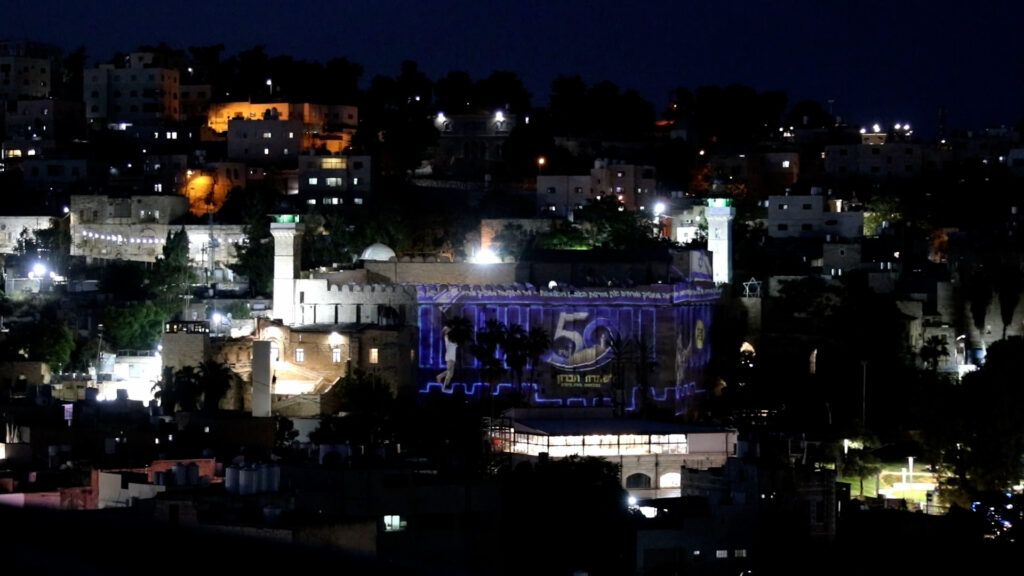
In a recent and highly provocative incident, the Ibrahimi Mosque in Hebron was illuminated with the colours of the Israeli flag, along with accompanying slogans. This event has sparked widespread condemnation from Palestinian officials who see this act as a disrespectful political statement targeting a significant religious and cultural site.
The Ibrahimi Mosque, also known as the Cave of the Patriarchs, holds profound religious significance for both Muslims and Jews, making the lighting particularly sensitive. Located in Hebron, a city in the West Bank with a complex history of Israeli-Palestinian tensions, the mosque is considered a sacred site and symbolizes a shared heritage.
Palestinian authorities strongly denounced the illumination, viewing it as an encroachment on their religious and cultural identity. They characterized the act as a deliberate provocation with the intent of asserting Israeli sovereignty over a contested location.
This move comes amid ongoing disputes over control and access to the site, which has been a flashpoint in the Israeli-Palestinian conflict. The area has witnessed several violent incidents and clashes in recent years, underscoring the deep-seated tensions associated with religious and territorial claims.
International observers and various human rights organizations have also raised concerns about the implications of such actions. They warn that politically charged displays at sacred sites risk inflaming existing conflicts and undermining efforts toward peaceful coexistence.
The Israeli officials have not publicly commented on the illumination, but such displays are often perceived as symbolic assertions of national identity and territorial claims. Critics argue that using a religious monument to project political messages compromises the site’s sanctity and can provoke sectarian unrest.
The illumination of the Ibrahimi Mosque in Israeli flag colours is more than just a visual spectacle; it is a potent symbol loaded with deep political and emotional resonance for both Israelis and Palestinians. The incident highlights the fragile nature of cultural and religious symbols in conflict zones and the importance of respecting shared heritage to foster peace.
As tensions remain high in Hebron and the broader region, this event serves as a stark reminder of the ongoing challenges in managing sacred spaces within a politically charged environment. Moving forward, both communities and international stakeholders face the critical task of ensuring that religious sites do not become arenas for political power plays, but rather places of mutual respect and understanding.