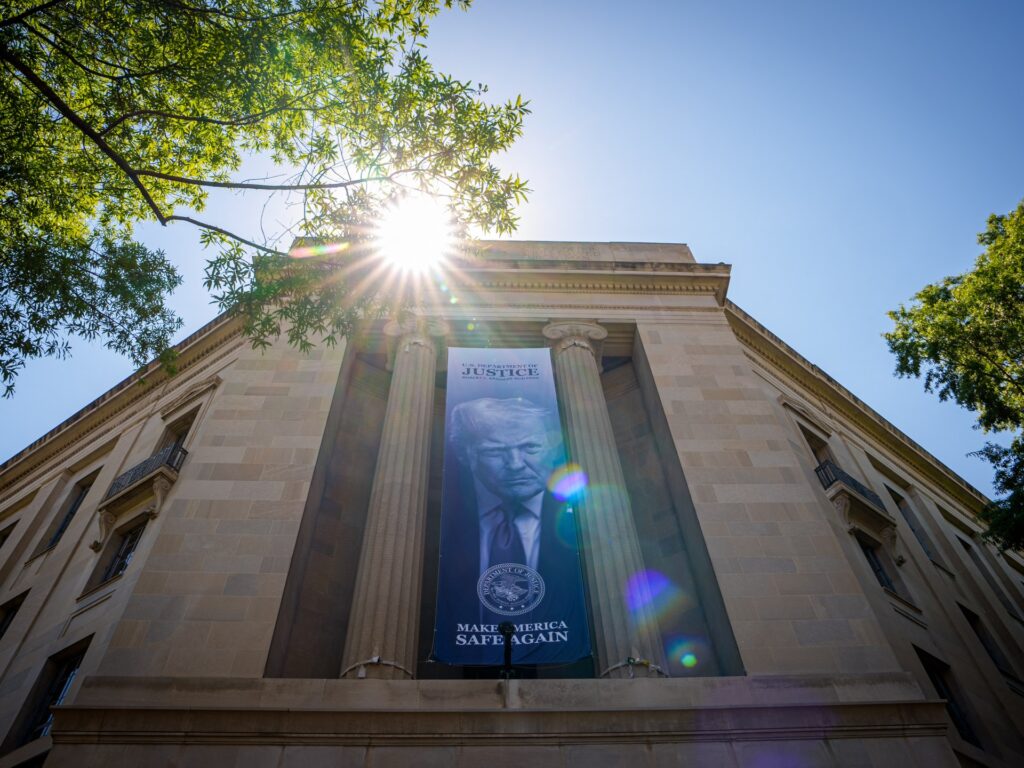
Two US police officers, Harry Dunn and Daniel Hodges, have filed a lawsuit against former President Donald Trump, challenging the establishment of a $1.8 billion fund intended to prevent the weaponisation of law enforcement resources. The officers argue that the fund, instead of serving its stated purpose, is likely to be used to “reward” rioters who participated in the attack on the US Capitol on January 6, 2021.
The fund was announced as part of a broader initiative aimed at ensuring law enforcement agencies across the country do not misuse their authority or equipment in ways that could compromise public safety and democratic processes. However, Dunn and Hodges contend that the fund could effectively provide financial incentives to individuals involved in violent protests against the government, thereby undermining the rule of law.
The lawsuit emphasizes that the fund might be diverted to benefit those who breached the Capitol, labeling it an inappropriate use of taxpayer dollars. By framing the money as “anti-weaponisation” funding, the administration intended to curb police misconduct and prevent state-level abuses of power, but the officers contend this approach mischaracterizes the issue and potentially endangers honest law enforcement personnel.
Harry Dunn and Daniel Hodges, both active-duty officers during the Capitol attack, represent a broader faction within the police community that feels marginalized by current political decisions. They argue that funds should rather be allocated toward strengthening legitimate law enforcement capabilities and ensuring accountability for rioters through appropriate legal channels.
Legal experts note that the outcome of this litigation could set significant precedents regarding post-riot law enforcement funding and the government’s role in shaping police practices. The debate over resource allocation highlights the challenges in balancing police reform, public safety, and responses to civil unrest.
The case also sheds light on ongoing tensions in the national discourse surrounding the January 6 events, policing, and government accountability. It reflects widespread concerns about the politicization of law enforcement funds amid a highly polarized political climate.
As the lawsuit progresses, observers anticipate further analysis on how federal monies are distributed to states and municipalities, and whether the intended goals of preventing law enforcement weaponisation align with community expectations and officer welfare.
This legal battle encapsulates the complexities of navigating post-riot recovery efforts and the deep divisions within American society regarding policing, protest, and justice. The officers’ challenge against Trump’s fund underscores the persistent friction between law enforcement interests and political initiatives aimed at addressing systemic issues in policing.