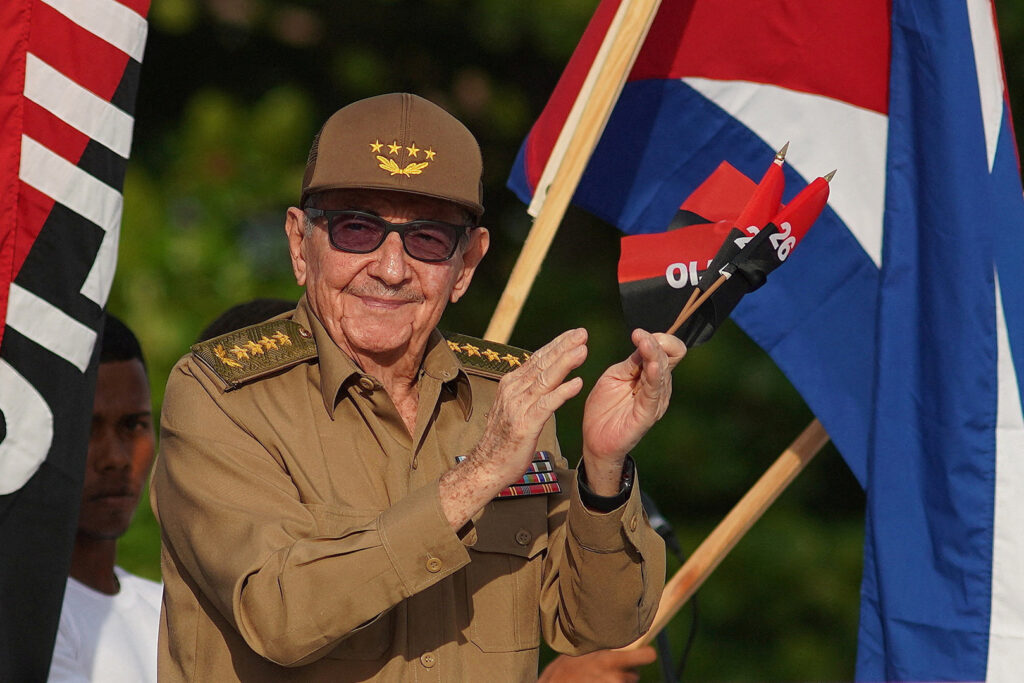
FILE PHOTO: Cuba's former President Raul Castro claps during a ceremony marking the 69th anniversary of the July 26, 1953 rebel assault which late Cuban leader Fidel Castro led on the Moncada army barracks, in Cienfuegos, Cuba, July 26, 2022. REUTERS/Alexandre Meneghini/File Photo
The United States has recently indicted former Cuban President Raul Castro, a move that reignites a notorious case dating back to 1996. The indictment relates to a tragic incident in which a Cuban military jet shot down two light aircraft operated by the Cuban exile group Brothers to the Rescue, resulting in the deaths of four people. This event has remained a contentious issue in US-Cuba relations for decades.
The shootdown occurred in international airspace over the Florida Straits, an area close to Cuba. Brothers to the Rescue claimed their operations were humanitarian in nature, focusing on rescuing Cuban rafters trying to flee the island. However, the Cuban government viewed their flights as violations of airspace sovereignty and accused the group of conducting espionage and provocation.
Raul Castro, brother of Fidel Castro, served as Cuba’s leader and was a prominent figure in the Cuban military at the time. The indictment accuses him of responsibility for ordering the shootdown, framing it as an illegal and deadly action against civilians.
The US Department of Justice has emphasized that the indictment is symbolic, given that they have little expectation of actually prosecuting Raul Castro in the near term, as diplomatic relations between the two countries remain complex and unresolved.
This renewed legal action highlights persistent tensions and unresolved grievances stemming from Cold War-era conflicts and post-Cold War diplomatic challenges. It also underscores the long-standing US stance on human rights violations and acts perceived as terrorism against Cuban exiles.
Critics of the indictment argue that it could further strain already fragile relations between Washington and Havana. Supporters assert that it is an important step in seeking accountability for violence against civilians and upholding international norms.
Since Raul Castro stepped down from the Cuban presidency in 2018, the political landscape in Cuba has seen shifts, but the shadow of this incident has loomed over its international diplomacy.
The indictment serves as a stark reminder that historical grievances can resurface and influence contemporary international relations, and it is likely to impact discussions on future US policies toward Cuba, including sanctions, diplomacy, and human rights advocacy.
As the story develops, analysts will be watching closely to see how both countries navigate the diplomatic fallout, and whether this move leads to renewed dialogue or escalated tensions.