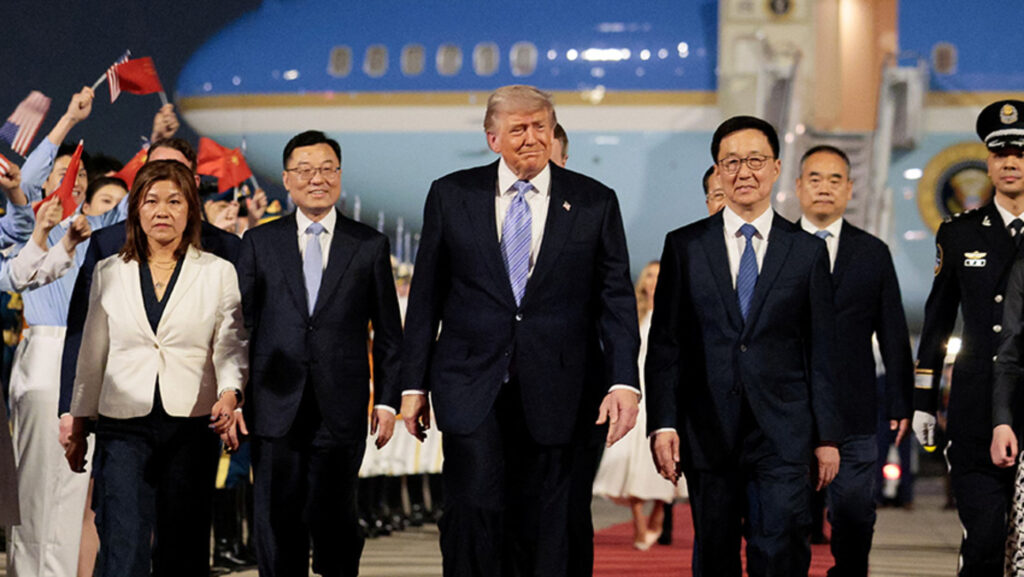
US President Donald Trump has arrived in Beijing, marking the beginning of a significant two-day summit with China’s President Xi Jinping. This high-profile meeting is anticipated to address a range of pivotal issues affecting US-China relations, including trade, geopolitical strategy, and global economic cooperation.
The summit comes at a time of heightened global attention on the dynamics between these two major world powers. Both leaders are expected to engage in discussions aimed at easing tensions and fostering a pathway toward more collaborative engagements in international affairs.
During his visit, Trump is likely to underscore the importance of balancing trade between the two countries, addressing concerns over tariffs, intellectual property rights, and market access. Meanwhile, President Xi is anticipated to advocate for continued dialogue and mutual respect, emphasizing China’s role as a responsible global stakeholder.
The agenda of the summit also includes discussions on security matters, regional stability, and cooperation in areas such as climate change, technological development, and public health. Analysts predict that the outcomes of these talks could significantly impact global economic markets and diplomatic relations in the coming years.
Both leaders have expressed optimism about the potential for constructive dialogue and solutions that benefit both nations, highlighting the necessity of strong leadership in navigating complex international issues. The summit is expected to feature official statements, joint press conferences, and opportunities for the leaders to connect on a personal level, strengthening diplomatic ties.
This summit represents a critical moment for both countries to demonstrate their commitment to diplomacy and partnership despite existing differences. Observers worldwide are keenly watching the developments, hopeful that the event will pave the way for enhanced cooperation and stability in the US-China relationship.
As the two-day summit unfolds, it symbolizes not only a meeting of leaders but also a strategic dialogue that could influence global policy directions, economic trends, and international peace efforts in the years to come.