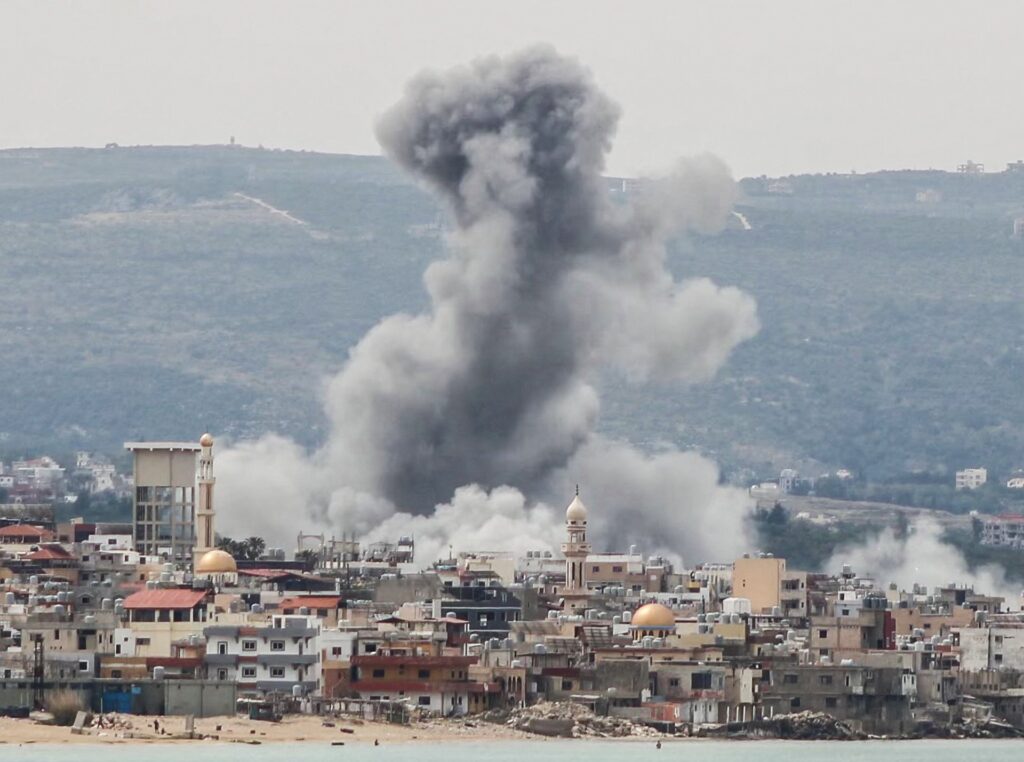
In a recent escalation of tensions in the Middle East, the Israeli military carried out an air attack in Lebanon, resulting in the deaths of six individuals. This deadly strike adds a grim chapter to the already volatile relationship between Israel and Lebanon.
The air attack was conducted just days before scheduled discussions between Israeli and Lebanese officials in Washington, intended to address various bilateral issues. The timing of the attack has raised concerns about the potential impact on these diplomatic talks, casting a shadow over efforts to ease tensions between the neighboring countries.
Alongside the lethal strike, the Israeli military has issued further threats of displacement, signaling possible future operations or movements that could affect civilian populations in Lebanon. This has heightened fears of increased instability and humanitarian challenges in the region.
The background to this recent violence includes long-standing disputes and intermittent hostilities between Israel and Hezbollah, the Lebanese Shia militant group and political party. The region has seen cycles of violence that periodically flare up into deadly confrontations, often accompanied by threats and counter-threats from both sides.
The victims of the air attack are reported to include both militants and civilians, though detailed information about the casualties remains limited due to the ongoing conflict and restricted access for independent observers.
International reactions have been swift, with various governments and organizations calling for restraint and urging both Israel and Lebanon to avoid actions that would exacerbate the conflict. The upcoming talks in Washington are viewed as a critical opportunity to potentially de-escalate tensions and pave the way for more peaceful dialogue.
The Israeli government has justified the air attack as a necessary measure to counter security threats emanating from Lebanese territory. This assertion is part of a broader Israeli policy aiming to prevent attacks against its territory by militant groups in the region.
Meanwhile, Lebanese officials have condemned the attack as a violation of sovereignty and a threat to national stability. The Lebanese government faces the challenge of responding to these incidents while managing the internal political dynamics involving various groups within the country.
Humanitarian concerns are mounting as the prospect of further displacement looms over many communities in southern Lebanon, where the conflict’s impact is most acutely felt. Aid organizations are monitoring the situation closely, preparing for possible emergency response operations should the violence escalate.
The international community continues to emphasize the importance of dialogue, diplomacy, and respect for international law as the only viable path to long-term peace in the region. The situation remains highly fluid, and observers are watching closely to see how the forthcoming Washington meetings will influence the trajectory of Israeli-Lebanese relations.
In summary, the recent deadly air attack by the Israeli military in Lebanon, coupled with threats of further displacement, highlights the fragility of peace and security in the region. With diplomatic discussions imminent, the world awaits a breakthrough that could prevent further bloodshed and foster a stable and peaceful coexistence between Israel and Lebanon.