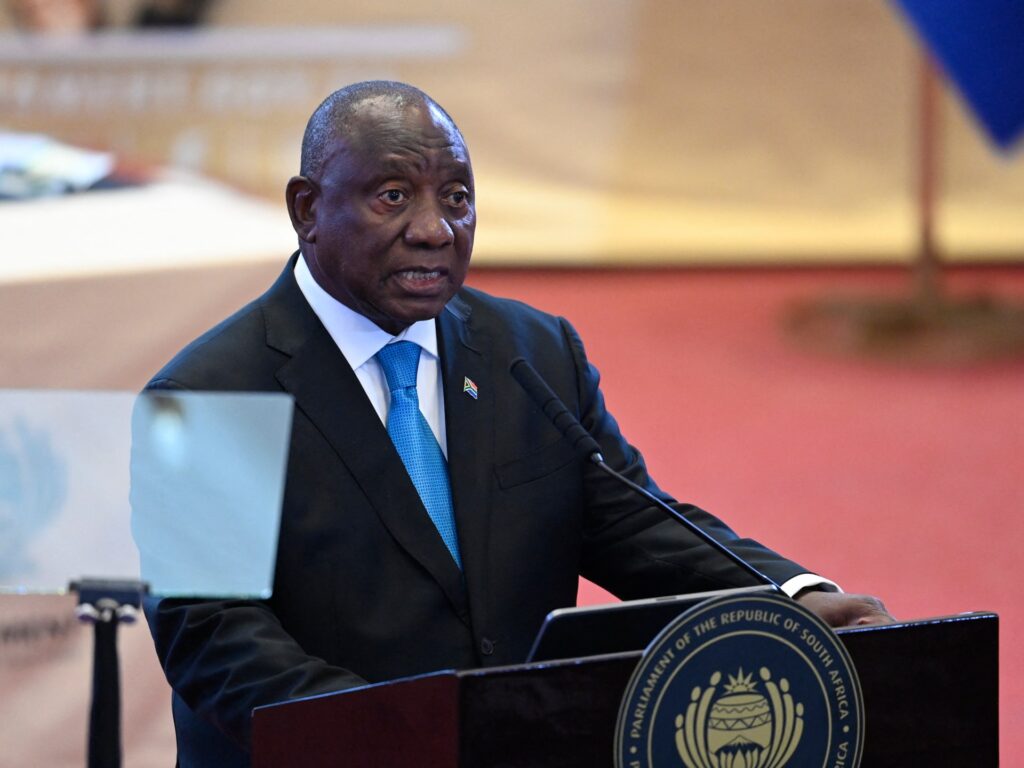
In a significant judicial development, South Africa’s highest court has revived an impeachment inquiry against President Cyril Ramaphosa. The case hinges on allegations related to a substantial theft of foreign currency from the president’s private farmhouse in 2020, a scandal that has captured the nation’s attention and raised questions about transparency and accountability at the highest levels of government.
The incident first came to public attention when a large sum of foreign currency was reported stolen from President Ramaphosa’s rural residence. The theft sparked a wave of controversy, with opposition parties and critics alleging either a lapse in security or more troubling implications of financial misconduct.
Following the initial reports, various political factions called for an investigation into the president’s handling of the incident, suggesting that the theft might be connected to broader issues of governance and corruption. These calls culminated in a formal motion to initiate impeachment proceedings.
However, early attempts to move forward with the impeachment inquiry faced legal and procedural hurdles, delaying the process. This uncertainty persisted until the highest court intervened, restoring momentum to the inquiry by ruling that a proper, thorough examination of the facts and circumstances was warranted.
The Constitutional Court’s decision underscores the importance of judicial oversight in safeguarding democratic processes, especially when allegations involve the nation’s leadership. The ruling mandates that parliamentary bodies resume their investigations into the matter, ensuring that due process is followed.
President Ramaphosa, who has been at the helm of South Africa’s government since 2018, has previously denied any wrongdoing or involvement in the theft. His administration has stated its commitment to cooperating with the inquiry to clear the president’s name and uphold public trust.
The renewed inquiry arrives against a backdrop of political tension and economic challenges facing South Africa. Many citizens and political analysts view the case as a critical test of the nation’s anti-corruption mechanisms and the resilience of its democratic institutions.
As proceedings advance, the inquiry is expected to examine the security measures at the president’s property, the chain of custody regarding the stolen currency, and any potential links to broader criminal networks.
The unfolding situation continues to dominate headlines, with many South Africans closely watching how the investigation unfolds and what implications it may have for the country’s political future.
The courts’ revival of the impeachment inquiry sends a clear message that no public official, regardless of rank, is above scrutiny. This development is likely to influence political dynamics in South Africa and set precedents for handling similar cases in the future.
International observers have noted the case as an important example of democratic accountability in Africa, highlighting the judiciary’s role in maintaining checks and balances.
The outcome of the inquiry will have far-reaching consequences for President Ramaphosa’s political standing and could impact the governing party’s position ahead of upcoming elections.
Until the investigation concludes, the nation remains focused on the pursuit of justice and the preservation of the integrity of its leadership. The impeachment inquiry serves as a pivotal moment in South Africa’s ongoing journey toward transparent and effective governance.