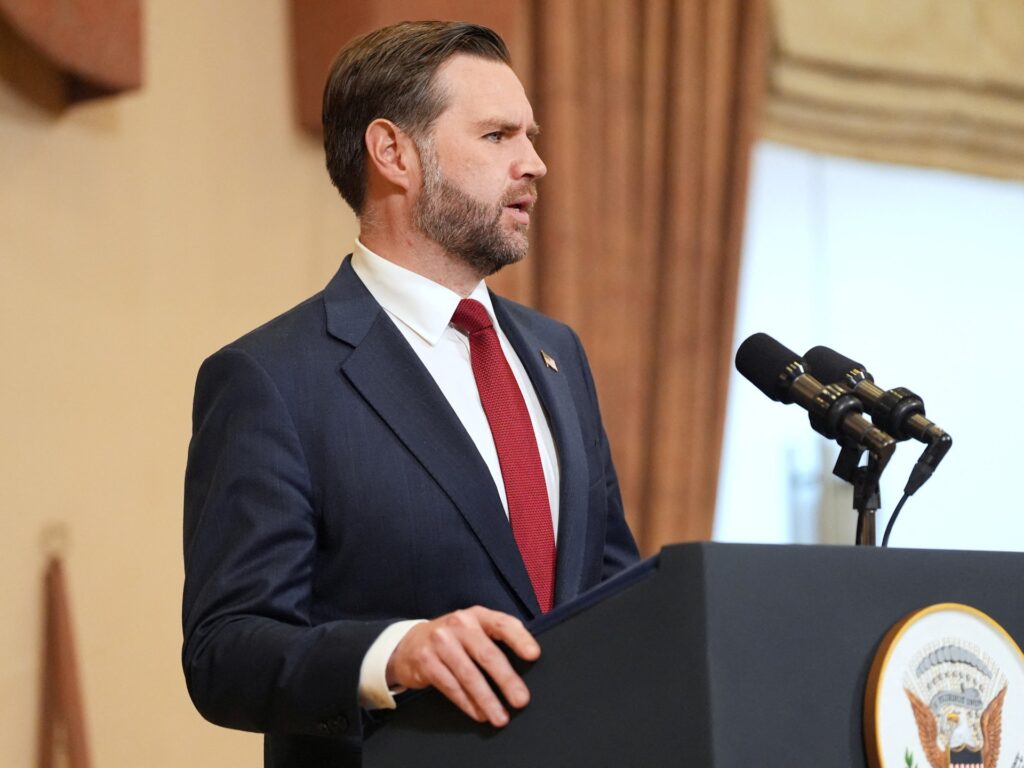
In a recent development that has garnered significant international attention, US Vice President JD Vance declared the conclusion of the US-Iran talks without reaching a deal. Speaking after his visit to Pakistan, Vance expressed strong disappointment, stating that Tehran chose not to accept what he described as the ‘final and best offer’ from the United States.
The talks, aimed at addressing longstanding issues between the two nations, were widely anticipated to potentially open a pathway toward improved relations or at least a temporary agreement. However, tensions and disagreements persisted, leading to an impasse.
JD Vance, in his full remarks, highlighted the extensive efforts made by the US delegation to find common ground. He emphasized that the offer presented was generous and designed to address critical concerns about security, economic cooperation, and diplomatic relations.
According to Vance, the failure of the talks was not due to lack of initiative from the US side but rather Tehran’s unwillingness to respond constructively to the proposals.
This development comes at a time when the geopolitical landscape is particularly volatile, with Iran’s regional activities and nuclear ambitions being a source of concern for the international community.
Analysts suggest that the breakdown of talks might lead to increased sanctions or other diplomatic actions aimed at pressuring Iran.
US Vice President Vance’s visit to Pakistan was part of a broader diplomatic effort to engage regional allies and counterbalance Iran’s influence. Although the talks with Tehran did not yield the desired outcome, Vance reaffirmed the United States’ commitment to pursuing peaceful solutions wherever possible.
The international community continues to watch closely as future developments unfold, hoping for a resolution that ensures stability and security in the region.
In summary, JD Vance’s departure marks a pause in US-Iran diplomatic negotiations, underscoring the complexity and challenges inherent in resolving such deeply-rooted disputes. The focus now shifts to how both sides will navigate the next steps and whether renewed dialogue can be established in the future.