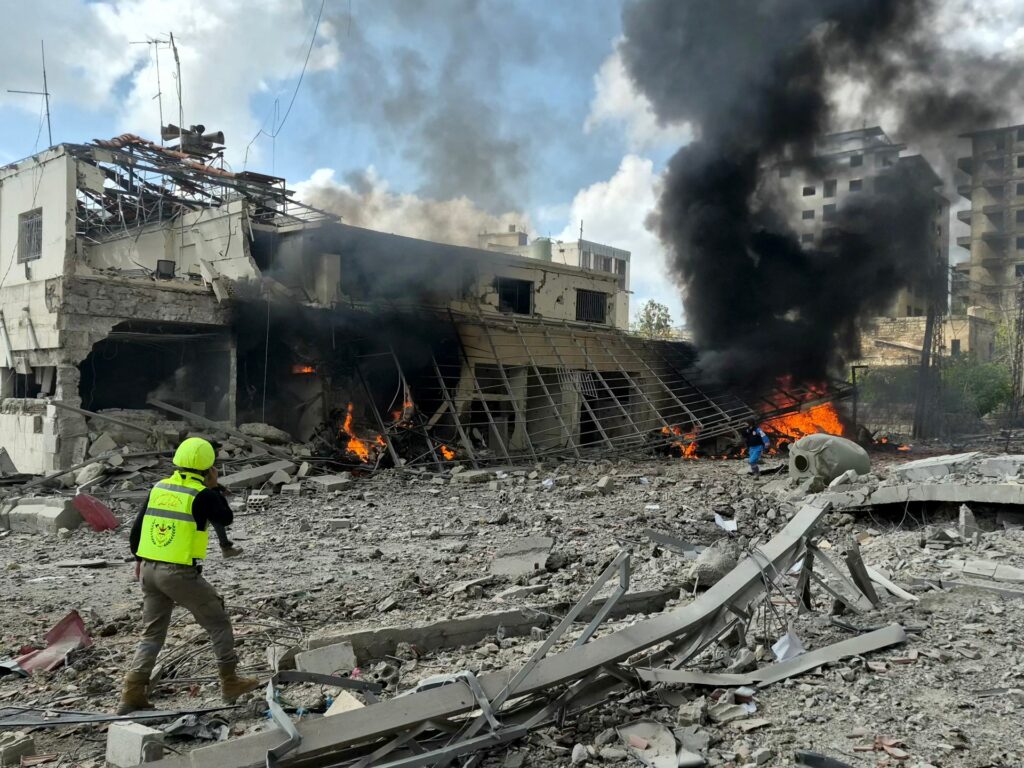
In a recent and devastating event, an Israeli air strike targeted a government building in the southern Lebanese city of Nabatieh, resulting in the deaths of at least 13 individuals, including Lebanese officers. This attack has escalated tensions in the region, highlighting the ongoing volatility and conflict that plague the area.
The strike occurred in Nabatieh, a city known for its strategic importance and proximity to the Israeli border. The government building targeted was reportedly housing several Lebanese officers at the time of the attack. The fatalities confirmed so far include these officers, underscoring the deadly nature of the assault.
Lebanon has a history of complex relations and conflicts with Israel, and such military actions heighten the risk of further escalation. The international community has expressed concern over the increasing violence and the potential for it to spiral into a broader conflict.
Emergency services and local authorities responded swiftly to the strike, with rescue teams working to clear the rubble and provide aid to survivors. Hospitals in the region have been mobilized to treat the injured, and security forces are on high alert to prevent further incidents.
The Lebanese government has condemned the attack, describing it as a violation of sovereignty and an act of aggression. Officials have called for international intervention to address the situation and to prevent future attacks that jeopardize the safety of Lebanese citizens.
Israel has not issued an official statement immediately following the strike, but such military operations are often justified by Israel on grounds of national security and counterterrorism efforts. The specific reasons for this particular strike have yet to be fully disclosed.
This incident underscores the fragile security situation in Lebanon and the broader Middle East region. With longstanding disputes and intermittent hostilities, the risk of civilian casualties and infrastructure damage remains high.
Analysts warn that continued military actions like this could hinder peace efforts and exacerbate the humanitarian situation in Lebanon. The attack on a government building signifies a serious breach of international norms and could have lasting repercussions on diplomatic relations.
Residents of Nabatieh and surrounding areas are coping with the aftermath of the strike, facing loss, destruction, and uncertainty about the future. Human rights organizations have called for accountability and measures to protect civilians in conflict zones.
The international community is watching closely as developments unfold. Efforts to mediate peace and reduce tensions are critical to avoid further bloodshed and to promote stability in one of the most geopolitically sensitive regions of the world.
In conclusion, the Israeli air strike on the government building in southern Lebanon’s Nabatieh marks a tragic event with significant loss of life. It highlights the ongoing challenges faced by Lebanon in navigating its security and political landscape amidst persistent conflict and external threats.