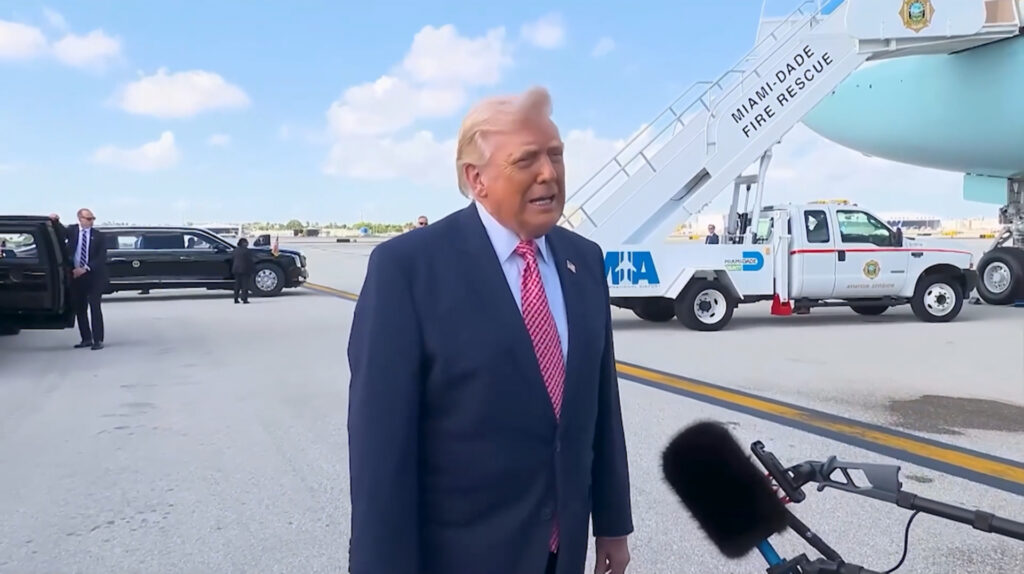
US President Donald Trump recently asserted that Iran is interested in negotiating a deal with the United States, signaling a potential thaw in the tense relations between Washington and Tehran. During public remarks, Trump expressed optimism about the possibility of diplomatic engagement, stating that Tehran is showing indications of wanting to reach an agreement.
The President also took the opportunity to praise the strength of the US military, emphasizing that America’s powerful defense capabilities provide a strategic advantage in any negotiations or conflicts. Trump’s comments come amid ongoing international concerns over Iran’s nuclear program and regional activities, which have long been points of contention between the two nations.
This development is particularly noteworthy as it hints at a shift from previous periods characterized by heightened hostilities and economic sanctions. Trump’s administration has previously adopted a tough stance against Iran, highlighted by the withdrawal from the Iran nuclear deal in 2018 and the imposition of stringent sanctions.
Despite the hawkish policies, the latest statement suggests that diplomatic channels may be opening, with Trump signaling willingness to engage if Iran demonstrates readiness to make concrete deals. This approach aligns with his broader policy strategy, which combines pressure through military and economic means with diplomacy when advantageous.
Iran, for its part, has historically oscillated between confrontation and negotiation with the US and its allies. Tehran’s leadership has often expressed willingness to talk but has insisted on the lifting of sanctions and respect for its sovereignty as prerequisites.
The international community is observing the situation closely, with key players like the European Union and regional powers advocating for dialogue to prevent escalation and promote stability in the Middle East.
Trump’s assertion also reflects the complexity of US-Iran relations, which are shaped by decades of mistrust, conflicting interests, and geopolitical rivalry. Any move towards an agreement would require careful negotiation, balancing security concerns, economic interests, and regional influence.
In addition to the diplomatic overtures, Trump reaffirmed his administration’s commitment to maintaining a robust military presence in the region to deter aggression and protect US interests.
The prospect of a deal could have significant implications for global security, energy markets, and diplomatic alliances, particularly if it leads to the easing of sanctions and a reduction in hostilities.
As developments unfold, stakeholders worldwide remain hopeful but cautious, seeking clarity on the terms and sincerity of Iran’s intent to negotiate. The coming weeks and months may prove critical in determining the trajectory of US-Iran relations and the broader stability of the region.