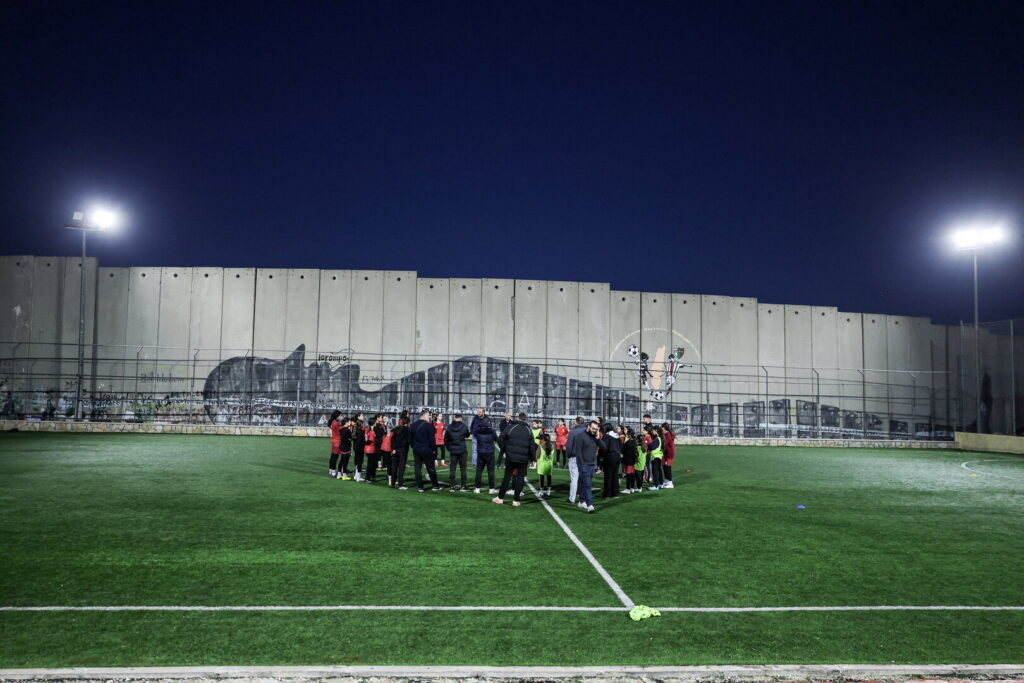
Palestinian camp football team stands in a field ahead of game, next to Israeli barrier separating Aida refugee camp from Jerusalem, in Bethlehem, in the Israeli-occupied West Bank, January 11, 2026. REUTERS/Ammar Awad
In a recent and highly controversial development, both FIFA and UEFA have come under serious accusations of aiding war crimes due to their ongoing support of Israeli football clubs in Occupied West Bank (OWB) territories. This revelation has sparked widespread condemnation from various human rights groups and international observers who argue that supporting sports entities in these contested areas indirectly legitimizes and perpetuates the conflict.
The controversy centers around the membership and participation of Israeli football clubs based in the Occupied West Bank, a territory recognized by many international bodies as under military occupation. Critics argue that by allowing these clubs to compete under the umbrella of FIFA and UEFA, the governing bodies of world and European football respectively, they are implicitly endorsing the occupation.
At the forefront of the accusations are the presidents of both FIFA and UEFA. They face allegations that their bodies’ actions—or lack of action—have contributed to war crimes by providing a platform that normalizes Israeli presence in these disputed territories. This normalization, opponents say, undermines international law and aids in the continuation of the occupation.
Human rights organizations have voiced their concerns, highlighting that sports, while often seen as a unifying and apolitical activity, can also be exploited to further political agendas and obscure complexities on the ground. In this context, the participation of Israeli clubs in international tournaments is seen as an attempt to legitimize territorial claims and shift global narratives.
The legal framework surrounding these accusations references various United Nations resolutions and international humanitarian laws that condemn settlements and unauthorized activities in occupied territories. Observers point out that by supporting clubs operating in such areas, FIFA and UEFA potentially violate these frameworks.
Critics have called for immediate suspension of Israeli clubs based in the OWB from international competitions and for FIFA and UEFA to reassess their policies to ensure they do not contribute to violations of human rights or international law. They urge these football authorities to adopt a more principled stance that respects the sovereignty and dignity of peoples living under occupation.
On the other hand, FIFA and UEFA have so far defended their position, emphasizing the neutrality of sports and the importance of keeping politics separate from football. They argue that sport can serve as a bridge for dialogue and peace, rather than a tool for conflict.
The diplomatic and political implications of this issue are significant. With football being a global sport watched and followed by millions, the actions of FIFA and UEFA carry weight and influence beyond the pitch. Their decisions affect public perception and potentially influence political stances worldwide.
This case adds to the growing scrutiny of sports governance bodies regarding their ethical and political responsibilities. It raises crucial questions about the role of international sports organizations in conflict zones and their potential impact on peace and justice.
The international community now watches closely, awaiting possible responses from FIFA, UEFA, and other stakeholders. The outcome of this controversy could set a precedent for how sports bodies navigate complex geopolitical issues in the future.
In conclusion, the accusations against FIFA and UEFA concerning their support of Israeli football clubs in the OWB present a complicated intersection of sports, law, and politics. As calls for accountability increase, the football community and the world at large face critical decisions about the ethics of sports diplomacy amidst ongoing conflicts.