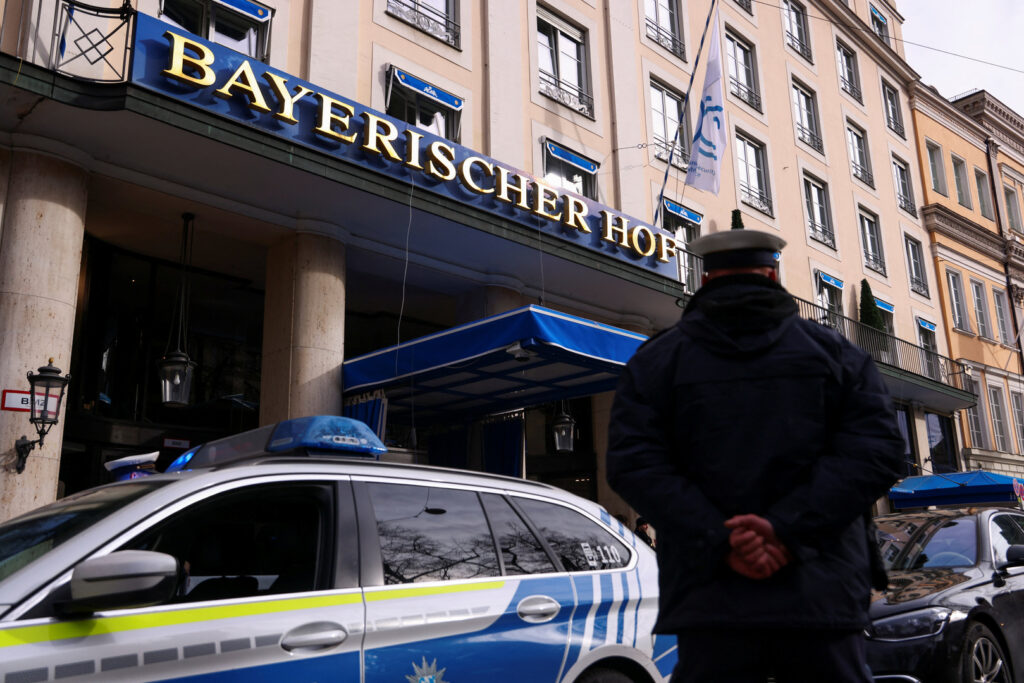
Police secure the area outside Hotel Bayerischer Hof, the venue of the annual Munich Security Conference, in Munich, Germany, February 12, 2026. REUTERS/Thilo Schmuelgen
The Munich Security Conference (MSC), a pivotal gathering of global leaders and security experts, has once again become the focal point for crucial discussions among European leaders. This year, the conference is marked by intense deliberations on pressing issues such as the ongoing conflict in Ukraine, strategic interests in Greenland, and the future direction of NATO.
European leaders are convening with a shared commitment to address the multifaceted security challenges that threaten the stability of the continent and beyond. The situation in Ukraine remains a top priority, with leaders debating strategies to support Ukraine amidst continuing aggression and efforts to reinforce the region’s security architecture.
Greenland has also emerged as a key topic, reflecting growing international attention due to its strategic location and resource potential in the Arctic. Discussions are expected to explore concerns over sovereignty, environmental protection, and the geopolitical interests of global powers.
NATO’s role and future strategy form a significant agenda item, especially as the alliance adapts to new security threats and works to maintain unity among member states. Leaders are tasked with balancing deterrence and diplomacy while ensuring that NATO remains resilient and responsive.
The Munich Security Conference serves as an essential platform for dialogue and cooperation, bringing together heads of state, defense ministers, and security experts to forge collective approaches to common challenges. This year’s sessions underscore the complexities of European security in a rapidly changing global landscape and the need for coordinated actions.
As European leaders navigate these difficult talks, the outcomes will likely shape the continent’s security policies and international relations in the coming years. The MSC once again highlights the importance of multilateral engagement in addressing security concerns that transcend national borders, emphasizing solidarity and strategic foresight.
In conclusion, the challenges facing European leaders at the Munich Security Conference are emblematic of broader global tensions. Through collaborative effort and candid discussions, the conference aims to build pathways toward peace, stability, and a secure future for Europe and its allies.