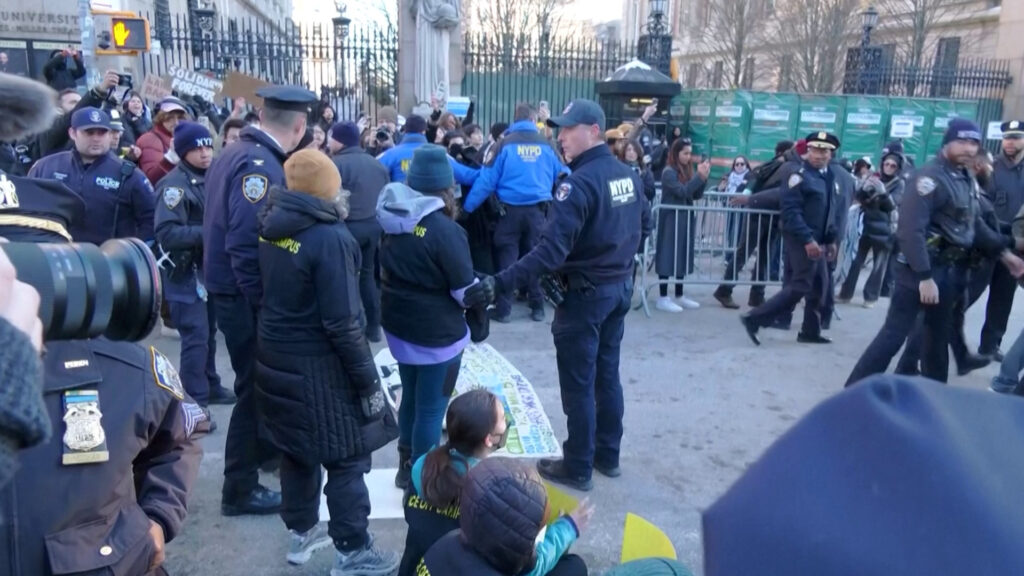
In a recent incident at Columbia University in New York, US police arrested 12 demonstrators participating in an anti-ICE protest. The protesters gathered to voice their opposition against the Immigration and Customs Enforcement (ICE) agency, which has been a subject of controversy and debate across the United States due to its immigration enforcement policies.
The protest at Columbia University was part of a broader movement aimed at expressing dissent against ICE’s practices and advocating for immigrant rights. The demonstrators employed various means of peaceful protest to make their voices heard on the issue, but police intervention resulted in the detention of a dozen participants.
Witnesses reported that the demonstration remained largely peaceful, with protesters holding signs and chanting slogans critical of ICE. However, tensions escalated when police moved in to enforce order, leading to multiple arrests. The authorities cited concerns over public safety and disruption as reasons for the arrests.
Columbia University, located in the heart of New York City, has historically been a site for political activism and social justice movements. The recent arrests have sparked debate among students, faculty, and local community members regarding the balance between protesting rights and law enforcement responsibilities.
Advocates for the arrested protesters have called for their release, emphasizing the importance of civil disobedience in drawing attention to social and political issues. They argue that the detention of demonstrators sends a chilling message to those who seek to challenge policies they view as unjust.
The incident has also drawn national attention to the ongoing debates surrounding immigration enforcement in the US, with ICE being a central figure in the conversation. Critics of ICE highlight concerns about family separations and the treatment of immigrants, while supporters emphasize the agency’s role in upholding immigration laws.
As legal proceedings for the arrested protesters begin, the Columbia University community continues to grapple with the implications of the incident. Many are calling for open dialogues and increased engagement on immigration issues, hoping to foster a more inclusive and understanding campus environment.
The protest and subsequent arrests reflect broader societal tensions and the complexities involved in addressing immigration policy in the United States. The situation at Columbia University serves as a microcosm of the national conversation, illustrating the challenges that arise when activism intersects with law enforcement enforcement.
In conclusion, the arrest of 12 anti-ICE protesters at Columbia University underscores the ongoing contentious debate over immigration enforcement and the rights of individuals to protest. The event has mobilized various stakeholders to reflect on the strategies for achieving social justice and the protections afforded to both protesters and law enforcement officials.