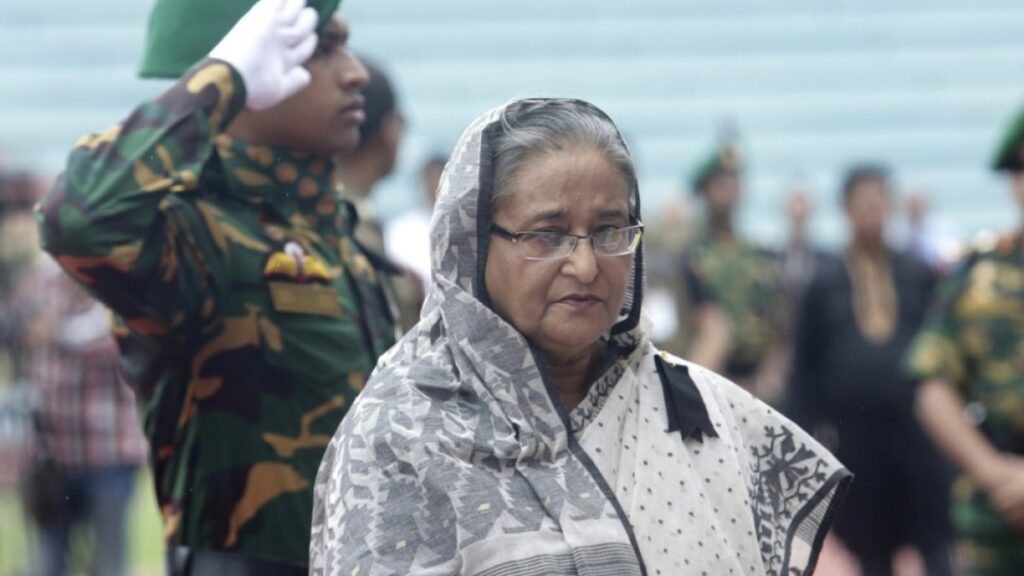
In a significant political development, exiled former Prime Minister Sheikh Hasina has strongly condemned the upcoming elections in Bangladesh after the banning of her Awami League party. Hasina, a central figure in Bangladesh’s political landscape, voiced deep concerns about the electoral process under the current interim government led by Muhammad Yunus.
Sheikh Hasina, who has faced exile amid ongoing political turmoil, highlighted that excluding the Awami League from participating in the elections intensifies an already growing resentment among the populace. She emphasized that this exclusion undermines the democratic spirit of the nation and calls into question the legitimacy of the forthcoming polls.
The Awami League, one of Bangladesh’s major political parties, has long been a pivotal player in the country’s governance and political dialogue. The ban against her party has sparked widespread debate and criticism domestically and internationally, with many viewing it as a move to suppress democratic representation.
Hasina’s denunciation comes at a time when Bangladesh is preparing for crucial elections intended to restore democratic governance following a period of interim administration. The interim government, under Muhammad Yunus, was instated amid political instability and is tasked with overseeing a fair and transparent election process.
However, critics argue that the interim government has displayed partiality and questioned its ability to conduct free and fair elections, especially after disenfranchising key political groups like the Awami League. This has led to increased political polarization and concerns over potential unrest.
The exclusion of the Awami League not only alienates a significant portion of the electorate but also threatens the inclusivity and competitiveness necessary for a healthy democratic system. Sheikh Hasina’s statements resonate with many who fear that this political maneuvering could lead to deeper divisions and hinder Bangladesh’s democratic progress.
International observers and human rights organizations have called for dialogue and reconciliation among all political parties to ensure an inclusive electoral process. They stress the importance of safeguarding democratic norms, maintaining political freedoms, and allowing all parties to participate freely.
The situation in Bangladesh remains fluid, with tensions escalating as election day approaches. The ban on the Awami League has intensified scrutiny on the interim government’s motives and actions, with calls from various sectors for the restoration of full democratic rights.
Sheikh Hasina’s call against the upcoming polls serves as a rallying cry for supporters and underscores the critical need for an election that reflects the will of all Bangladeshis. How the interim government will respond to these challenges remains to be seen, but the current landscape suggests a complex and contentious road ahead for Bangladesh’s democracy.