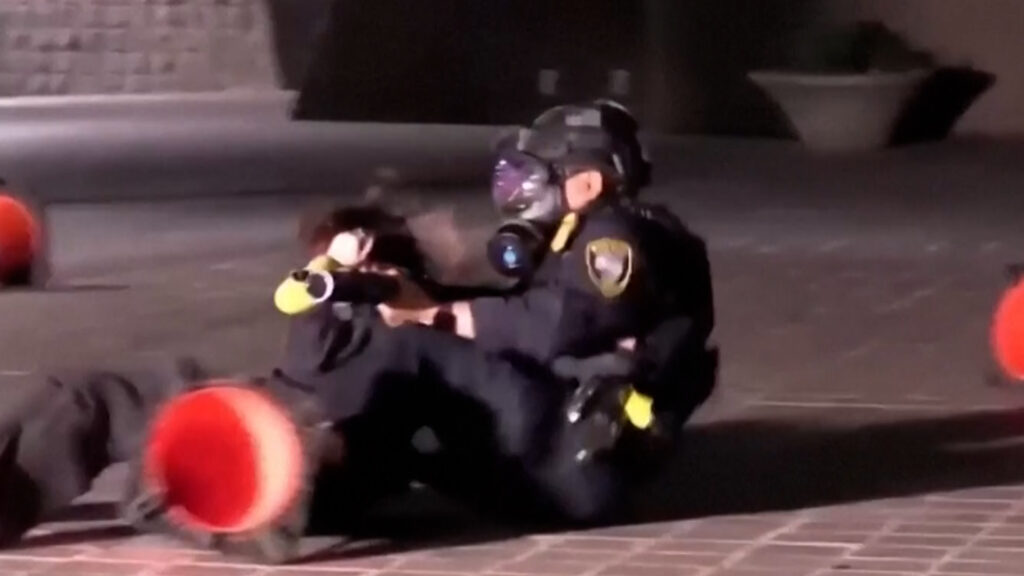
During a heated anti-Immigration and Customs Enforcement (ICE) protest, a distressing incident occurred in which a protester was shot in the face with a non-lethal projectile. The video footage capturing this moment has raised significant concern and outrage across social media and news platforms.
The protester, who had been actively participating in demonstrating against the ICE policy, suffered severe injuries due to the impact. Medical reports indicate that the individual was blinded in one eye and sustained skull fractures as a result of the projectile.
Non-lethal rounds are intended to incapacitate or disperse crowds without causing permanent harm, but incidents like this highlight risks associated with their use. Eyewitness accounts describe the chaos and tension at the scene, where demonstrators clashed with law enforcement officials.
The protest was part of a larger movement opposing ICE’s immigration enforcement tactics, which many critics argue are harsh and inhumane. This injury has further fueled debates about the use of force by police officers during protests.
Advocates for the protester have called for an immediate investigation into the circumstances that led to the shooting. They demand accountability from the law enforcement agencies involved and highlight the need for proper crowd control measures that prioritize the safety of civilians.
The law enforcement sides have acknowledged the use of non-lethal rounds but have maintained that officers were acting in accordance with protocol to manage the crowd amid escalating tensions.
Medical personnel attending to the injured protester emphasize the seriousness of the trauma sustained. The skull fractures require ongoing treatment, and the loss of vision in one eye will undoubtedly impact the individual’s quality of life.
This incident is a stark reminder of the dangers associated with managing protests, especially those involving controversial and emotionally charged issues such as immigration enforcement. It also raises questions about the balance between maintaining public order and respecting the rights of individuals to peacefully demonstrate.
Community leaders and human rights organizations have condemned the incident and are urging for reforms in how law enforcement engage with protesters. They stress the importance of de-escalation tactics and less aggressive responses to public assemblies.
As the injured protester begins their recovery, the case continues to draw national attention, influencing ongoing discussions surrounding protest management, use of force policies, and civil liberties.
The incident underscores the volatile nature of protest environments and the urgent need for dialogue, transparency, and improved protocols to prevent such injuries in the future.