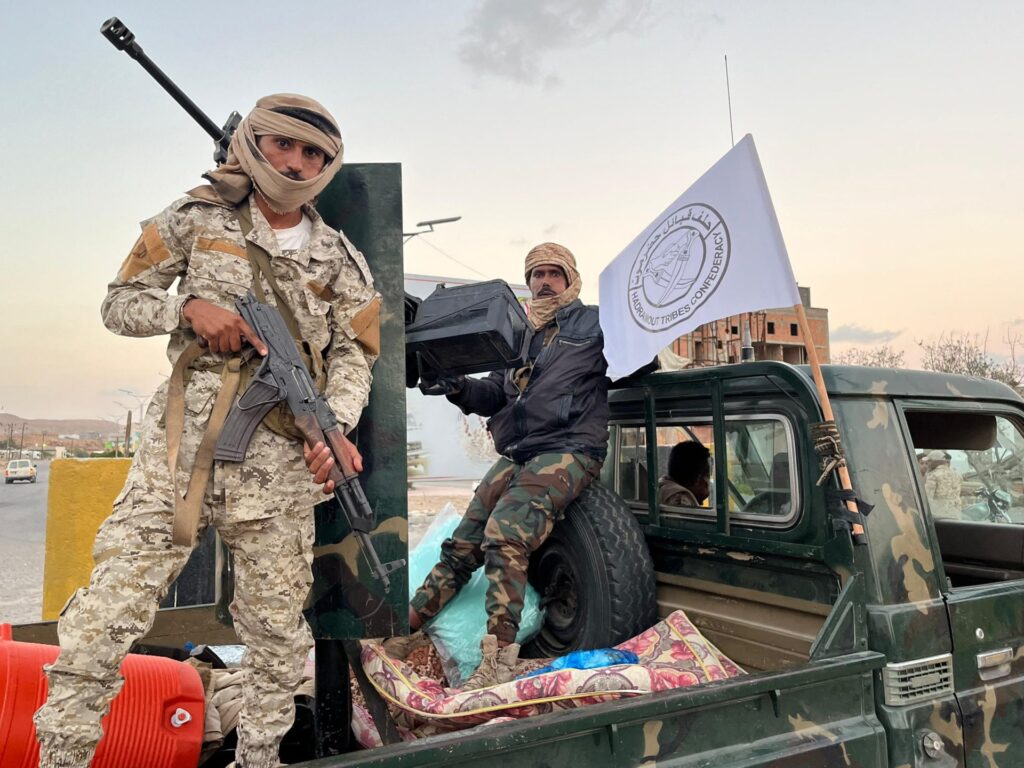
In a significant development in Yemen’s ongoing conflict, the Saudi-backed government, known as the Presidential Leadership Council (PLC), has successfully regained control over key southern regions previously held by the Southern Transitional Council (STC). This shift marks a pivotal moment in the power dynamics of Yemen, especially in the south, where the STC had established substantial influence.
The recapture of southern territories by the PLC signals an attempt to restore unified governance in the south under the Saudi-backed government framework. However, this progress is complicated by the enduring divide between rival factions and the presence of multiple stakeholders with divergent agendas.
The STC, a southern separatist group, has long been at odds with the internationally recognized Yemeni government, advocating for an independent south. Their control over southern provinces had posed a major obstacle to unified administration and peacebuilding efforts.
With the PLC’s regained control, the southern provinces are expected to see attempts at restructuring governance and integrating local authorities under the central government’s oversight. Yet, the challenge lies not just in the south but nationally, as the northern capital, Sanaa, remains under the control of the Houthi movement. The Houthis, who seized power in Sanaa in 2014, represent a significant military and political force resisting government authority, further complicating efforts toward a united Yemen.
The political fragmentation and rivalries among the Yemeni factions highlight the deeper challenges facing peace efforts. Even with the PLC controlling the south, engaging the Houthis in a meaningful political dialogue is essential for any sustainable resolution. Meanwhile, the humanitarian crisis in Yemen continues, exacerbated by ongoing conflict, economic collapse, and limited access to basic services.
Saudi Arabia’s backing of the PLC underscores its strategic interest in stabilizing Yemen and countering Iranian influence, which is alleged to support the Houthis. Regional dynamics play a crucial role in shaping Yemen’s conflict trajectory, with neighboring countries involved diplomatically and militarily.
International actors, including the United Nations and various humanitarian organizations, continue to push for negotiations and ceasefires to ease the human suffering and facilitate political compromises. The recent military gains by the PLC could either pave the way for renewed discussions with the STC and other stakeholders or escalate tensions if not managed inclusively.
Looking ahead, Yemen’s path to peace remains fraught with complexity. Successful reconciliation requires addressing the root causes of division, ensuring equitable power sharing, and fostering economic recovery. The PLC’s control of the south is a step towards re-establishing government authority but is far from a definitive solution.
Ultimately, the fate of Yemen hinges on the willingness of all factions, including the STC and the Houthis, to engage in dialogue and commit to a unified political process. Without inclusive negotiations and sustained international support, Yemen risks further fragmentation and prolonged conflict, with severe implications for regional stability and the welfare of its people.