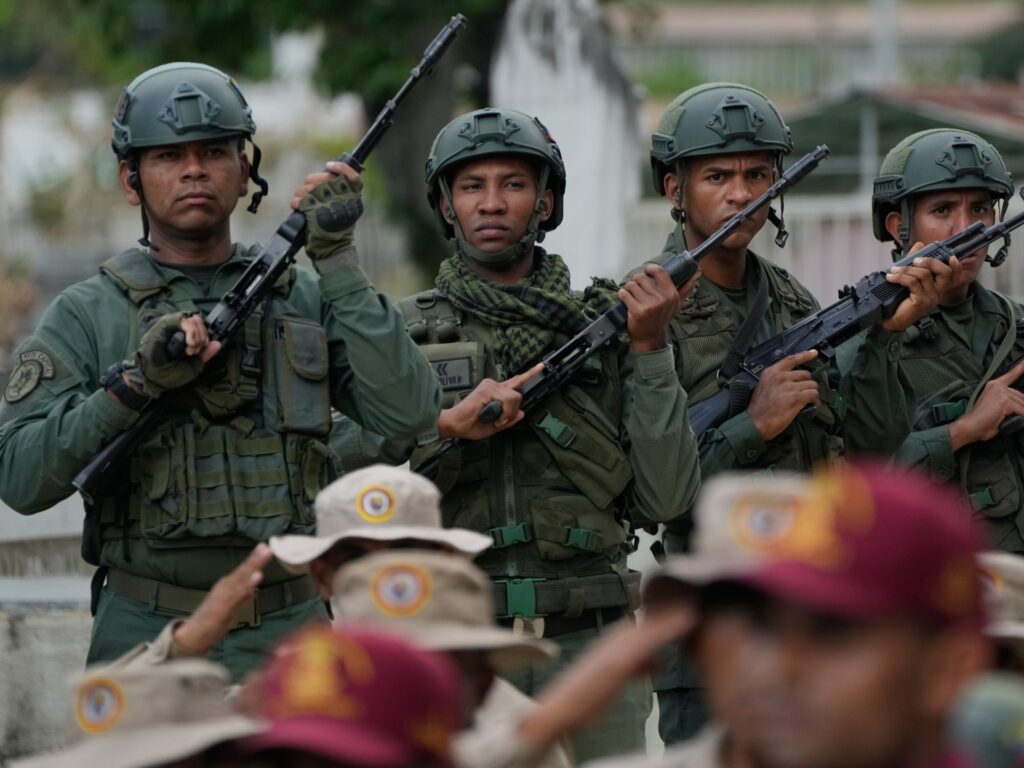
Venezuela stands at a pivotal juncture in its political and economic trajectory, with its military playing an indispensable role in shaping the nation’s future. The armed forces are not merely a security apparatus but a powerful political actor whose support is crucial for any leadership, be it under Nicolás Maduro, a figure like Henrique Capriles, or even in hypothetical scenarios involving external influences such as former President Donald Trump.
The military’s influence stems from its entrenched position within Venezuela’s power structures and economic frameworks. Over the years, the Venezuelan armed forces have expanded their role beyond traditional defense into significant economic ventures, controlling key resources, logistics, and critical infrastructure. This integration has given them vested interests tied to the nation’s stability and the preservation of their own privileges.
For any political player to effectively govern Venezuela, aligning with the military becomes a fundamental necessity. This alignment often involves negotiations and deals that satisfy the military’s incentives, securing their loyalty while ensuring governance continuity. In this scenario, the military acts as a kingmaker; without their support, governance is prone to instability and potential collapse.
The incentives for the military to engage in political negotiations are multifaceted. On one hand, the military desires stability to protect its economic interests and maintain social order. On the other, they seek political leverage to influence policy and national direction. This dual incentive fosters a complex relationship between civilian leadership and military elites, characterized by bargaining and accommodation.
This dynamic has profound implications. Firstly, it can constrain the democratic processes by elevating military interests above civilian governance. Secondly, it creates a delicate balance of power where military support is contingent on ongoing negotiation and concessions. Lastly, it positions the military as a central actor in any transitional or reformative efforts within Venezuela, underscoring their role in both potential crisis and resolution.
In conclusion, Venezuela’s future, whether under current leadership or alternative governance models, hinges on the military’s disposition and cooperation. Both domestic leaders and international influencers must recognize the military’s pivotal role and craft strategies accordingly. Striking a deal with Venezuela’s armed forces, therefore, is not just an option—it’s an imperative for lasting stability and progress in the country.