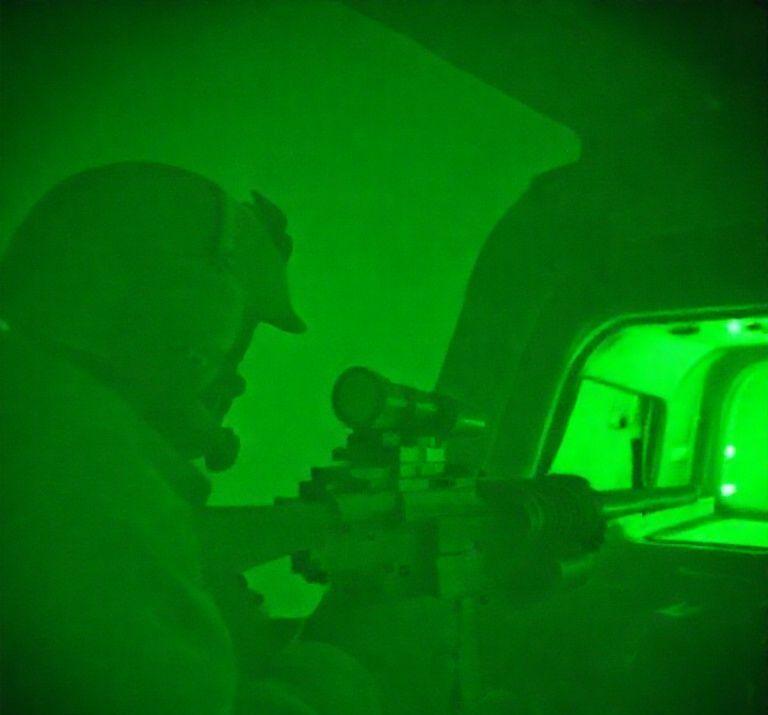
a-grainy-monochromatic-green-night-vision-image-shows-the-silhouette-of-a-helmeted-person-with-poss.jpg
A high-ranking former officer within the United Kingdom’s elite Special Forces has come forward, telling a public inquiry in closed sessions that two past leaders of all UK Special Forces actively suppressed evidence suggesting possible SAS war crimes. The revelations are part of testimony released Monday by the Independent Inquiry relating to Afghanistan, which is meticulously examining allegations that the SAS unlawfully killed detainees and unarmed civilians, including children, during their operations.
The officer, identified at the inquiry by the cipher N1466, revealed he had presented what he termed “explosive” evidence pointing to “criminal behaviour” to the then-Director Special Forces in 2011. He further asserted that the subsequent Director Special Forces, who assumed leadership in 2012, “clearly knew there was a problem in Afghanistan” but failed to take action. N1466’s testimony carries significant weight, as he is the most senior former special forces officer to claim that evidence of war crimes was intentionally withheld by the very individuals leading the SAS.
“It was not just one director that has known about this,” N1466 stated in his evidence, adding that the leadership of UK Special Forces was “very much suppressing” the serious allegations. He confirmed to the inquiry that neither of the two former special forces heads had conveyed any of these troubling claims to the Royal Military Police (RMP), despite British law mandating that commanders inform the RMP of any potential serious criminal offense committed by those under their command. Due to reporting restrictions, the names of the former directors accused by N1466 cannot be disclosed; however, General Sir Mark Carleton-Smith and Lieutenant General Jonathan Page, the preceding director, were named in earlier proceedings concerning their alleged failure to report information to the RMP.
N1466’s concerns first emerged in February 2011, when he observed an alarming pattern in SAS reports from Afghanistan: suspicious and unusually high numbers of killings, often accompanied by an insufficient recovery of enemy weapons to justify the reported deaths. His suspicions solidified with a specific night raid where nine Afghan men were killed, with only three weapons reportedly found. Millenium TV has learned that an investigation into the scene of that raid years later revealed bullet holes clustered close to the ground, suggesting the victims may have been shot while lying down, which casts doubt on the SAS’s original account of a firefight. The families involved consistently maintained that their relatives were civilians and unarmed.
Further compounding his alarm, N1466 was made aware of whistleblower accounts detailing SAS troopers openly boasting during a training course about killing all “fighting-age” males during operations, regardless of whether they posed an actual threat. These operational reports, combined with the whistleblower testimony, left N1466 “deeply troubled by what I strongly suspected was the unlawful killing of innocent people, including children,” he testified. He unequivocally stated, “I will be clear, we are talking about war crimes.”
In response to his concerns, N1466 commissioned a review of recent SAS operations in April 2011, which he told the inquiry produced results that looked “startlingly bad” for the SAS. This review formed part of the evidence he presented to the Director Special Forces in 2011, where he “indicated quite clearly to him” that “there was a strong potential of criminal behaviour.” N1466 testified that the director “absolutely knew what was happening” in Afghanistan regarding the alleged war crimes and “absolutely knew what his responsibilities were” concerning reporting the allegations to military police. However, the director did not contact the police, opting instead for an internal review of the SAS squadron’s tactics, a move N1466 characterized as a “warning shot” to reduce the violence. N1466 described this as “a conscious decision that he is going to suppress this, cover it up and do a little fake exercise to make it look like he’s done something.”
Bruce Houlder KC, a former director of service prosecutions, emphasized that British law “imposed a very clear duty” on commanding officers to report suspected crimes, including murder. He stated that had such information come to his attention, he would have initiated an investigation into the Director Special Forces for failing to report in 2011. N1466 eventually reported the evidence directly to the Royal Military Police in January 2015, nearly four years after his initial concerns, and only after the RMP had already begun its own investigation, Operation Northmoor, into the SAS.
N1466 expressed “great regret” for not reporting sooner, reflecting on how the deaths of individuals, including “two toddlers shot in their bed next to their parents” during an SAS raid in Nimruz province in August 2012, might have been prevented. That specific raid, which occurred after the new Director Special Forces had taken over, was never reported to the military police.
The Director Special Forces who took charge in 2012 has refuted N1466’s allegations, stating that he will provide a comprehensive response during his evidence to the inquiry. He claims that none of his senior commanders raised concerns or presented any evidence of unlawful killings during his three years in command, and therefore he had no allegation or evidence to refer to the RMP. The former officer who was Director Special Forces in 2011 did not provide a comment.
Tessa Gregory of law firm Leigh Day, representing the Afghan families at the inquiry, conveyed gratitude to N1466 for his “candid testimony.” She noted the families’ “extreme concern” that many soldiers involved in the operations are currently declining to give evidence, citing the right against self-incrimination. Gregory expressed hope that others would follow N1466’s example to uncover the truth. Conversely, Col Richard Williams, who commanded the SAS between 2005 and 2008, described N1466’s evidence as “the critical opinion of one” and “rather unbalanced,” advocating for it to be considered alongside the perspectives of those who commanded troops on the ground. Former veterans’ minister Johnny Mercer echoed caution, suggesting the release of N1466’s evidence “fits a certain narrative” and urged against reading only one side.
An inquiry spokesperson reiterated that the investigation focuses on “the deliberate execution of Afghan males,” not split-second combat decisions, and confirmed its legal obligation to publish available evidence. Millenium TV will continue to follow this unfolding inquiry closely.
© Millenium TV