in-the-somber-overcast-aftermath-of-a-powerful-storm-three-peoplea-woman-in-an-orange-and-white-o.jpg
The 2025 Atlantic hurricane season will undoubtedly be remembered for the catastrophic impact of Hurricane Melissa, which left a trail of destruction across Jamaica and Cuba. However, the season presented a striking paradox, characterized by periods of unusual calm punctuated by bursts of extreme cyclonic activity. Notably, the year witnessed three Category 5 hurricanes, a rare occurrence seen only once before, yet experienced a “remarkably” quiet period during the typical mid-September peak. Furthermore, for the first time since 2015, no hurricane made landfall on United States soil.
Millenium TV has learned that despite an initial forecast for an “above average” season, the North Atlantic hurricane season, which officially spans from June 1 to November 30, aligned with the National Oceanic and Atmospheric Administration’s (NOAA) predictions for named storms, hurricanes, and major hurricanes. The 2025 season produced 13 named storms, five hurricanes, four of which escalated to major hurricane status. The Accumulated Cyclone Energy (ACE) Index, a metric reflecting storm strength, duration, and wind speed, registered 132.9, indicating an above-normal or highly active season.
The season commenced quietly with Tropical Storm Andrea on June 23, a short-lived system that remained over open Atlantic waters. Later that month, Tropical Storm Barry formed in Mexico’s Bay of Campeche, becoming the first storm to make landfall near Tampico. It was swiftly followed by Tropical Storm Chantal, which struck South Carolina on July 6, unleashing up to six inches of rain and subsequent flash flooding in North Carolina. Chantal ultimately became the sole storm to make landfall in the U.S. during the season, an anomaly not seen in a decade.
The Atlantic basin experienced its first hurricane of 2025 in mid-August with Hurricane Erin. This powerful system rapidly intensified from a tropical storm to a Category 5 hurricane in approximately 24 hours on August 16, boasting sustained winds of 160 mph (257 km/h). Erin passed near the Caribbean and skirted the U.S. East Coast. While it did not make direct landfall, it generated dangerous rip currents and significant surf, leading to beach closures and evacuations in certain coastal areas. This rapid intensification proved to be a harbinger of the season, as hurricanes Humberto and Melissa later followed a similar explosive strengthening path, pushing the total to three Category 5 hurricanes—a statistic matched only once before in recorded history.
Following Erin, a “quite remarkable” lull in storm activity occurred, coinciding precisely with the climatological peak of the Atlantic hurricane season. Experts highlighted a trio of contributing factors: a significant lack of atmospheric moisture, increased vertical wind shear capable of tearing storms apart, and a notable absence of thunderstorms off the west coast of Africa, a customary breeding ground for tropical systems. Forecasters at the time suggested this quiet period would be temporary, predicting a surge of activity later in the season. True to these predictions, two major hurricanes, Gabrielle and Humberto, subsequently formed. Their trajectories were influenced by a weakened and eastward-displaced “Bermuda high” pressure system, steering them towards Bermuda and the mid-Atlantic rather than the typically hard-hit Florida.
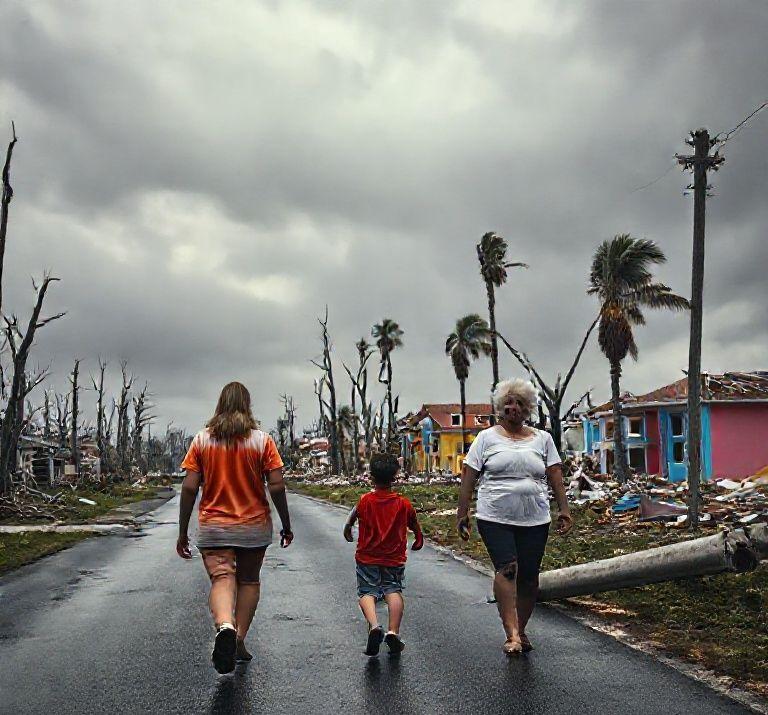
The Caribbean had experienced a relatively calm year until late October when Tropical Storm Melissa, situated south of Jamaica, transformed into a Category 4 hurricane within 24 hours, fueled by unusually warm regional waters. After becoming slow-moving and delivering several days of destructive winds and torrential rains, Melissa made landfall in Jamaica on October 28 as a major Category 5 hurricane, with sustained winds reaching 185 mph (297 km/h). While Jamaica typically experiences two or three tropical storms or hurricanes annually, only three hurricanes have directly impacted the island since 1988. Hurricane Melissa now stands as the strongest storm ever to hit Jamaica and shares the record for the strongest hurricane to make landfall anywhere in the Atlantic basin. Melissa then made a second landfall in eastern Cuba, still as a major hurricane, causing extensive damage and flooding. This catastrophic event brought an abrupt end to the 2025 Atlantic hurricane season, with no further storms forming in November.
A recent study indicated that the atmospheric and oceanic conditions contributing to Hurricane Melissa’s rapid intensification were made six times more probable by climate change. While climate change is not believed to increase the overall number of hurricanes, typhoons, and cyclones globally, warmer oceans combined with a warmer atmosphere—driven by climate change—have the potential to intensify the storms that do form. The frequency and magnitude of “rapid intensification events” in the Atlantic, such as those observed with Erin and Melissa, are also likely to have increased. Furthermore, the observed slowdown in storm movement, as exemplified by Hurricane Melissa, has the potential to lead to greater rainfall totals.
© Millenium TV