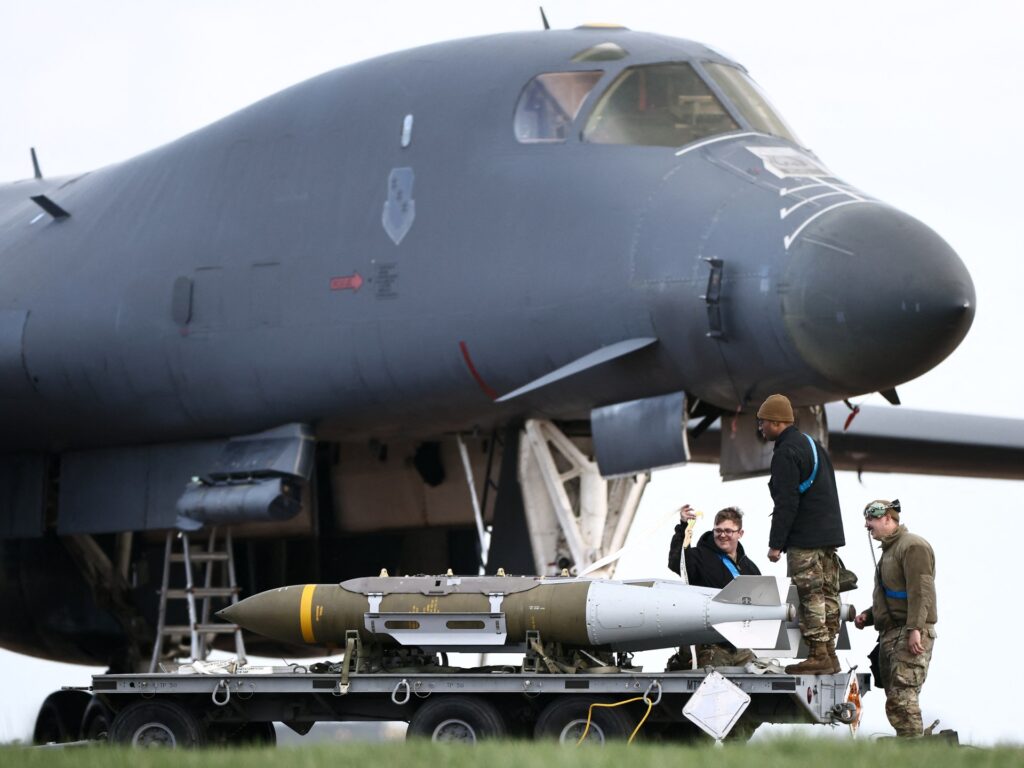
For decades, US overseas military bases have been pillars of American strategic power, enabling rapid deployment and sustained military operations across the globe. Positioned from the United Kingdom to the Persian Gulf, these bases have allowed the US to wage faraway wars effectively, project power, and maintain influence in volatile regions.
However, the strategic calculus surrounding these bases is shifting dramatically. Iran’s rising military capabilities, asymmetric tactics, and regional influence have introduced new risks that challenge the traditional benefits of maintaining such installations.
Historically, US bases in places like the UK served as critical logistical hubs, supporting NATO operations and acting as deterrents against leftover Cold War threats. Meanwhile, bases in the Gulf region have been crucial for operations related to Iraq, Afghanistan, and counterterrorism efforts. They provided quick access to conflict zones and allowed for intelligence gathering and missile defense.
But Iran’s increased missile arsenal, drone capabilities, and regional proxy networks raise serious questions about the safety and strategic value of these bases. Tehran’s capacity to threaten US personnel and assets through missile strikes or covert operations means these bases could become prime targets in any future conflict.
This vulnerability forces US policymakers to wrestle with complex questions: Should the US reduce its footprint and rely more on mobile, technology-driven military capabilities? Or does the deterrence value of a physical presence still outweigh the risks? The potential of escalation with Iran now complicates how the US views forward-deployed forces.
Additionally, political considerations in host countries, including growing anti-base sentiments and sovereignty concerns, add layers of difficulty for maintaining these overseas sites. For instance, public opinion in the UK and other allied countries is increasingly skeptical of prolonged US military presence, partly due to the potential for their territories to become battlegrounds.
Moreover, advances in missile technology and long-range precision strikes mean that geographic distance may no longer guarantee safety from attack. US bases, once considered secure because of their location, now face threats that traverse borders and seas rapidly. This technological evolution erodes the strategic advantage of fixed overseas bases.
Defense analysts suggest that the US might need to pivot towards a more flexible posture. This could involve enhancing rapid deployment forces, strengthening partnerships with allied local militaries, and investing in emerging technologies like cyber warfare and space-based systems.
At the same time, completely abandoning overseas bases could diminish US influence globally and embolden adversaries who view American retrenchment as a sign of weakness. Balancing these risks is a delicate task.
Looking towards the future, the role of US overseas bases will likely be redefined rather than eliminated. Adaptation might include fortifying existing bases with advanced missile defenses, dispersing forces across multiple satellite locations, and increasing intelligence and surveillance capabilities to anticipate threats.
In summary, US overseas bases from the UK to the Gulf are at a strategic crossroads. Once unquestioned assets in America’s global military strategy, they now present a paradox: essential for immediate operational capability but increasingly vulnerable in an evolving security landscape dominated by Iran’s growing assertiveness. The coming years will reveal how the US reshapes its global military footprint to meet these challenges.