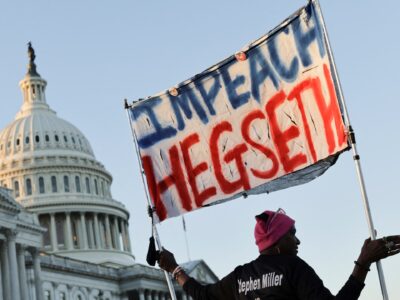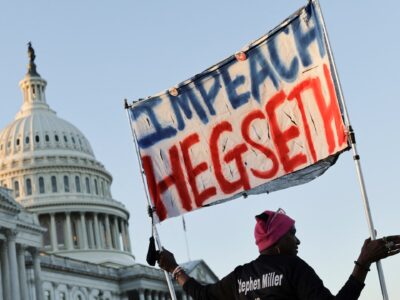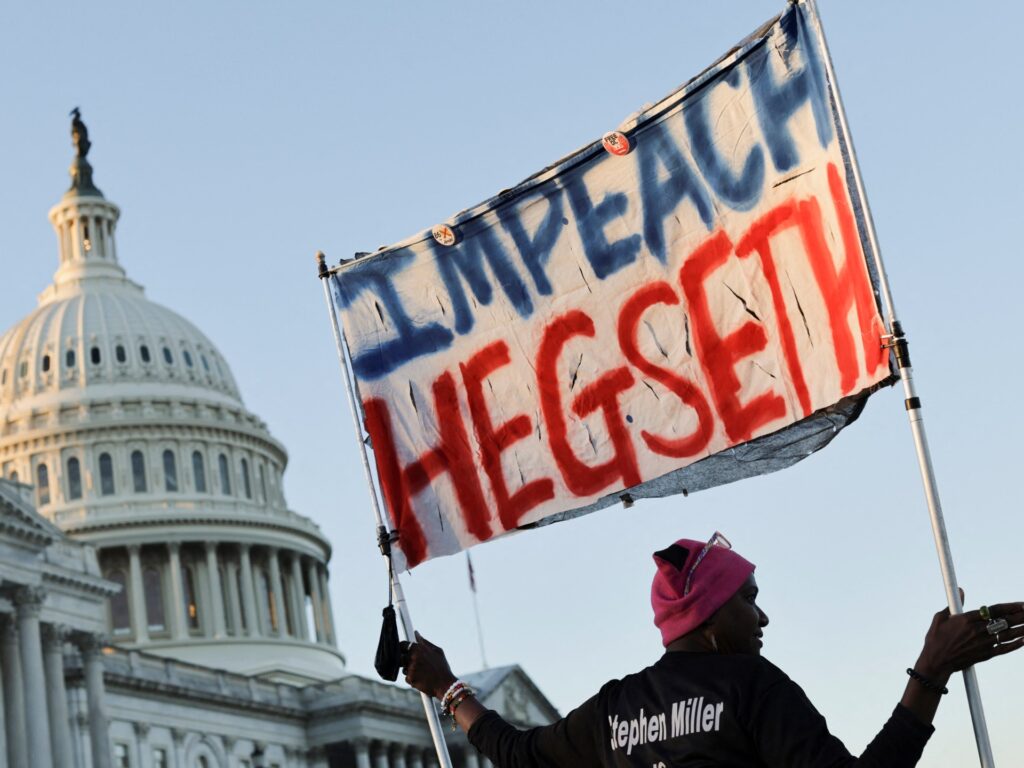
In a significant development in US politics, House Republicans have rejected an effort to impeach Pentagon chief Pete Hegseth. This move comes amid accusations that Hegseth spearheaded a war on Iran without obtaining the necessary congressional approval.
Pete Hegseth, who holds the crucial position of Pentagon chief, has recently been at the center of controversy. Critics accuse him of initiating military actions against Iran, a highly sensitive and potentially explosive issue in US foreign policy, without seeking or securing consent from the United States Congress.
Under the US Constitution, significant military engagements require Congressional authorization to ensure checks and balances are maintained. The failure to secure this approval before engaging in armed conflict raises concerns about overreach of executive power and the sidelining of democratic processes.
Opponents of Hegseth argued that his actions represented a serious breach of protocol and accountability. They called for impeachment proceedings as a means to hold him accountable and affirm the importance of Congressional oversight in military affairs.
However, the House Republicans, who hold substantial influence and control in the legislative chamber, voted against this move. Their rejection effectively quashed the impeachment effort, signaling political support for Hegseth or at least a reluctance to pursue impeachment against him at this stage.
This decision has sparked debate among lawmakers, analysts, and the public. Supporters of Hegseth argue that his actions were necessary for national security and that swift action was required to address threats posed by Iran. They claim that procedural delays could have jeopardized US interests and that executive discretion in matters of national defense must be preserved.
On the other hand, critics stress the importance of adherence to legal frameworks and Congressional authority, warning that bypassing these processes sets a dangerous precedent. They argue that even in matters of security, oversight and transparency are essential to prevent unchecked executive power.
The incident highlights ongoing tensions between the executive branch and Congress regarding war powers and control of military action. It also raises questions about how the US government balances rapid response capability with constitutional mandates.
For now, Pete Hegseth remains in his post as Pentagon chief, continuing to oversee defense policies and military operations. The controversy surrounding his actions, however, underscores the complex and often contentious nature of US foreign policy decision-making in the 21st century.
The outcome also serves as a reminder of the political dynamics within the House of Representatives, where party allegiance and strategic considerations often influence decisions on accountability and governance.
As this story develops, observers will be watching closely for any further moves by either House Republicans or opposition members to address the situation. The debate over Iraq also reverberates in broader discussions about US involvement in Middle East conflicts and the role of Congress in directing such engagements.
In conclusion, the rejection of the impeachment effort against Pete Hegseth by House Republicans marks a pivotal moment in US political and military affairs. It reflects deeper issues related to constitutional authority, executive discretion, and the mechanisms of oversight that shape American democracy and its approach to international conflict.