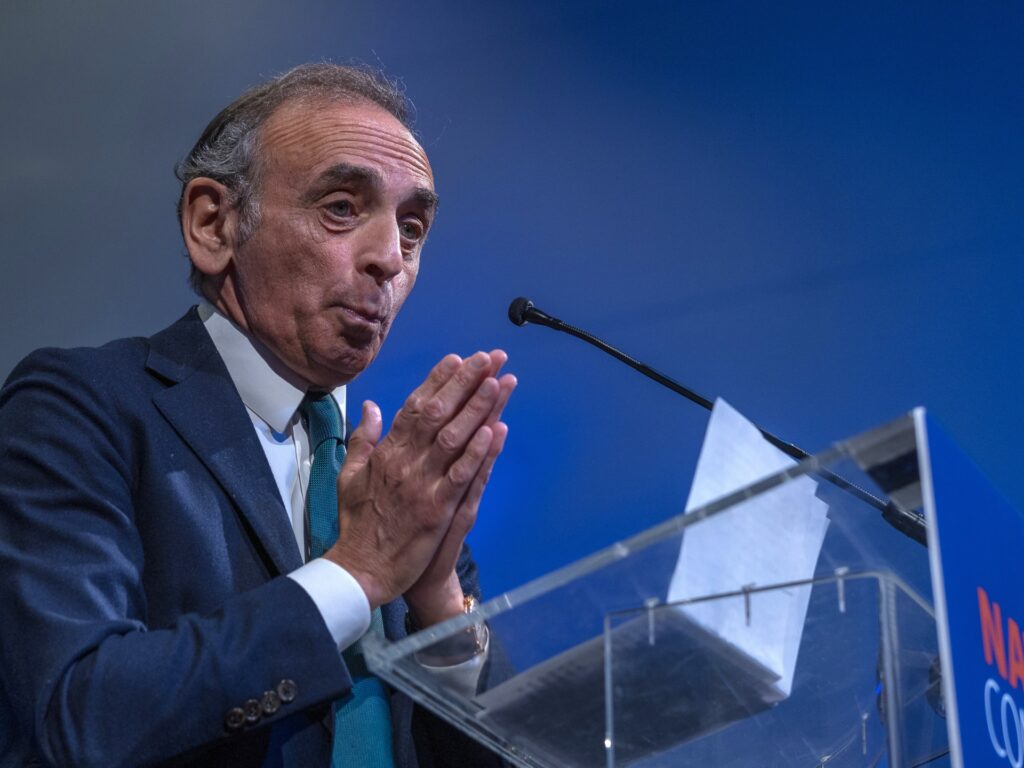
Eric Zemmour, a prominent French far-right author and political commentator, has officially launched his second bid for the French presidency. Known for his controversial views and polarizing rhetoric, Zemmour seeks to harness the momentum from last month’s violent protests across France to bolster his campaign.
Central to Zemmour’s platform is a hardline stance on immigration and employment. He has notably called for the expulsion of “foreign unemployed people,” a policy aimed at curbing what he describes as a strain on the nation’s economy and social services. This proposal has sparked significant debate and criticism from political opponents and human rights groups alike.
Zemmour’s first presidential run in the previous election saw him attract a considerable following among conservative and nationalist voters, although he ultimately fell short of reaching the highest office. His second campaign seeks to capitalize on growing public concern over security, economic challenges, and national identity.
The recent wave of violent protests, fueled by social and economic grievances, has added urgency to political discourse in France. Zemmour has positioned himself as a candidate who will restore order and prioritize the interests of French citizens.
His campaign is expected to focus heavily on issues of immigration control, national sovereignty, and economic reform. Zemmour’s rhetoric often emphasizes traditional French values and a strong national identity, appealing to voters who feel marginalized by globalization and liberal policies.
However, his proposed policies and inflammatory statements have drawn condemnation from mainstream political parties and civil society organizations, who accuse him of promoting division and xenophobia.
As the presidential election approaches, Zemmour’s campaign represents a significant challenge to established parties, potentially reshaping the political landscape and sparking intense debate on France’s future direction.
Analysts warn that his rise reflects broader trends seen across Europe, where far-right movements gain traction amid economic uncertainty and social unrest. The campaign promises to be closely watched both within France and internationally, as it may signal shifts in political attitudes and the strength of nationalist movements.
In summary, Eric Zemmour’s second presidential bid marks a continuation of his contentious political journey, set against a backdrop of social upheaval and national debate on immigration and identity. His proposals, particularly regarding the expulsion of foreign unemployed individuals, underscore the polarized nature of contemporary French politics and the challenges the country faces in reconciling diversity with unity.