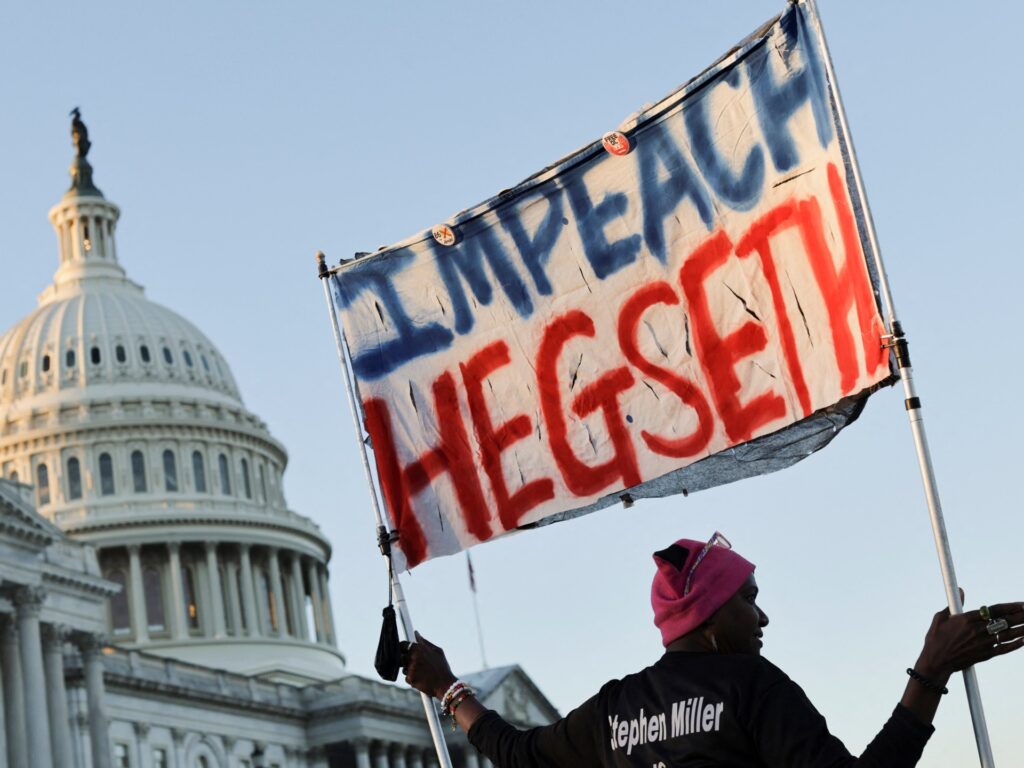
The United States House of Representatives has initiated the voting process on a motion to advance the impeachment proceedings against Pete Hegseth. The move comes amid serious allegations that Hegseth orchestrated military actions against Iran without obtaining the necessary approval from Congress, a violation of legislative protocols governing declarations of war and military engagements.
Pete Hegseth, a prominent political figure, is accused of spearheading what has been described as an unauthorized war on Iran. This charge has ignited significant debate within the House, as members weigh the implications of such unilateral decisions on national security and legislative authority.
The impeachment motion marks a critical juncture in addressing the balance of powers between the executive branch’s military actions and Congress’s constitutional oversight responsibilities. According to lawmakers, the escalation towards Iran carries profound consequences not only for foreign policy but also for the constitutional checks and balances designed to prevent the misuse of executive power.
Supporters of the impeachment motion argue that Hegseth’s alleged actions undermine democratic processes and set a dangerous precedent for future engagements. They emphasize the importance of adhering to legal requirements, particularly the War Powers Resolution and other statutes that mandate congressional consent for military operations.
Opponents of the motion, however, raise concerns about political motivations behind the impeachment effort, suggesting that it may be driven more by partisan interests than by substantive legal breaches. They caution against the potential destabilization of governance through impeachment without conclusive evidence.
The House vote will determine whether the impeachment process advances to further inquiry stages, possibly including investigations by relevant committees and eventual hearings. If successful, this could lead to a formal trial and the possibility of removal from office depending on the Senate’s verdict.
This historic vote reflects ongoing tensions in U.S. politics regarding the oversight of military expeditions and executive authority. It also reiterates the constitutional principle that no individual, regardless of position, is above the law.
As the vote proceeds, national and international observers are closely monitoring the developments, understanding that the outcome could significantly impact U.S. foreign policy, domestic politics, and the precedent for handling similar cases in the future.
In summary, the House’s decision to vote on advancing the impeachment of Pete Hegseth underscores the critical role of Congress in maintaining checks on unilateral military decisions, highlighting the delicate balance of power that sustains American democracy.