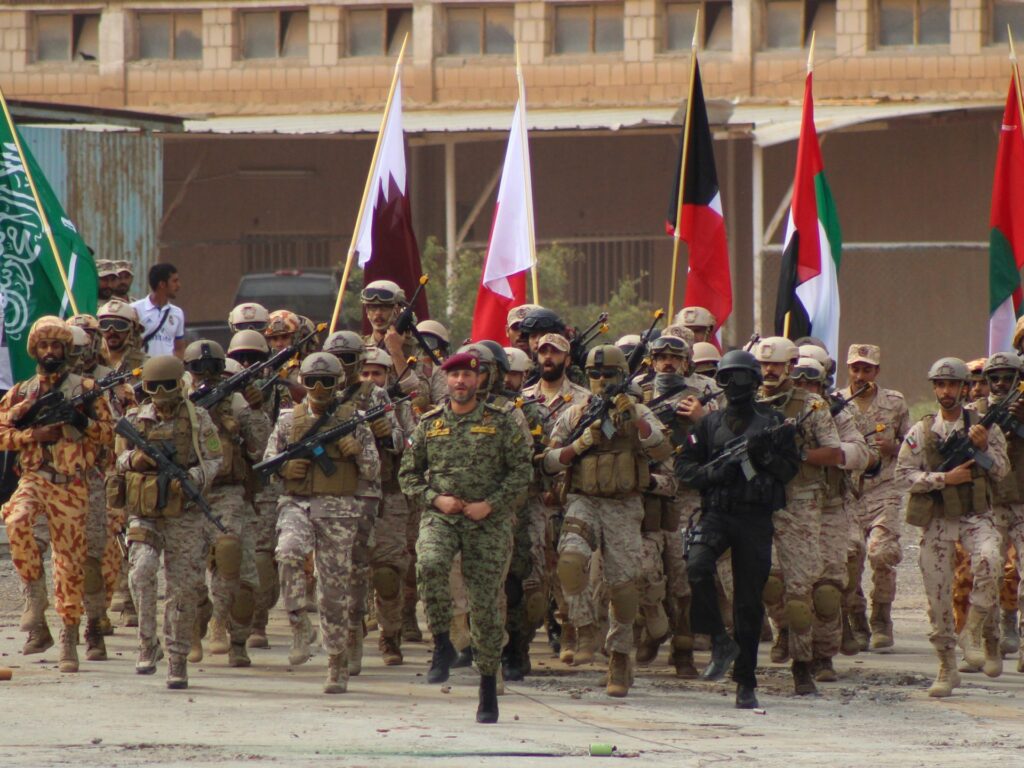
In a strategic move to enhance regional security and defense coordination, the Gulf Cooperation Council (GCC) is setting up an advanced military command base in Kuwait. This development comes as Gulf leaders collectively emphasize the critical need to strengthen their defense mechanisms to effectively confront present and future challenges in the region.
The establishment of the new military command base signals a significant step forward in the GCC’s efforts to unify its defense strategies and capabilities. By centralizing command and control functions in Kuwait, the member states aim to facilitate rapid response and improved coordination among their armed forces.
Kuwait’s geographic location and strategic importance make it an ideal site for such a base. Positioned at the heart of the Gulf, it provides a vantage point for monitoring regional security developments and serves as a hub for collaborative military operations.
The GCC, consisting of six member states—Bahrain, Kuwait, Oman, Qatar, Saudi Arabia, and the United Arab Emirates—has faced increasing regional threats that necessitate a collective defense approach. These threats include geopolitical tensions, terrorism, and the potential for conflicts that could impact the broader Middle East’s stability.
By reinforcing defense coordination, GCC leaders aim to ensure a unified front that can deter aggression and swiftly manage any military contingencies. The advanced command base will be equipped with state-of-the-art communication and intelligence technologies, enabling seamless information sharing and joint operational planning.
This initiative is also expected to foster deeper military cooperation among GCC members through joint training exercises, intelligence collaboration, and shared strategic planning. Such efforts are crucial as the Gulf region navigates complex security dynamics influenced by external powers and internal political shifts.
Moreover, the command base in Kuwait reflects the GCC’s commitment to self-reliance in defense, reducing dependence on external military support and strengthening internal solidarity. This move aligns with broader regional security policies aimed at preserving sovereignty and stability.
The announcement has been met with support from various member states’ defense ministries, underscoring the importance of collective action amid evolving security challenges. It also serves as a message to external actors that the Gulf states remain vigilant and prepared to safeguard their interests collaboratively.
In conclusion, the GCC’s decision to establish an advanced military command base in Kuwait represents a proactive and strategic approach to regional defense. It underscores the alliance’s resolve to coordinate efforts, share resources, and maintain peace and security across the Gulf region in an increasingly uncertain geopolitical environment.