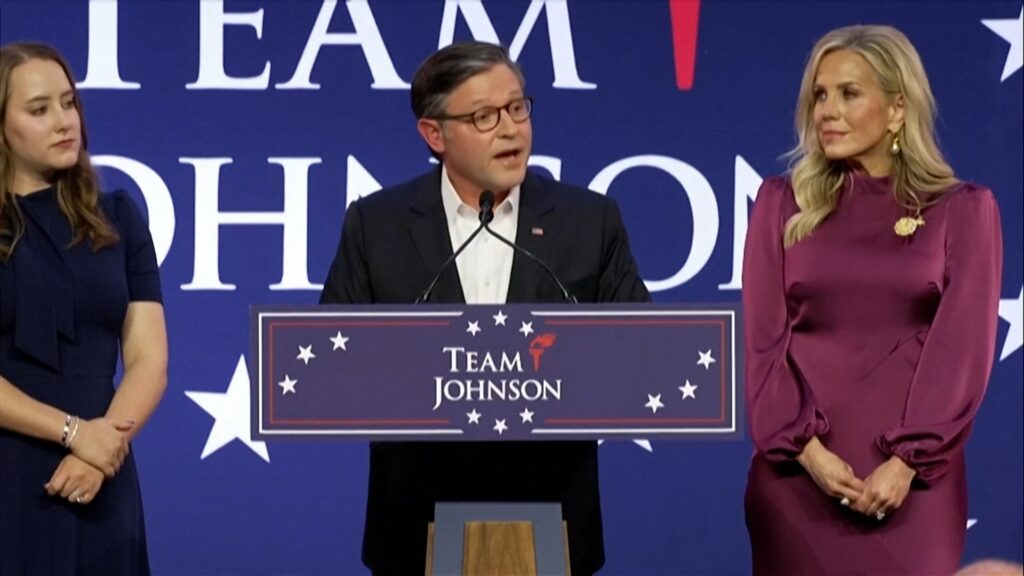
In the wake of recent electoral gains by the Democratic Party, US House Speaker Johnson has voiced a fervent critique centering on the rise of Marxism within political discourse. Johnson’s remarks came during a press conference, where he expressed concern over what he perceives as a growing ideological shift propelled by Democratic successes.
Johnson characterized the current political climate as increasingly influenced by Marxist ideals, which he argues threaten traditional American values and the principles of capitalism. He warned that this ideological turn could lead to policies that undermine economic freedom and individual rights.
The Democrat gains in recent elections have been interpreted by some as a mandate for progressive policies, including increased social spending, regulatory reforms, and initiatives aimed at addressing inequality. Johnson, however, sees these moves as a step toward socialism, citing historical examples where Marxist policies resulted in economic and social turmoil.
Critics of Johnson’s rant suggest that his language is a strategic attempt to mobilize conservative voters by invoking fears of Marxism, which remains a contentious term in American politics. They argue that the Democratic agenda largely focuses on reform rather than radical ideology.
The tension between the parties underscores the ongoing ideological battle shaping the US political landscape, with debates intensifying over the future direction of economic and social policies. Johnson’s comments highlight the polarization that has become characteristic of American governance, as both sides seek to define their vision for the country’s path forward.
While Johnson’s rhetoric resonates with a segment of the Republican base, it also draws sharp rebuke from Democrats and moderate observers who caution against demonizing opposing views. The discourse around Marxism and socialism continues to be a flashpoint in political discussions, reflecting deeper divisions within the electorate.
As the US prepares for upcoming legislative sessions, the ideological divide promises to influence policy-making and electoral strategies. Johnson’s warnings about Marxism symbolize broader concerns among conservatives about the direction of the nation, even as Democrats advocate for expansive reforms aimed at social justice and economic equality.
The debate surrounding Marxism and its place in American politics is likely to continue shaping political narratives and electoral dynamics in the near future, with potential implications for governance, party unity, and voter engagement.