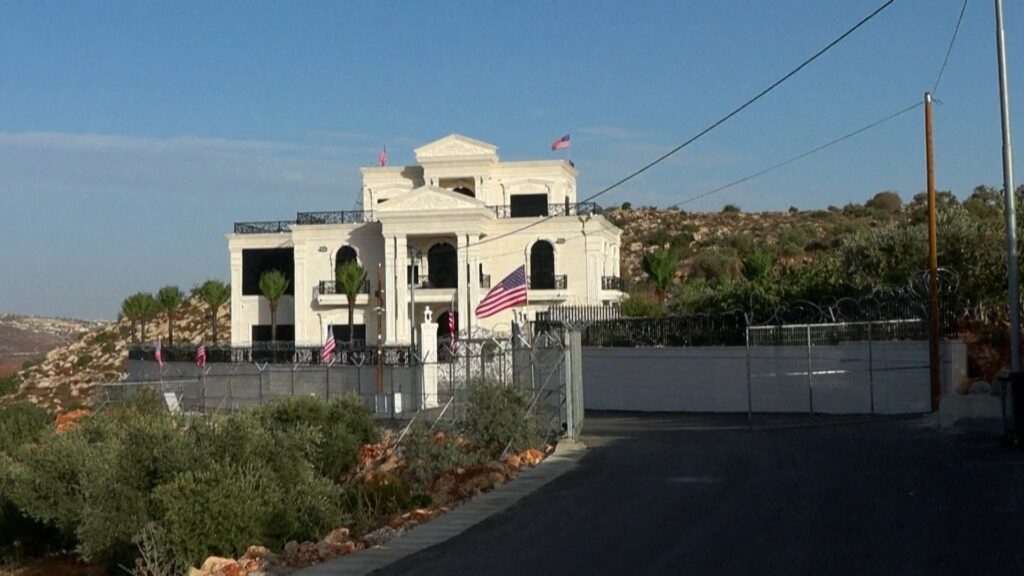
In the occupied West Bank, Palestinian Americans have adopted a striking measure to protect their homes from potential violence by Israeli settlers—displaying the US flag prominently on their properties. This unconventional method stems from their belief that showcasing American symbols could deter settler attacks, given the diplomatic implications and the presence of US nationals.
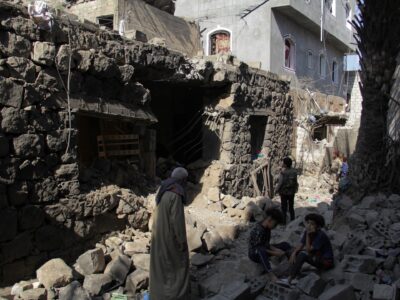
The occupied West Bank has long been a flashpoint of tension and conflict. Israeli settlers have frequently been involved in aggressive acts against Palestinian communities, ranging from vandalism and harassment to violent pogroms aimed at intimidating Palestinians and seizing land. Such aggression exacerbates an already volatile environment and further complicates the peace process.
Palestinian Americans, who often hold dual citizenship or strong ties to the United States, have found themselves in a unique position. Understanding the international dynamics and the weight of US diplomatic influence, they have started to display US flags on their homes and properties. This act is both a plea for protection and a symbolic claim to international support.
Locals have noticed that homes flying the US flag are less likely targets of settler violence. The reasoning is that Israeli settlers and authorities might hesitate before attacking properties associated with foreign nationals, fearing diplomatic repercussions or international attention.
This phenomenon highlights the complex identity challenges faced by Palestinian Americans, caught between their heritage and their connection to the US. Their use of the flag is a poignant reminder of their struggle for safety and recognition in a context marked by deep-rooted conflict.
The US government’s official stance remains a call for peaceful resolution and respect for international law in the Israeli-Palestinian conflict. However, the grassroots reality on the ground shows Palestinian Americans taking matters into their own hands to secure their safety.
The use of the US flag in such a contentious environment also underscores the broader geopolitical tensions at play. The flag, a symbol of American ideals and international power, becomes a tool of protection in a setting where ordinary legal safeguards often fall short.
As violence and provocations continue in the West Bank, the resilience and resourcefulness of Palestinian Americans represent a unique form of peaceful resistance. Their strategy also raises important questions about the role of international communities and governments in protecting vulnerable populations in conflict zones.
The dynamics of settler attacks and Palestinian resistance are ever-evolving. However, the image of US flags fluttering on West Bank homes stands as a powerful testament to the enduring hope and determination of Palestinian Americans to live in safety and dignity.
In conclusion, the adoption of US flags by Palestinian Americans in the West Bank is more than a protective measure; it is a manifestation of identity, struggle, and the quest for security in one of the most fraught regions of the world. As the conflict persists, such stories are crucial in understanding the human dimensions often overshadowed by political rhetoric and international diplomacy.