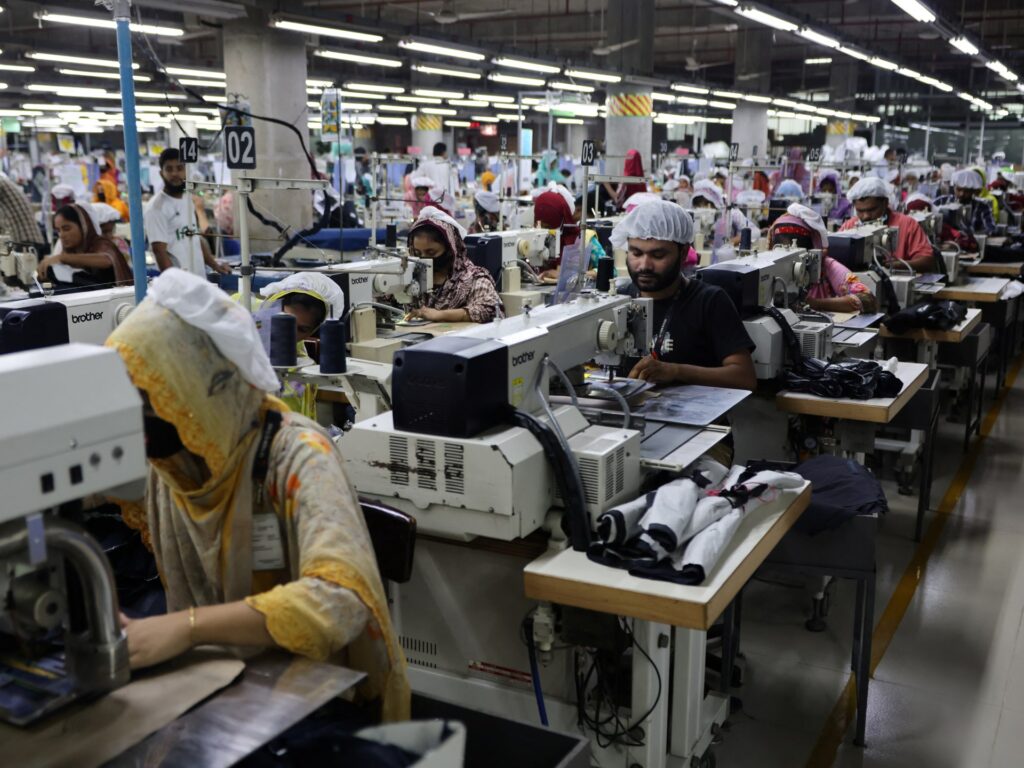
In Bangladesh, thousands of garment workers, who form the backbone of the world’s second-largest apparel exporting industry, have taken to the streets in a massive protest demanding better minimum wages. These workers are highlighting a distressing reality: their current pay barely covers their basic needs, leaving many facing hunger and economic hardship.
The garment industry in Bangladesh is a critical sector, significantly contributing to the country’s economy and providing employment to millions. However, despite the industry’s substantial growth and exports, the workers receiving wages remain trapped in a cycle of poverty.
Reports indicate that many garment workers live paycheck to paycheck, struggling to afford essentials like food, housing, and healthcare. The rising cost of living, global inflation, and stagnant wages have exacerbated their difficulties, prompting calls for urgent government and industry action.
Protesters argue that the existing minimum wage is insufficient to keep up with inflation and basic living standards. Many workers are advocating for a substantial increase that would enable them to support their families without sacrificing necessities.
The demonstrations have garnered international attention, spotlighting the broader issue of labor rights and fair compensation in global supply chains. Advocacy groups emphasize that ensuring a living wage is not only a matter of human rights but also vital for sustaining the industry’s future.
Industry leaders and government officials now face mounting pressure to negotiate wage reforms and improve working conditions. Failure to address these concerns could lead to continued unrest and disrupt Bangladesh’s pivotal role in the global apparel market.
As the protests persist, the plight of garment workers in Bangladesh underscores the urgent need for equitable policies that prioritize the welfare of laborers who power a cornerstone of the global fashion industry. Ensuring fair wages is essential to alleviating hunger and poverty among these workers while promoting sustainable economic growth.