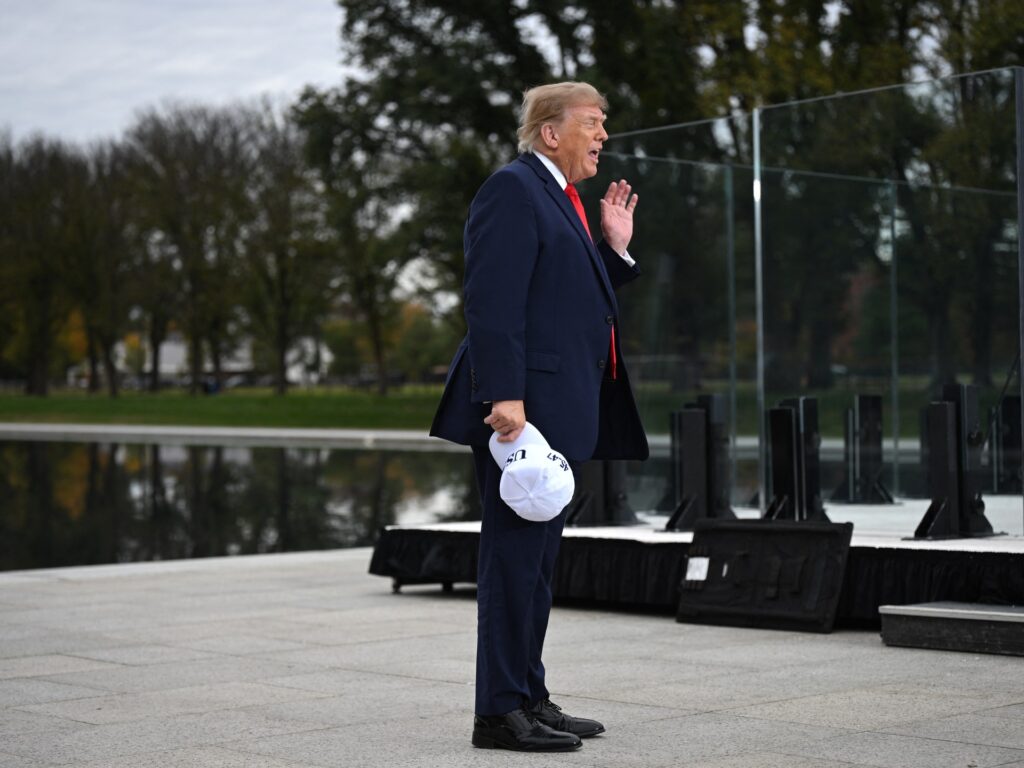
As the United States approaches its crucial midterm elections, former President Donald Trump finds his approval ratings hovering near a historic low. According to the latest Reuters/Ipsos poll, only 32 percent of voters currently approve of Trump’s job performance. This figure signals a challenging environment for Trump and his affiliated political allies as they gear up for the elections.
The poll results highlight a growing skepticism among the American electorate about Trump’s leadership and political agenda. With the midterm elections just days away, this dip in approval could influence voter turnout and the overall political landscape.
Trump’s tenure has been marked by intense political division, and his ongoing influence within the Republican Party remains substantial. However, this recent survey indicates a potential erosion of support even within his base. Analysts suggest that the factors contributing to this decline include public dissatisfaction with economic issues, ongoing debates about immigration policies, and concerns about social and racial tensions.
The midterm elections traditionally serve as a referendum on the sitting president’s performance and by extension, a barometer for their supporters’ standing. Trump’s sub-35 percent approval rating may impact Republican candidates running for Congress, who often rely on his endorsement to mobilize voters.
Moreover, the poll may reflect shifting attitudes in key swing states where Trump’s popularity wanes, thereby influencing competitive races for Senate and House seats. Democratic candidates could capitalize on this diminished approval to unseat incumbent Republicans or secure open seats.
Besides the raw numbers, the poll sheds light on demographic splits. Younger voters, independents, and suburban women reportedly show lower approval ratings for Trump compared to older, rural, and staunchly conservative groups. This divergence suggests a deepening divide in how Trump’s leadership is perceived across different segments of the population.
As the election day approaches, both Republicans and Democrats will likely adjust their campaign strategies in response to these polling insights. Republicans may seek to distance themselves from Trump to appeal to moderate voters, while Democrats might emphasize his low approval as a call for change.
The outcome of the midterm elections will not only determine control of the House of Representatives and the Senate but also set the tone for the 2024 presidential race. For Trump, these numbers serve as a critical indicator of his political clout and public sentiment heading into the next phase of his career.
In conclusion, the Reuters/Ipsos poll revealing a 32 percent approval rating for Donald Trump just before the midterms underscores a period of vulnerability for the former president. With voter attitudes shifting and political tensions running high, the midterm elections promise to be a pivotal moment in American politics, shaping the future trajectory of Trump’s influence and the country’s governance.