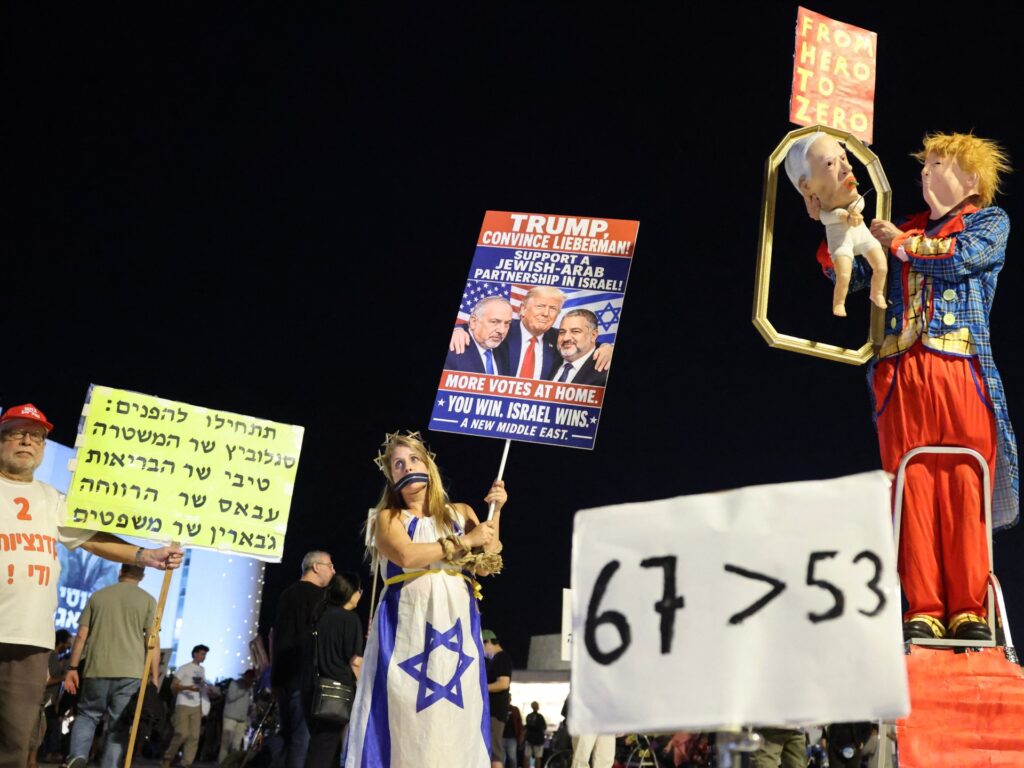
In recent days, Israel witnessed significant political turmoil as thousands of protesters gathered to demand a new Jewish-Arab coalition government to replace Prime Minister Benjamin Netanyahu. The large-scale demonstration reflected growing domestic unrest and strong calls for political change in the country.
The rally was organized by various opposition groups advocating for inclusivity and unity across ethnic and religious lines in Israel. Protesters emphasized the formation of a coalition government that bridges Jewish and Arab communities, underscoring the need to move beyond Netanyahu’s long-standing leadership.
Chants and slogans at the rally highlighted demands for democratic reforms, equality, and an end to policies perceived as divisive. Organizers argued that a coalition including Arab parties could promote stability and peace within Israel and with its neighbors.
However, the rally also sparked significant backlash. In a sharply contrasting counterprotest, Netanyahu supporters demonstrated to express their rejection of the proposed coalition. They voiced concerns over involving groups they label as ‘terrorists’ in the government, reflecting deep divisions within Israeli society.
Supporters of Netanyahu stressed the importance of national security and warned against policies that could undermine Israel’s stability. The counterprotesters carried signs and banners vehemently opposing a government incorporating Arab political factions that have been controversial in Israeli politics.
The political climate remains tense as the nation approaches pivotal decisions regarding its leadership and future direction. Analysts note that the protests exemplify the fierce battle for the ideological soul of Israel, involving issues of identity, security, and governance.
International observers are closely monitoring these developments, recognizing the potential impact on regional dynamics and peace initiatives. The demand for a Jewish-Arab coalition represents a significant political shift, challenging long-standing norms in Israeli politics.
Netanyahu, who has been a dominant figure in Israeli politics for over a decade, faces growing pressure from various segments of Israeli society. His political opponents see the coalition as a pathway to ending his tenure and introducing new policies.
The situation remains fluid, with demonstrations continuing and political negotiations ongoing. How Israel navigates these challenges will shape the country’s political landscape and social fabric for years to come.