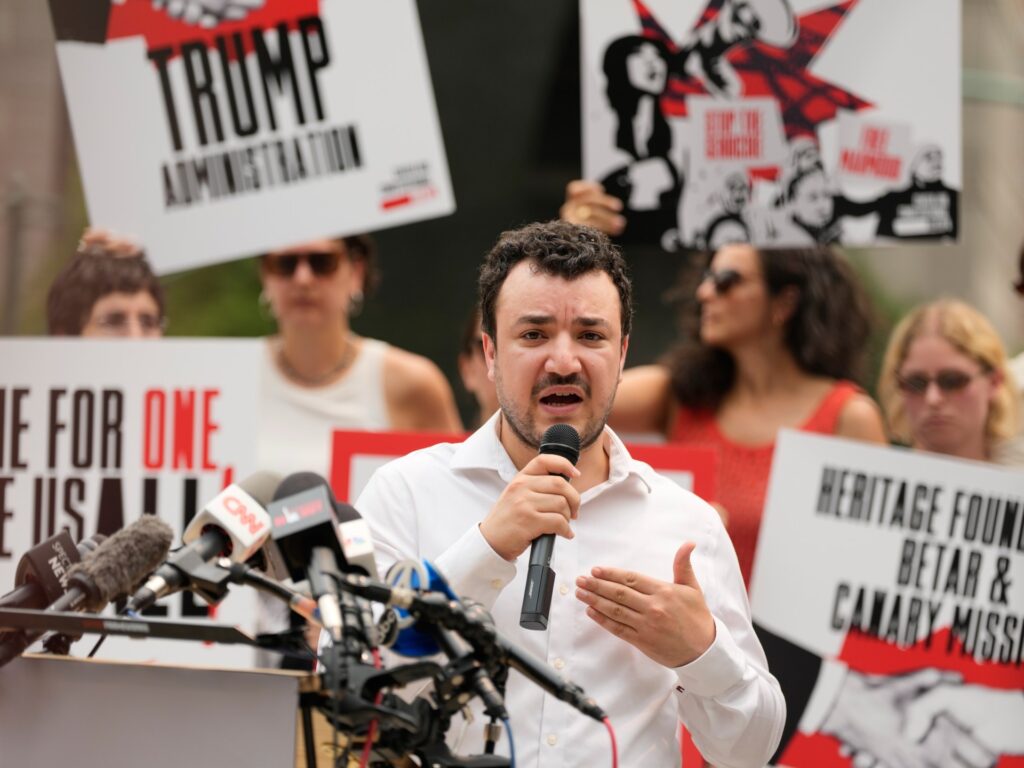
Mahmoud Khalil recently returned to his alma mater, Columbia University, to discuss and promote his newly published memoir, which provides a vivid and personal account of his experiences with the U.S. immigration system. Khalil’s memoir not only recounts his arrest and detention by U.S. immigration agents but also highlights the broader impact of Palestinian activism on American political discourse.
During his talk at Columbia, Khalil detailed the circumstances leading to his arrest, providing insight into the challenges faced by many immigrants today. His story is a stark reminder of the human side of immigration enforcement policies and the emotional and psychological toll these experiences can have on individuals and their families.
However, Khalil’s narrative extends beyond his personal ordeal. He prominently credits the energy, resilience, and advocacy of Palestinian activists for catalyzing significant shifts in U.S. political perspectives related to the Middle East. According to Khalil, Palestinian activism has succeeded in reshaping public opinion and influencing policymakers by bringing greater awareness to Palestinian struggles and advocating for human rights and justice.
This activism has fostered new dialogues across various sectors, including academia, politics, and grassroots movements, leading to calls for more nuanced and informed U.S. policies. Khalil emphasized that such activism challenges long-standing narratives and promotes solidarity with oppressed communities, encouraging a re-examination of U.S. foreign policy.
His memoir also delves into the intersectionality of immigrant rights and Palestinian rights, underscoring how the fight for justice transcends borders and different communities. It reveals how the political landscape in the U.S. is becoming more inclusive of diverse voices advocating for equity and human rights on a global scale.
Students and faculty at Columbia engaged deeply with Khalil’s story, recognizing the significance of his experiences and the historical and political contexts he addressed. The event sparked conversations about the role of activism in shaping national policies and the importance of personal narratives in influencing public perception.
Khalil’s visit and memoir come at a time when immigration policies and Middle Eastern geopolitics remain highly contentious topics in the U.S. His firsthand account provides a necessary perspective on the lived realities behind political debates.
In summary, Mahmoud Khalil credits Palestinian activism not only with reshaping U.S. politics but also with fostering a more empathetic and informed society. Through his memoir and discussions at Columbia University, he urges greater attention to human rights issues and encourages continued activism to effect meaningful change in policy and public consciousness.