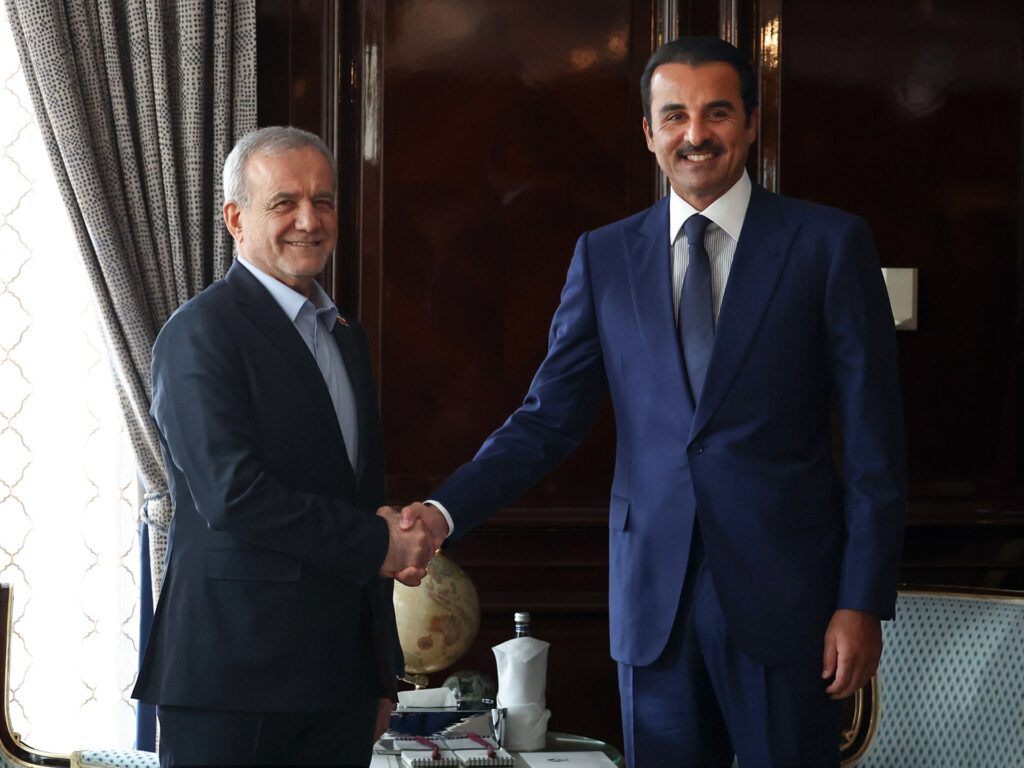
In a significant diplomatic engagement, Qatar’s Emir met with Iran’s Mohammad Reza Pezeshkian in Moscow. The meeting focused on enhancing energy cooperation between the two nations and exploring ways to strengthen bilateral relations, according to reports from Iranian state media.
The discussions took place in the Russian capital, highlighting the growing regional and global importance of collaboration among Gulf and Middle Eastern countries. Both leaders emphasized the potential benefits of coordinated energy strategies amidst the ongoing complexities in global energy markets.
Qatar, as one of the world’s leading exporters of liquefied natural gas (LNG), and Iran, with its substantial oil and gas reserves, have the capacity to influence energy supply dynamics worldwide. Through this meeting, the two countries signaled their intent to explore joint initiatives that could enhance their energy sectors’ efficiency and market reach.
The talks went beyond just energy cooperation, touching upon broader bilateral relations. Strengthening ties could pave the way for increased collaboration in trade, investment, and regional security issues, thereby fostering a more stable and prosperous environment for both countries.
This meeting in Moscow also underlines the strategic geopolitical considerations, as Qatar and Iran seek to balance their foreign relations amid global tensions and shifting alliances. The choice of Moscow for the dialogue suggests a multi-polar approach in their diplomatic communications, likely involving Russia as an influential intermediary or partner.
Energy cooperation discussions between Qatar and Iran hold significance amid ongoing global energy transitions and the push for sustainable and renewable energy sources. Both countries could leverage their expertise and resources to contribute positively to energy security and economic development in the region.
Furthermore, the engagement may lead to collaborative projects in infrastructure, technology exchange, and joint ventures in the exploration and development of hydrocarbon resources. This could enhance the strategic autonomy and economic resilience of both Iran and Qatar.
The meeting is also expected to foster people-to-people connections, cultural exchanges, and diplomatic visits, strengthening the foundation of their bilateral relationship.
As the global energy landscape evolves, such high-level discussions reflect the proactive efforts of regional players to adapt and capitalize on emerging opportunities. The cooperation between Qatar and Iran could serve as a model for regional integration in energy and beyond.
In summary, the encounter between Qatar’s Emir and Iran’s Pezeshkian in Moscow is a pivotal step towards deeper energy collaboration and bilateral relations, with potential impacts on regional stability, economic growth, and global energy markets. Both countries appear committed to working together to harness their respective strengths for mutual benefit.