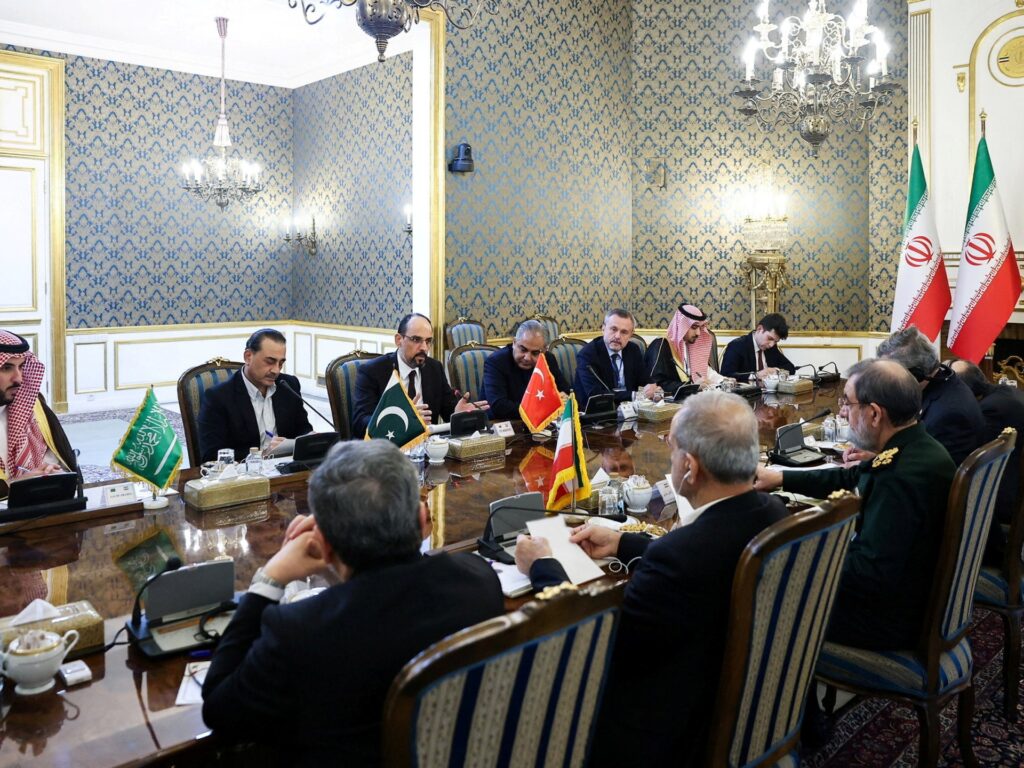
Top officials from Iran, Saudi Arabia, Turkey, and Pakistan have agreed to continue their discussions focused on peace and security in the region amid ongoing tensions. This development comes in the wake of recent escalations involving Houthi missile attacks targeting Saudi Arabian territory.
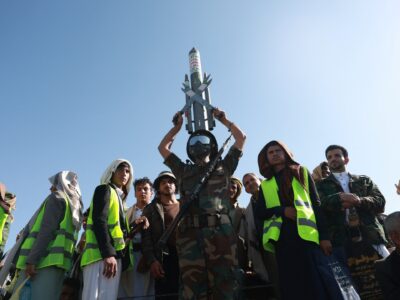
The four countries, which have strategic and geopolitical stakes in the stability of the Middle East, held high-level talks to address the persistent threats posed by the Houthi movement based in Yemen. The Houthis have intensified missile and drone attacks against Saudi Arabia, prompting heightened military responses and security concerns.
Saudi Arabian forces successfully intercepted and downed several Houthi missiles in recent days. This defensive action underscores the volatile security environment and the urgent need for coordinated regional cooperation.
In response to these attacks, Iranian, Saudi, Turkish, and Pakistani officials emphasized the importance of dialogue and diplomatic engagement as the primary means to de-escalate tensions. Their ongoing negotiations aim to establish a framework for sustainable peace and enhanced security arrangements to prevent further violence.
The collaboration among these nations highlights a rare instance of unified efforts in a region often marked by political rivalries and divergent interests. Each country brings unique perspectives and influence that may prove instrumental in mediating conflicts involving proxy groups and insurgencies.
Furthermore, the continued talks reflect a shared interest in safeguarding critical trade routes, stabilizing energy markets, and promoting regional economic development.
Observers note that the path forward will require difficult compromises and sustained commitment to peace-building initiatives. However, the willingness of Iran, Saudi Arabia, Turkey, and Pakistan to engage constructively signals a positive shift toward collective security efforts.
Key issues on the agenda include mechanisms to monitor ceasefires, humanitarian aid provisions for affected populations, counter-terrorism cooperation, and addressing the root causes of instability in Yemen and beyond.
The dialogue sessions are expected to continue as these nations seek to balance their strategic goals with the overarching objective of regional stability.
This diplomatic initiative may also encourage other regional and international actors to support peace efforts and contribute to resolving the protracted conflicts in the Middle East.
As tensions persist, the coordinated approach by Iran, Saudi Arabia, Turkey, and Pakistan could play a crucial role in mitigating risks and fostering a more secure environment for all parties involved.
In summary, the agreement among these four countries to pursue further talks amid ongoing Houthi attacks represents a significant step towards dialogue-driven conflict resolution. It underscores the critical importance of sustained diplomatic engagement in maintaining peace and security in one of the world’s most volatile regions.