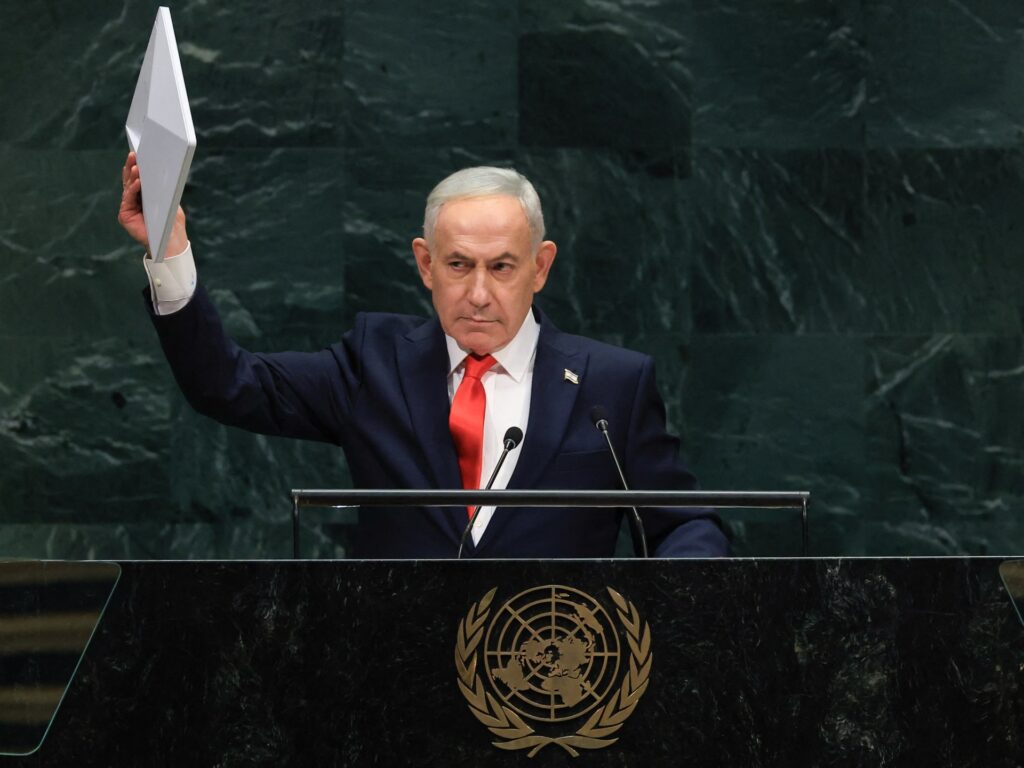
In a highly charged address at the United Nations, Israeli Prime Minister Benjamin Netanyahu launched a broadside against what he described as the multitude of threats facing Israel, taking aim not only at traditional foes but also at perceived critics and allies. The speech resonated deeply amid ongoing regional tensions and international debates over Israel’s policies.
Netanyahu’s rhetoric was unapologetically fierce as he denounced Iran, accusing it of continuing to pursue nuclear weapons capabilities that threaten Israel’s security and stability in the Middle East. He reiterated longstanding claims that Iran’s regime supports terrorism and destabilizes the region, underscoring the need for the global community to recognize and counter these efforts.
Beyond direct adversaries, Netanyahu also targeted critics within the international arena, including individuals and institutions that have voiced opposition to Israeli policies. Among those singled out was New York City Mayor Saleem Mamdani, whom Netanyahu accused of unfairly representing Israel in a negative light. This pointed criticism highlights the growing tension not only between states but also within international civic and political discourse.
Furthermore, the Prime Minister condemned those accusing Israel of crimes against Palestinians, categorically denying allegations of wrongdoing. He framed Israel’s actions as a matter of self-defense against terrorism and underscored the nation’s commitment to peace, saying that attempts to delegitimize Israel only hinder prospects for genuine resolution.
Netanyahu’s speech reflects a strategic effort to defend Israel’s image on the world stage amidst increasing scrutiny and criticism. By addressing both external threats and internal dissent within international circles, he aims to consolidate support and push back against narratives that he views as damaging or unwarranted.
The speech drew mixed reactions globally, with supporters applauding Netanyahu’s firm stance on national security and detractors criticizing him for escalating rhetorical tensions. The ongoing conflict between Israel and Palestinian groups continues to be a focal point of international diplomacy, with calls for peaceful negotiation often overshadowed by cycles of violence and politicized accusations.
Analysts suggest that Netanyahu’s approach at the UN serves both domestic and international purposes—strengthening his leadership position at home while seeking to influence global public opinion and diplomatic relations. The emphasis on both enemies and allies in his comments reveals the complexities Israel faces on multiple fronts, navigating regional rivalries, geopolitical alliances, and the court of public opinion.
As the international community watches closely, the outcomes of such speeches and diplomatic engagements remain critical to shaping future peace prospects and the trajectory of Middle Eastern geopolitics. Netanyahu’s address at the UN marks another chapter in the ongoing dialogue about Israel’s place in a volatile region and the global response to longstanding conflicts.