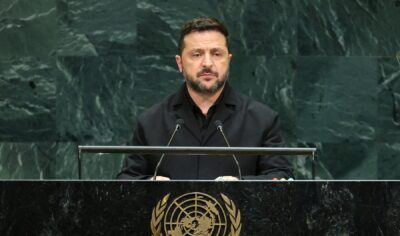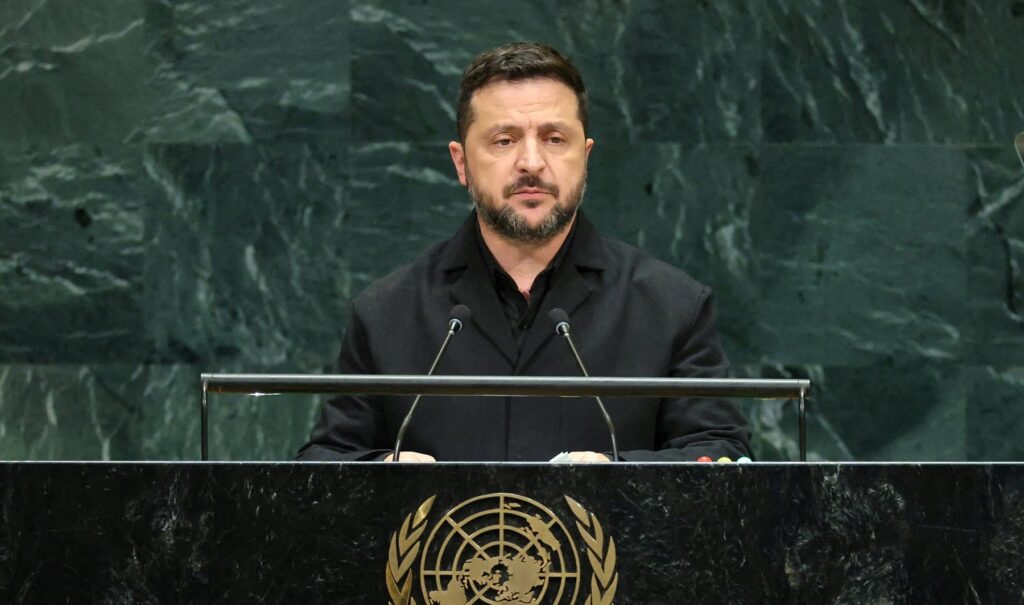
In a dramatic and tense escalation, Russia launched new attacks on Ukraine while Ukrainian President Volodymyr Zelenskyy was delivering a speech at the United Nations General Assembly (UNGA). This incident highlights the ongoing conflict and the high stakes involved in the diplomatic and military tensions between the two nations.
President Zelenskyy’s speech at the UNGA was highly anticipated, focusing on Ukraine’s plight, the need for international support, and condemning Russian aggression. His address aimed to rally the global community to increase diplomatic pressure and aid to Ukraine amid the war that has caused significant humanitarian and geopolitical consequences.
As Zelenskyy spoke, reports emerged of intensified Russian military actions, including missile strikes and artillery bombardments targeting key locations within Ukraine. This attack appeared to be a direct message timed to coincide with Zelenskyy’s appeal on the world stage, underscoring Russia’s determination to continue its campaign despite international criticism.
The timing of these attacks during such a significant international diplomatic event accentuates the volatility of the situation in Eastern Europe. It also puts additional pressure on the United Nations and its member states to respond more decisively to the conflict.
International reactions have been swift, with many countries condemning Russia’s aggression and reaffirming their support for Ukraine’s sovereignty and territorial integrity. Calls for renewed sanctions against Russia and increased military and humanitarian assistance to Ukraine have been voiced by numerous world leaders.
The attack disrupted global diplomatic efforts and highlighted the ongoing human cost of the conflict, with civilian casualties and infrastructure damage continuing to mount. It also served as a stark reminder of the challenges facing the international community in resolving the conflict through peaceful negotiations.
Analysts believe that Russia’s strategic choice to escalate military operations during the UNGA speech could be intended to demonstrate strength and resolve, as well as to undermine the efficacy of international diplomatic efforts led by Ukraine.
Meanwhile, Zelenskyy’s speech reiterated Ukraine’s commitment to peace and its call for international unity against aggression. He emphasized the resilience of the Ukrainian people and the necessity for continued global solidarity to overcome the crisis.
This development marks a significant moment in the ongoing conflict and the diplomatic efforts surrounding it, signaling that the road to peace remains fraught with challenges. The international community watches closely as events unfold, hoping for a de-escalation but preparing for the continuing repercussions of this complex and devastating war.